

Meet Concordia MFA student Alexey Lazarev, recipient of the Jorisch Family Artist Residency

Lazarev will explore material transformation in Salzburg
April 22, 2026
|

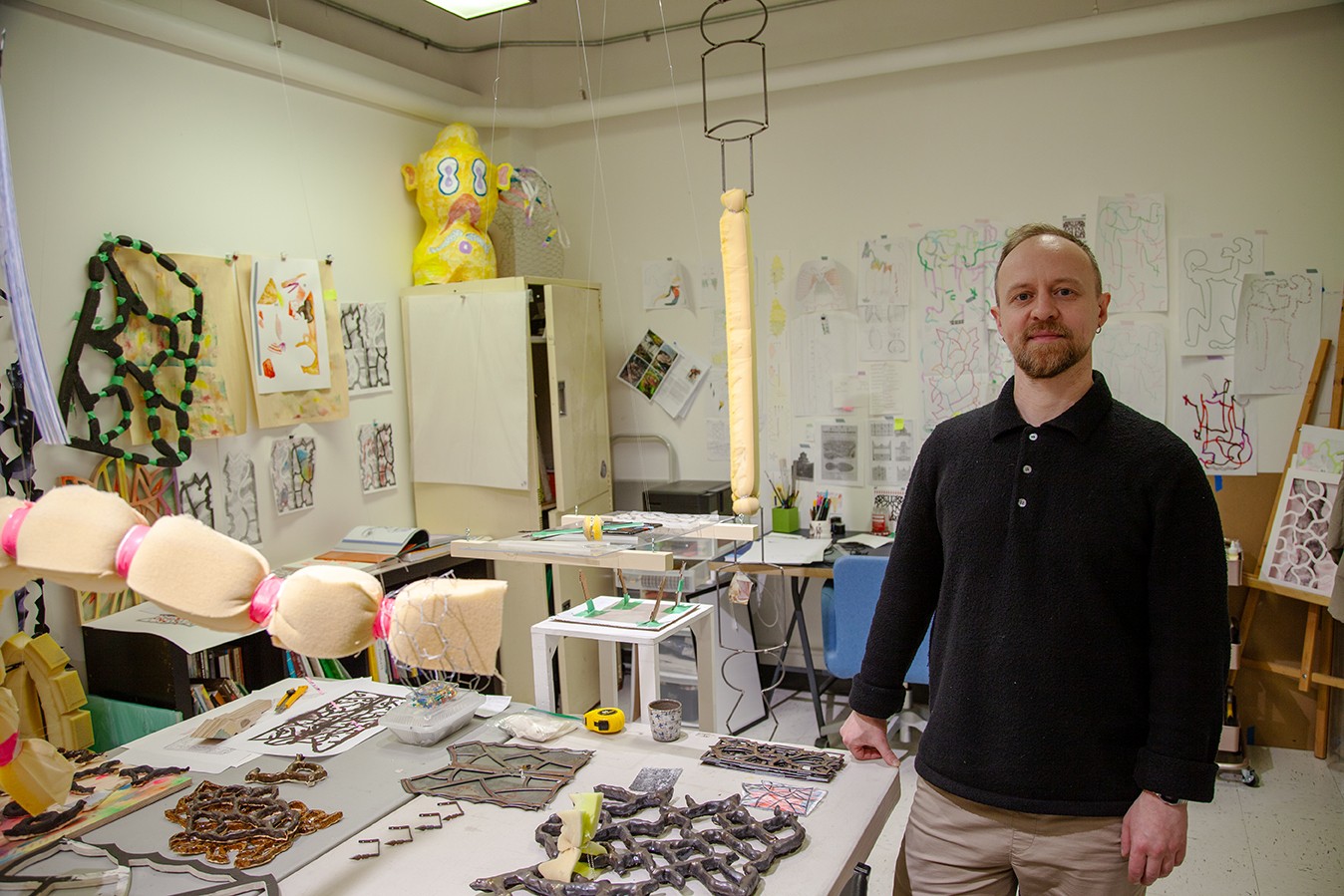
Picture of man artist in studio with solorful materials (including fibres) Alexey Lazarev in his studio (on campus). Photo by Melanie Saumure.
Alexey Lazarev, a Concordia Master of Fine Arts (MFA) candidate, has been awarded the Jorisch Family Artist Residency. He will spend four weeks at the Museum der Moderne in Salzburg, Austria, where he will develop his research-creation practice.

The residency was established at Concordia through a donation by Georg Jorisch in connection with his family’s restitution of artworks looted during the Nazi occupation.

Lazarev explains that the residency will help him further develop his artistic research and thesis, which moves across drawing, architecture, sculpture, and expanded print media.

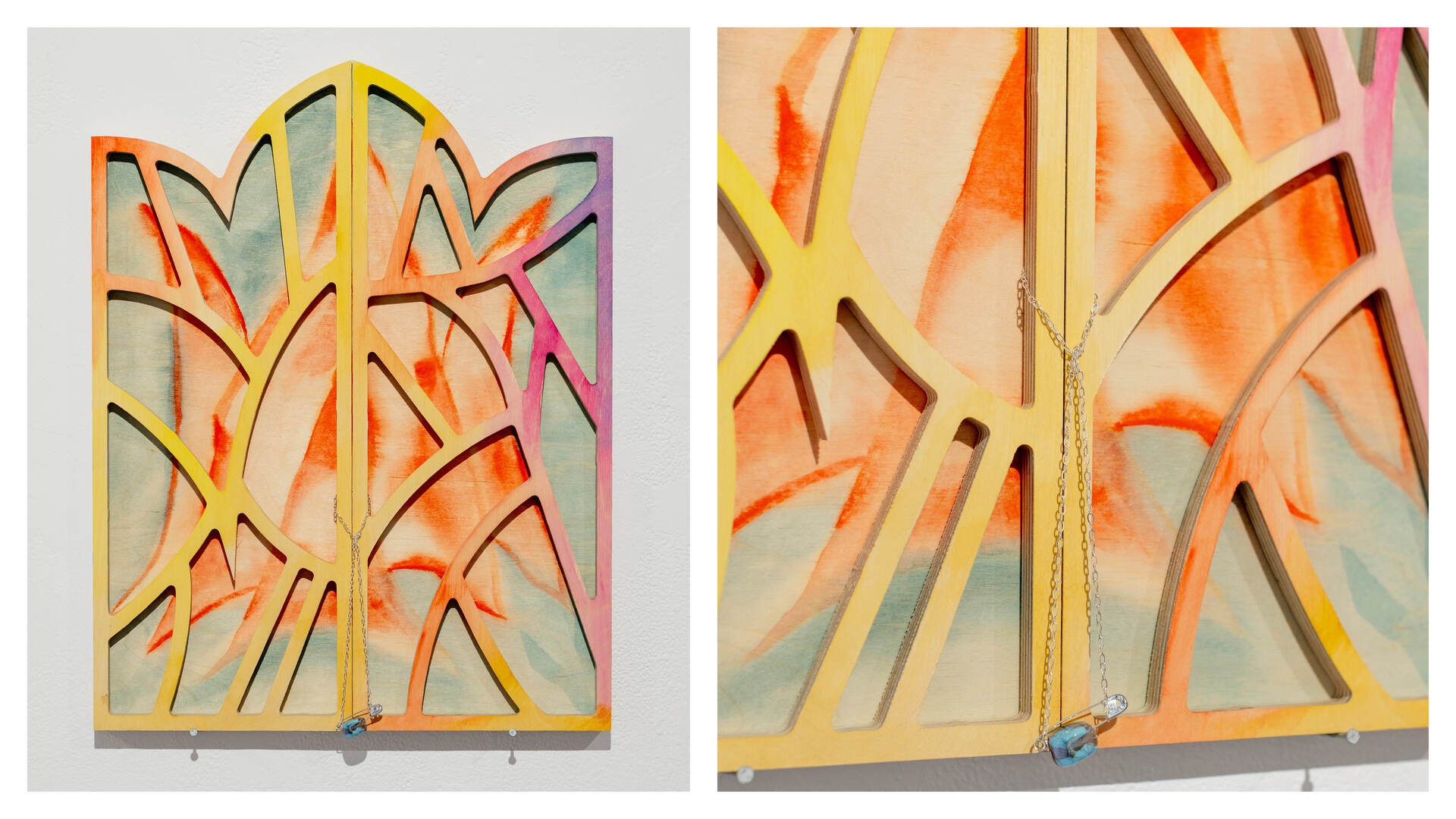
Mixed-media colorful sculpture Alexey Lazarev, Shark Teeth, 2024. Mixed-media sculpture combining CNC-cut plywood, watercolor on untreated wood, decorative chains, safety pin and an artist-made glass bead. Photo by Katya Konioukhova
Could you share a bit about your artistic practice and the main themes you explore?

Alexey Lazarev (AL): My practice operates at the intersection of drawing, sculpture, and expanded print media. I examine the ways structures such as grids, gates, fences, and other architectural fragments shift as they move between rigid and flexible materials.

More broadly, I look at moments when systems begin to destabilize and how those tensions can become productive. Through processes like transfer, pressure, casting, and imprint, I explore how images migrate between materials and how matter can function as a recording device.

The concept of materiality (as described by Jane Bennett) plays an active role in my work. I’m particularly interested in how substances like metal, clay, paper, or pigment carry their own agency and participate in shaping the final image.

How do your experiences in Montreal and abroad inform your creative process?

AL: Working across different places has been central to how I think and work. I’ve been living in Montreal since 2012, and having grown up in Saint Petersburg, I’ve been paying attention to how similar structural elements, such as fences, balconies, and grids, mediate public and private space, organizing the city in subtle but persistent ways.

These experiences inform both the visual language of my work and my curiosity about form. My upcoming residency in Salzburg offers a unique context, where these functional forms are often more ornamental, particularly in wrought iron gates and architectural detailing. This will allow me to further explore how these regulate visibility, connect or separate spaces, and orient bodies within the city.

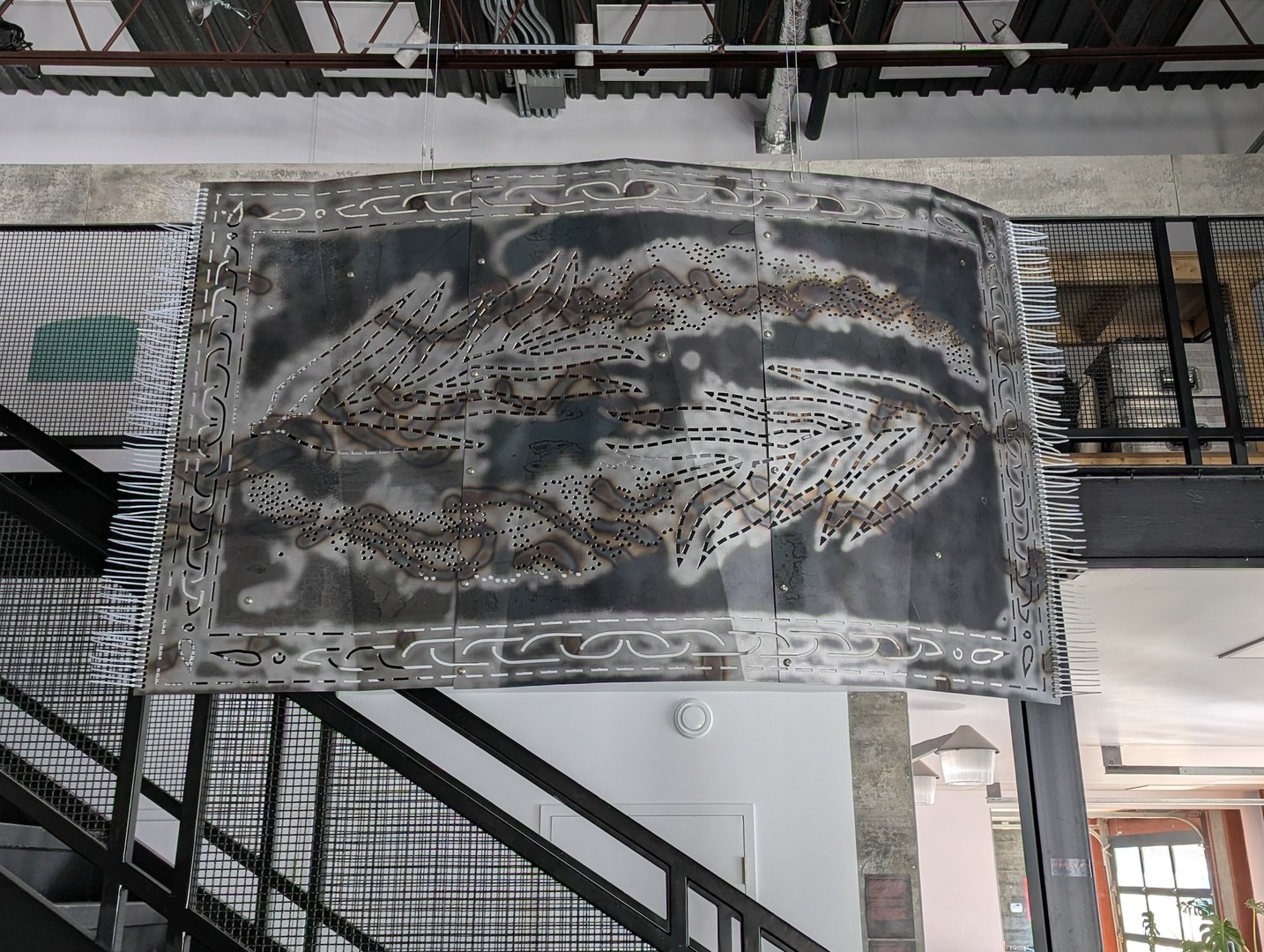
Metal carpet-like sculpture Alexey Lazarev, Soft to Touch (Fireweed), 2026 showcased as part of Bois Magique 04 at Espace Transmission. Hand-deformed steel sculpture with plasma torch drawing and plastic zip ties. Photo by Alexey Lazarev.
What materials or techniques are you currently exploring?

AL: I’m currently developing a body of work using salt-based oxidation as a durational drawing process. During my time in Salzburg, I’ll be working with steel and copper plates, using saline solutions to initiate controlled corrosion. Salzburg is a particularly fitting location for this work, given its history of salt mining.

What fascinates me is how rust operates both as a chemical process and as a form of image-making. Rather than applying ink, I press paper directly onto the oxidizing surfaces, allowing mineral residues to embed into the fibers. I’m also experimenting with collecting rust particles and transforming them into drawing media, extending the process from metal to paper.

There’s a strong element of unpredictability in this approach... Environmental factors affect the outcome. That instability allows the material to actively shape the work.

How do you envision your work engaging with audiences?

A: I think of my work as something that unfolds through looking closely, rather than immediate readability.

At the same time, structures, such as grids and gates, relate to architectural fragments and are recognizable across different cultures. They appear in various forms across cities and contexts, creating points of familiarity for viewers. I’m interested in their transformation, as well as in how it can open up new ways of engaging with the work.

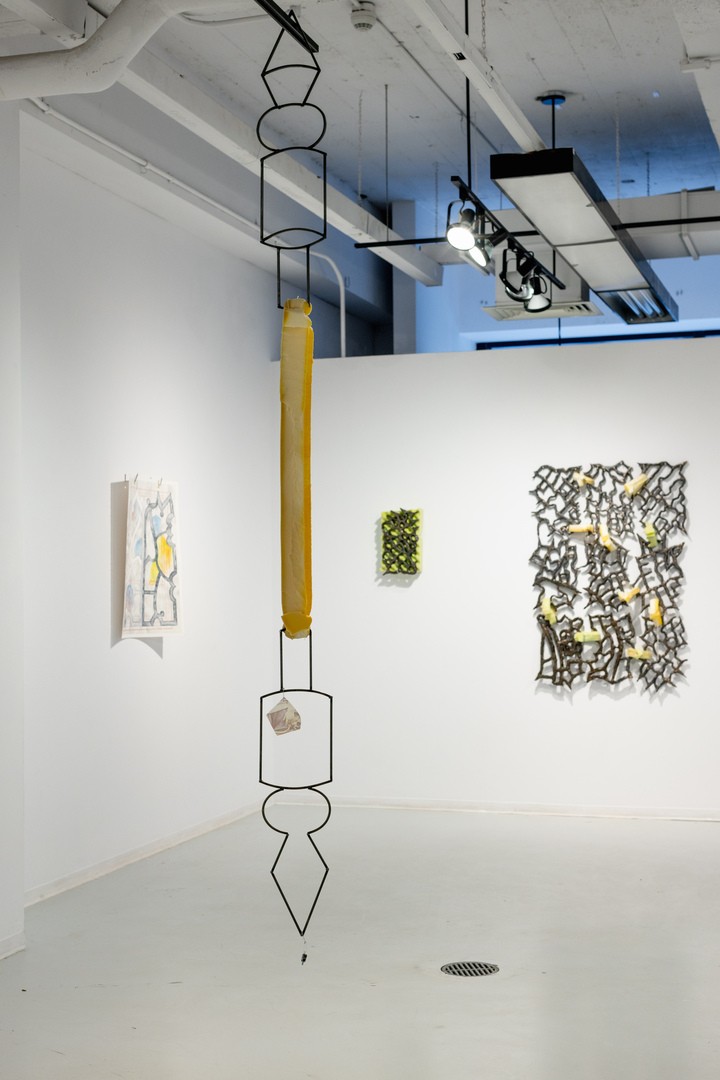
Suspension in art gallery Yellow Ochre, installation by Alexey Lazarev, 2024 at Concordia MFA Gallery, Montreal. Mediums: Ceramics, polyurethane foam, steel and more. Photo by Katya Konioukhova

What are you most excited about?

A: The residency at the Museum der Moderne is closely connected to my MFA thesis, where I’m looking at how visual and structural elements persist as they move across a variety of materials and historical contexts.

I’m excited to develop a series of oxidized metal plates, working within a fixed format and a steady rhythm of production. Over time, this will build into a larger installation where plates and prints will be shown together, revealing both the source and its imprint.

I’m also continuing to explore how other media can inform each other, and how material processes like corrosion can function as generative systems. In addition, I’m interested in extending this research into more spatial forms, including modular or gate-like systems that incorporate material traces gathered from distinct locations.

Learn more about Concordia’s Faculty of Fine Arts and its MFA.


Back to top

© Concordia University