

RESEARCH: Smartwatches could offer a privacy-friendly way to verify age online


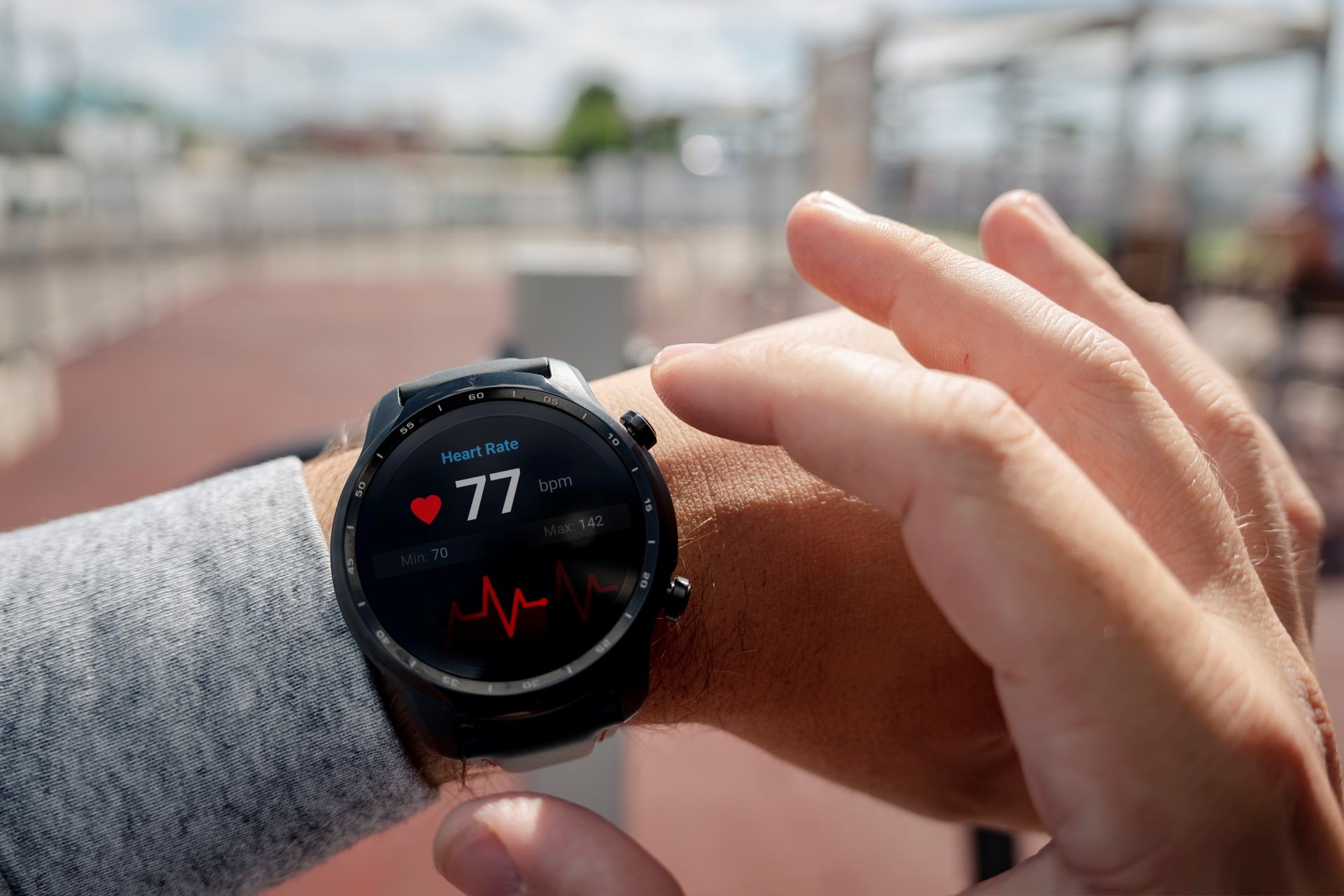
A new Concordia study published in the Nature journal npj Biomedical Innovations suggests that a simple 30-second electrocardiogram (ECG) reading from a smartwatch could accurately estimate a person’s age—potentially offering a secure alternative to facial recognition or ID checks for online age-restricted services.
Researchers collected ECG data from 220 participants aged 3 to 78 using a Fitbit Sense smartwatch. They tested several machine-learning models to see whether heart-signal patterns could reveal a user’s age.
The best results were produced by a basic feedforward neural network, a type of artificial intelligence model that learns patterns by passing information through a series of simple processing layer, each one building on the last. This model predicted age with an average error of just under three years, outperforming results from earlier studies based on hospital-grade ECGs.
Across multiple models, accuracy consistently reached between 93 and 96 per cent.
The results show that key parts of the ECG signal change noticeably through adolescence and early adulthood, making younger age groups easier to estimate. Predictions become less precise for seniors.
Because ECG data is harder to fake than photos and can be processed anonymously on a device, the researchers say the technology could support safer, more privacy-respecting age checks.
They note, however, that the study involved only healthy participants and a relatively small dataset. Larger, more diverse samples — and collaboration with smartwatch manufacturers — will be needed before the method can be deployed widely.
The Natural Sciences and Engineering Research Council Canada, MITACS and the Regroupement Stratégique en Microélectronique du Québec supported this research.
Read the cited paper: “Age estimation via electrocardiogram from smartwatches”