

Bridging science and relationships for compelling journalism with Jenn Thornhill Verma


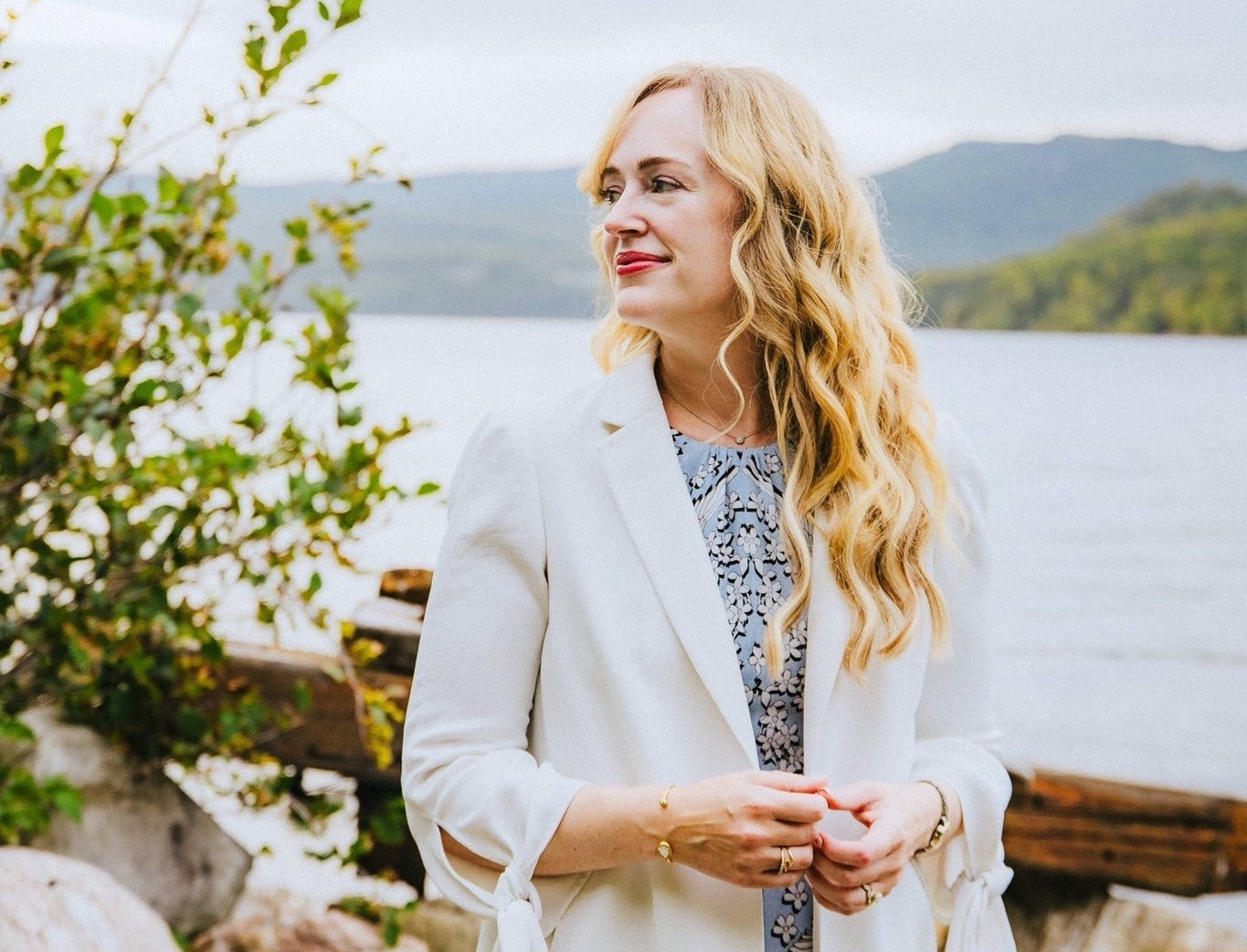 Journalist Jenn Thornhill Verma is a two-time Pulitzer Center Ocean Reporting Network Fellow.
Whether covering the collapse of the cod fisheries or investigating how Inuit are adapting to climate change, for award-winning journalist Jenn Thornhill Verma, science reporting goes far beyond translating data and research.
"Most of my reporting is predicated on what the best-available science says alongside the perspectives of those with boots in boats, in harbours, waterways, and iceways,” she says. "Science and community knowledge aren't in competition — I think the best stories live at their intersection."
Thornhill Verma is a two-time Pulitzer Center Ocean Reporting Network Fellow. The fellowship allows a journalist to tackle an in-depth or investigative ocean story over a year. Her first series, Entangled, published in The Globe and Mail, won the Gold Award for Best Data Journalism at the 11th annual Digital Publishing Awards.
On July 30, Thornhill Verma will deliver a keynote address at Projected Futures 9, the ninth version of the award-winning international summer school in the Department of Journalism that exposes students to the foundations of science journalism through multimedia workshops with esteemed journalists.
This year, the school is collaborating with Volt-Age, Canada's number one electrification research program, to experiment with more new ways to report on science.
"We are so lucky to have science journalists like Jenn join us for the summer school," says David Secko, professor and academic leader of Projected Futures. "It is their work that can help guide students to thinking of new ways to combine science and storytelling to better address the issues that face us."
Secko hopes the school’s collaboration with Volt-Age will continue to push Concordia to innovate in the field of science journalism.
Blending research with community knowledge
Thornhill Verma’s keynote, Ground truthing: Reporting Science Where the Story Lives, will cover her work as a Pulitzer Fellow and the ins and outs of her reporting approach, which combines scientific evidence and community perspectives.
"The best-available science should be accessible to everyone, but it's too frequently paywalled, written inaccessibly, or translated only for other specialists. Journalists are the bridge," she says. "That means, for me, being as comfortable demystifying data with world-leading scientists as you are baiting a hook on a wharf — and earning the trust of both."
As the 2026 Pulitzer fellow, she is reporting Surfaced, an investigation into how regulatory gaps have enabled legally harvested Canadian Arctic species to enter illegal global markets. The first piece of the series, Big Game: How Canada Became a Player in the Illegal Wildlife Trade, was published on June 20.
"Canada has long cast itself as a bystander in illegal wildlife trade, but the country is an unrecognized hub for organized crime," she explains.
The longform investigation was heavily driven by documents, from filing access to information requests, to examining court records and complex policies.
“It’s new territory for me,” Thornhill Verma says. “It’s been about understanding what makes a trade legal or illegal and how that plays out for those with the most at stake.”
‘Relationships are everything’
Thornhill Verma, who grew up in Newfoundland and Labrador, is no stranger to the ocean. She is the granddaughter of a south coast fisherman who was the last in her family to fish commercially, as the Government of Canada closed the commercial cod fishery in 1992.
"The ocean isn't an abstraction," she says. "It's where my family made its living, and where some of the most consequential policy decisions of our time are playing out largely out of public view."
Her talk will address a question all journalists are faced with: how do you make science that's important for the public to know more interesting?
For her, it begins with strong relationships.
"Relationships are everything," she says. "Go where the story lives. And never mistake complexity for a reason to keep people out."
Register for the Projected Futures 9 Keynote with Jenn Thornhill Verma on July 30 at 5:30 p.m.
Learn more about Projected Futures.