



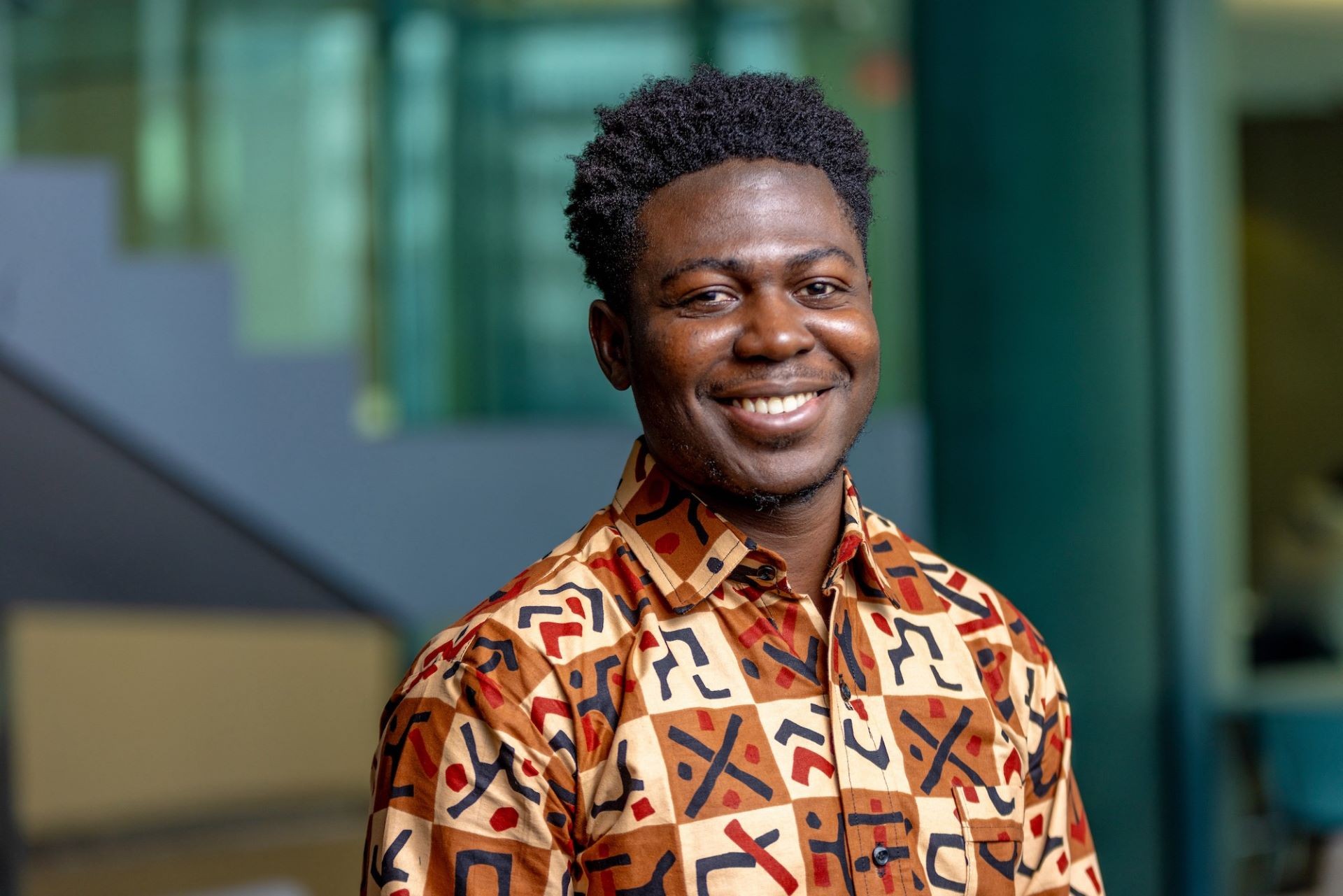
 Gideon Abagna Azunre’s research focuses on finding inclusive, equitable strategies to redevelop urban poor settlements.
Urban development projects often promise to give communities a voice — but how genuine is that participation? Gideon Abagna Azunre, PhD candidate in the Department of Geography, Planning and Environment, set out to find answers by studying international programs like the Greater Accra Resilient and Integrated Development (GARID) program. This World Bank initiative is designed to upgrade slums in Accra, Ghana.
Azunre’s findings reveal a complex picture. Meetings, committees, and digital platforms are intended to include residents in these types of initiatives. But many feel their involvement doesn’t truly count, citing fatigue, political pressures, and the overwhelming influence of international funders.
In this interview, Azunre shares the insights, challenges, and recommendations emerging from his research.
What initially drew you to study participatory processes in informal settlement upgrading, particularly in Accra?
Gideon Azunre: Growing up in cities across Ghana (Bolgatanga, Tamale, and Kumasi), I was struck by the scale of urban poor settlements and the glaring neglect from state and city governments. Accra is even more challenging, as the nation’s capital and the primary destination of poor migrants — particularly from the north, where I’m from. Although these neighbourhoods provide millions of residents with affordable housing, their governance can be harsh, with militarized evictions and dispossessions.
My PhD research focuses on finding inclusive and equitable strategies to redevelop these settlements. Participatory slum upgrading, often internationally funded, is widely praised academically and in policy circles. I was curious how genuinely “participatory” these programs really are, and how residents experience the planning, design, and implementation processes.
My work draws on a Southern decolonial lens—an action-oriented approach that confronts dominant exclusionary power structures in post-colonial societies—to provide detailed evidence on how externally financed programs from the World Bank and UN-Habitat operate in informal contexts. It challenges mainstream approaches to participation by centering residents’ experiences and enhancing their influence in processes essential to their survival.
These communities often face intersecting inequalities tied to ethnicity, gender, and income, so my research emphasizes culturally sensitive ways to engage vulnerable groups.
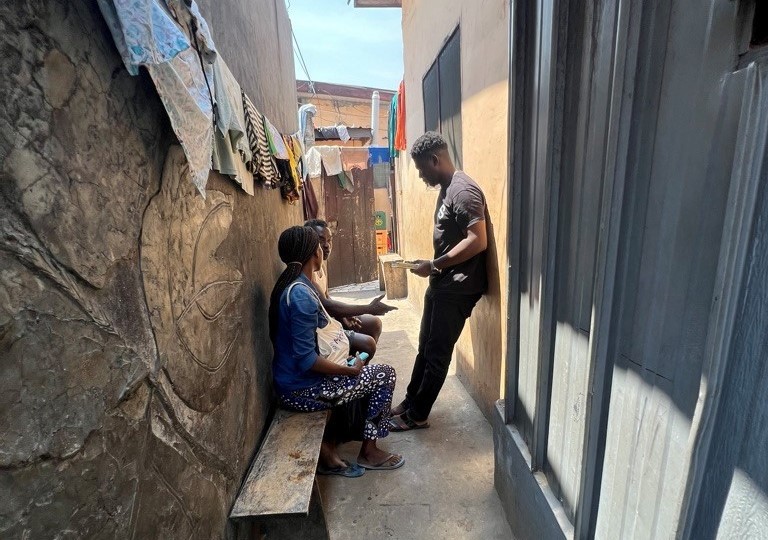 Gideon Abagna Azunre: ‘Participation often looked inclusive on the surface but felt very different to residents’