

Date & time
Thursday, April 16, 2026
2 p.m. – 3 p.m.
2 p.m. – 3 p.m.


Dr. Mehmet Akşit
This event is free.
Engineering, Computer Science and Visual Arts Integrated Complex
1515 Ste-Catherine St. W.
Room 1.162
Yes - See details
Modern Disaster Management Centers (DMCs) increasingly rely on advanced technologies—such as satellites, drones, sensor networks, and data-fusion systems—to enhance situational awareness and support decision-making. In these environments, human operators, assisted by decision-support systems, verify incident reports, allocate resources, and monitor ongoing operations. The processed data include incident characteristics (type, location, severity) as well as response-related information such as rescue plans, team composition, and expected intervention durations.
Despite these advancements, current disaster management systems remain constrained by pipeline-oriented architectures and substantial manual intervention. Under high-load conditions, when large volumes of incident reports are generated, these systems frequently experience delays, bottlenecks, and breakdowns in workflow execution. This reduces the effectiveness and efficiency of response operations and increases the likelihood of data inconsistencies and errors.
Drawing on our experience with advanced DMC environments, this talk addresses these fundamental limitations through the introduction of digital automation mechanisms. In particular, we present domain-specific meta-control architectures supported by descriptive, predictive, and prescriptive digital twins. This integrated approach enables continuous monitoring, simulation-based foresight, and adaptive optimization of response processes. The proposed framework demonstrates how next-generation digitalization strategies can significantly enhance the performance, robustness, and data quality of disaster management systems.
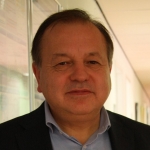
Prof. Dr. Mehmet Akşit received his BSc and MSc degrees (with honours) in Electrical Engineering from Eindhoven University of Technology in 1980 and his PhD from the University of Twente in 1989. From 2000 to 2019, he served as Full Professor and Chair of the Software Engineering Department at the University of Twente. He has held visiting professorships and research appointments at IBM Research (USA), New Jersey Institute of Technology (USA), The University of Tokyo (Japan), and University of Malaya (Malaysia). Between 2020 and 2022, under the TÜBİTAK International Fellowship for Outstanding Researchers Program, he served as Professor of Digital Disaster Management Systems at TOBB University of Economics and Technology in Ankara. He founded World Alliance on Digitalization for Disaster & Emergency Management, an international foundation engaging researchers from 16 countries.
His research has made foundational contributions to software engineering, programming languages, and software architecture. His group developed one of the earliest aspect-oriented programming languages, Composition Filters, and introduced mechanisms for modelling emergent behaviour in software systems. He pioneered synthesis-based software design methods and fuzzy-probabilistic modelling techniques for uncertainty management, and advanced architectural optimisation through multi-criteria trade-off analysis to enhance key quality attributes such as adaptability, evolvability, availability, and energy efficiency. Since 2021, he has been conducting voluntary research at AFAD, focusing on AI-driven and digital-twin-based disaster management systems.
In 2017, he received the SDPS Priscilla and Raymond T. Yeh Lifetime Achievement Award (USA). Citations: 17,626 (Google Scholar, March 3, 2026).