

Date & time
Tuesday, September 8, 2026
10 a.m. – 12 p.m.
10 a.m. – 12 p.m.
Registration is closed


Registration is closed
In-person
This event is free
Engineering, Computer Science and Visual Arts Integrated Complex
1515 Ste-Catherine St. W.
Room 3.309
Yes - See details
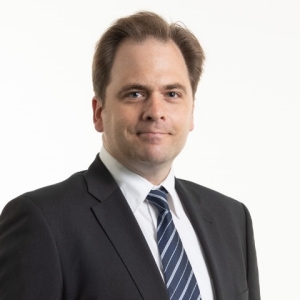
At the inaugural Mark Pathy Space Institute Distinguished Speaker Seminar, Professor Martin Tajmar, head of TU Dresden’s Chair of Space Systems, will explore the Chair’s current research.
Since its establishment in 2012, the Chair has developed three research groups focused on
The seminar will highlight space missions and technologies developed by these groups, including the SOMP satellite platform and astronaut experiments conducted aboard the International Space Station.
Other recent activities include engine tests at up to 6 kN and retro-propulsion studies for a future European lunar lander. The Chair’s work in electric propulsion includes highly miniaturized, liquid-metal-fed thrusters that have flown on hundreds of satellites and led to the creation of a successful small-satellite propulsion company.
Other examples include Hall thrusters with three-dimensional thrust vector control and electrodynamic tethers that allow satellites to deorbit without propellant.
The seminar will conclude with an overview of the Chair’s advanced testing capabilities, including specialized diagnostic facilities and what it describes as the world’s most precise thrust balance. The European Space Agency currently uses the balance to qualify thrusters for future scientific missions.
Dr. Martin Tajmar is professor and head of the Chair of Space Systems at TU Dresden and director of the Institute of Aerospace Engineering, which graduates approximately 150 master’s students annually.
He holds a PhD in electrical engineering and electric propulsion from TU Vienna, an engineering physics degree and an MSc in space studies from the International Space University. He is an expert in space propulsion, advanced aerospace concepts and experimental physics.
Tajmar has held research and leadership positions at NASA’s Jet Propulsion Laboratory, the European Space Agency, the Austrian Institute of Technology and the Korea Advanced Institute of Science and Technology. He also established Austria’s first master’s program in aerospace engineering.
He has led major projects for the European Space Agency and NASA, including GOCE, LISA Pathfinder and MMS. He has authored more than 150 journal articles and more than 250 conference papers and holds 30 patents. He currently leads approximately €2.5 million in annual research funding from DLR, the European Union, DARPA, the European Space Agency, Airbus and German ministries.
His research has contributed to the founding of two space startups, Morpheus Space and PERSEI Space. His honours include the Saxonian Start-up Prize, DLR Innospace Award, BMBF/DLR Innovation Award and Ritter von Ghega Award.
© Concordia University