Date & time
Thursday, January 29, 2026
12 p.m. – 1:30 p.m.
12 p.m. – 1:30 p.m.


Dr Felicity Vabulas
This event is free.
Henry F. Hall Building
1455 De Maisonneuve Blvd. W.
Room 1220
Yes - See details
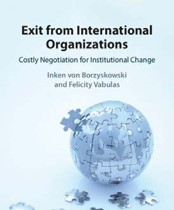
Why do states exit international organizations (IOs)? How often does exit
from IOs – including voluntary withdrawal and forced suspension – occur?
What are the effects of leaving IOs for the exiting state? Despite the
importance of membership in IOs, a broader understanding of exit across
states, organizations, and time has been limited. Exit from International
Organizations addresses these lacunae through a theoretically grounded
and empirically systematic study of IO exit. Von Borzyskowski and Vabulas
argue that there is a common logic to IO exit which helps explain both its
causes and consequences. By examining IO exit across 198 states, 534
IOs, and over a hundred years of history, they show that exit is driven by
states' dissatisfaction, preference divergence, and is a strategy to negotiate
institutional change. The book also demonstrates that exit is costly because
it has reputational consequences for leaving states and significantly affects
other forms of international cooperation.
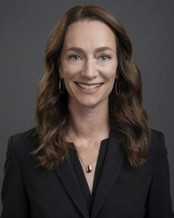
Felicity Vabulas is the Blanche E. Seaver Associate Professor of
International Studies at Pepperdine University. Her research focuses on the
political economy of international cooperation, specifically when and why
states change how they cooperate internationally and the implications this
has for international relations. She has been awarded a Seaver College
Endowed Professorship and the Howard A. White Award for Excellence in
Teaching. Her earlier research received a best paper award from the
American Political Science Association and has been supported by the
World Bank, the National Science Foundation, and the International Studies
Association.