

Date & time
Friday, August 28, 2026
1:30 p.m. – 3:30 p.m.
1:30 p.m. – 3:30 p.m.


Zachary Yuzda
This event is free.
Online
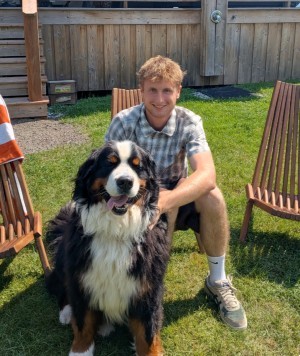
Zachary Yuzda
Supervisor: David Morris
ABSTRACT: In a recent article, Brett Smith argues that our ability to imagine another person’s situation is limited by our own body, which can block efforts to have shared imagination between normate and supposedly disabled athletes. I push back against these limits, by drawing on and elaborating work done by prominent philosophers and thinkers who address disability, such as Susan Bredlau, Joel-Micheal Reynolds, Sara Hendren, and others. I elaborate their ideas by using sports as a scaffolding, since its rules and equipment work as structures that nicely illustrate how external contexts shape and govern our lives. So, we cannot just look at our own bodies when thinking about the bodily limits of imagination, we need to pay attention to this context. Then, I draw on phenomenological concepts such as “habit” and “field” from the work of Maurice Merleau-Ponty, to show how our imagination can be expanded beyond our bodily limits. I apply these concepts to sports to show the embodied similarities in habitual and adaptive experience. Through our inherent ability to extend our bodily limits, I suggest that our imagination can be similarly extended. I see this as an important societal step to work past stigmatization around not just supposedly disabled athletes but supposedly disabled individuals in general. Focusing on the microcosm of sport, makes it easier to see how bodily imagination can be expanded in general, to help us better understand one another. This work allows me to show that Smith’s conclusion is not compelling, and that it is possible to extend our embodied imagination.
To attend, click the button below: