

Alumnus/Alumna profile
Share:


Gary Regenstreif
BA Journalism/English, 1983
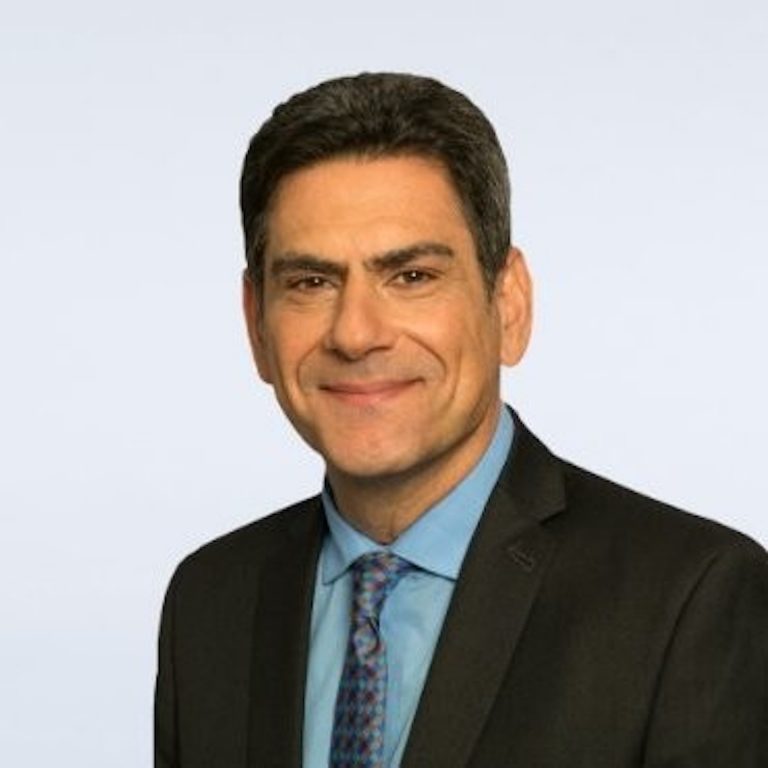
Gary Regenstreif was a reporter at The Canadian Press before moving to the Reuters news agency, where he was a journalist and senior editor in Toronto, Ottawa, Caracas, Buenos Aires, Rome, Paris and New York.
He was then Executive Editor at S&P Global Market Intelligence, driving news coverage and standards. Most recently, he has been Publisher, Advisory Insights at KPMG US.
Questions and answers with Gary
What do you love most about your work, and what inspired you to pursue this career in the first place?
What inspired me most about becoming a journalist was the brave and brilliant work of those reporting on conflicts and crises around the globe, sharing stories about what was occurring abroad and telling the truth about what was happening at home. And as I moved more into journalism for business audiences, I sought to help people understand the world around them and give them the information they needed to do their jobs more effectively. Today, creating thought leadership, it’s about surfacing insights that will help businesses and other organizations achieve their objectives, be it to transform and grow, manage risk, modernize their technology, extract more value from their mergers and acquisitions, or other goals.
Looking back, what skills have been the biggest gamechangers in your career?
Communication and flexibility. To convey information, insights and stories effectively in multiple forms and to different audiences is essential, as well as being prepared to keep an open mind and consider new opportunities that might not have been part of the career path that was originally plotted out.
How did Concordia prepare you for the real world?
The first was around diversity, and because of its wonderful mix of international students, Concordia was a microcosm of the outside world, unlike so many colleges with more homogeneity in the student population. Concordia had a rich blend of races, religions and nationalities that was a welcome introduction to humankind for many young people who grew up experiencing just a tiny slice of it. From an academic perspective, Concordia’s journalism professors were experienced and took a practical approach to teaching the craft with just the right amount of theory for context. And from English literature, I learned how to think creatively and cherish the art of storytelling. One last takeaway: at the time, at least, Concordia was not among the most well-funded universities, which meant we learned not to be spoon fed, or feel entitled, and we had to figure things out on our own. That served me well outside.
What is a standout memory from your time at Concordia?
Apart from formal learning, it would surely be my time in the student newspaper, The Link. I spent two years there, one of them as the Entertainment Editor, working with a terrific group of clever, engaged and collaborative fellow students. We would debate important issues of the day, strove to put out the best publication we could and, as we worked through it as a team, we grew as individuals.
If you could give your younger self one powerful piece of advice, what would it be?
Don’t be afraid. Be courageous. Go for it. And don’t worry about what people are thinking. What they’re thinking is their problem, not yours. (And they’re probably too busy just worrying about themselves!)
What’s the most exciting shift happening in your industry right now?
The media industry has been going through convulsions for decades now, making the economics of traditional media considerably more challenging. And there are many pressures on journalism from the perspective of freedom of the press. That said, social media and other platforms have enabled journalists to convey information in numerous new ways. But the most exciting shift right now for content creators is the emergence of GenAI, which accelerates research, helps identify topics for development that are not already widely covered and facilitates other parts of the process.
Feeling inspired?
Make friends through the Journalism Student Association or explore other clubs that interests you.
Learn to talk about your work to different audiences with clarity and impact through FutureBound’s storytelling and public speaking series.
Consider writing content for Concordia’s newspapers The Link or The Concordian.
Apply for journalism internship and practicums and start building real-world experience.
Connect with Career Counselling & Education Transitions to plan your career path.