

Colloquium Series
A weekly forum for sharing ideas, advancing research and connecting physics to the broader scientific community
The Department of Physics hosts a weekly colloquium series that brings together students, faculty members and researchers to explore current and emerging topics in physics. A longstanding part of the department’s academic life, the series creates a shared space where experimental, theoretical and interdisciplinary perspectives intersect.
About the series
The colloquium is primarily research-focused, showcasing work from invited external scholars as well as Concordia faculty. Presentations span a wide range of areas in physics and related disciplines.
While most talks highlight current research developments, the series also occasionally features broader topics such as career pathways in physics as well as equity and inclusion in STEM fields.
The series creates a shared space where experimental, theoretical and interdisciplinary perspectives intersect.
Who should attend?
The colloquium is primarily intended for graduate students in physics.
Faculty members, senior undergraduate students, external guests and members of the wider university community are also welcome to attend.
Time and location
Wednesdays at 3 p.m.
Room HB-130
Hingston Hall, wing HB
Loyola Campus
Held during the fall and winter terms.
Current colloquium schedule
Fall 2026 Schedule
Sept. 9 – Barry Frank Memorial Lecture
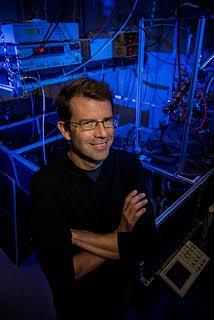
Dr. N. Peter Armitage, Johns Hopkins University
On Ising's model of ferromagnetism
The 1D Ising model is a classical model of great historical significance for both classical and quantum statistical mechanics. Developments in the understanding of the Ising model have fundamentally impacted our knowledge of thermodynamics, critical phenomena, magnetism, conformal quantum field theories, particle physics, and emergence in many-body systems.
Despite the theoretical impact of the Ising model there have been very few good 1D realizations of it in actual real material systems. However, it has been pointed out recently, that the material CoNb₂O₆ has a number of features that may make it the most ideal realization we have of the Ising model in one dimension. In this talk I will discuss the surprisingly complex physics resulting in this simple model and review the history of "Ising's model" from both a scientific and human perspective. In the modern context I will review recent experiments by my group and others on CoNb₂O₆. In particular, I will show how low frequency light in the THz range gives unique insight into the tremendous zoo of phenomena arising in this simple model system.
Sept. 16 - Dr. Salini Karuvade, Concordia University
One Hundred and One Years of Quantum Physics
Last year marked 100 years since Werner Heisenberg wrote down the equations that would become quantum mechanics. In the century since, that framework has been tested to extraordinary precision, reinterpreted countless times, and transformed from a source of philosophical discourse into the engine of a technological revolution. This talk tells the story of how it all began. The desperate acts, the lucky accidents, and the reluctant revolutionaries who built a theory none of them fully believed.
Sept. 23 - Dr. Anan Chen, Canada Research Chair Tier II Biochemistry of Infectious Disease, Department of Chemistry and Biochemistry, Concordia University
Decoding the Molecular Pore: Function, Structure and Antiviral Discovery Against Plus-Strand RNA Viruses
Plus-strand RNA viruses constitute the largest genetic class of eukaryotic viruses, including SARS-CoV2, tumor-inducing HCV, debilitating CHIKV, ethal encephalitis viruses and many other emerging pathogens. A major target for understanding and thus controlling +RNA viruses is their genome replication complex, which rewires host endomembranes to form replication organelles—the central site of viral genome replication. Recent progress in cryo-electron tomography and structural modeling tools has shed light onto “crown”-like viral replication complexes, which assemble into pore-like structures on the membrane of replication organelles in different +RNA viruses. Our research reveals the function and mechanism of coronaviral molecular pore, which links viral RNA synthesis with export from the double-membrane vesicles. By integrating membrane biochemical analysis with cell-based assays, we determined the molecular composition and topology of the molecular pore-replicase complex. We developed new methods in isolating double-membrane vesicles and molecular pores, establishing a platform to study viral-host interaction and the pore structure among different +RNA viruses. A conserved ring of residues in the pore lining was also identified, forming a constraint for viral RNA transit through the pore. Leveraging this data, we are testing the concept of a new class of pore-targeting antivirals, which can be broadly effective against +RNA virus infection.
Oct. 7 - Dr. Katelin Schutz, Canada Research Chair in Astrophysics Beyond the Standard Model, Department of Physics, McGill University
Searching for new particles in dense astrophysical media
In this seminar, I will discuss how we can treat various astrophysical systems, like stars and compact objects, as particle physics experiments that exist "for free" in Nature. Their relatively high densities, large volumes, and long timescales allow for even very rare microscopic processes to have large cumulative effects. In some cases, their observed properties can encode particle physics constraints that are many orders of magnitude stronger than what can be achieved in a collider experiment. Moreover, unlike the pristine conditions in a laboratory experiment, particles in astrophysical settings must propagate through dense, thermal, magnetized environments. In-medium decays and resonances can vastly enhance the production of new particles in ways that have no vacuum analog. While capturing all of these effects poses a theoretical challenge, it opens new opportunities to use existing observations to explore even more particle physics parameter space.
Oct. 21 - Dr. Nadia Lafrenière, Lecturer, Department of Mathematics and Statistics, Concordia University
Understanding card shuffling thanks to representation theory
A shuffling operator explains, for example, the evolution of a deck of cards subject to a specific random process: it often consists of removing a subset of the cards and reinserting them in a specific fashion. To understand how quickly this random process converges to a limit state, a common technique is to compute the eigenvalues of some matrix.
However, these matrices are very large, and computing eigenvalues is not an easy task. This is why we proceed with the help of representation theory. Using a well-known decomposition of the symmetric group algebra into simple modules, one manages to express the eigenvalues using a few simple statistics on a combinatorial object called a standard Young tableau.
The top-to-random shuffle corresponds to removing the first card of a deck and reinserting it at any place in the deck. The top-to-random shuffle will serve as my primary example to describe how to get the eigenvalues from the standard Young tableaux. No knowledge of representation theory is needed for this talk. The goal is to showcase the power of the techniques it carries.
Oct. 28 - Dr. Cunlu Zhou, Department of Computer Science, University of Sherbrooke
Efficiently extracting quantum information from a quantum state is a fundamental task in quantum computing, often requiring the estimation of many non-commuting observables under a limited measurement budget. Practical measurement design must balance a fundamental trade-off between statistical efficiency and the resources required to implement the measurement circuits. Many existing strategies focus on two extremes: hardware-friendly product measurements with high sampling costs, and fully commuting measurements that can require deep circuits.
In this talk, I will present FlowMeas, a generative learning framework for resource constrained quantum measurement design that provides a systematic way to resolve this trade-off. FlowMeas uses a generative flow network to learn distributions over finite ensembles of shallow Clifford measurement circuits while directly incorporating constraints on measurement budget and circuit depth. At zero entangling depth, the learned protocols match or improve leading product measurement methods on molecular benchmarks. Allowing only one or two layers of entangling gates further reduces energy estimation errors by up to 27% relative to the strongest state-independent product measurement baseline. The learned policies can also be transferred across related Hamiltonians, substantially reducing the optimization required along molecular potential-energy surfaces. We demonstrate the approach on molecular systems with up to 20 qubits and on a compactly encoded 54-qubit interacting fermionic model. Beyond these results, I will briefly discuss generative learning as a broader framework for practical quantum computing protocol design.
Reference: Generative Learning for Quantum Measurement Design
Questions?
For questions about the colloquium series, please email physics.ac@concordia.ca.