

UX is everything, everywhere all at once. UX is an acronym for user experience. UX is often associated with websites and other technology as well as usability, wireframes and testing but…
UX is EVERYTHING.
UX literally refers to an experience a person can have with anything. Any time you interact with something or someone you have had an experience.
A bad experience is obvious. These experiences can be frustrating or unnecessarily complicated and time consuming. With a really bad experience, a person might make mistakes or fail to accomplish what they set out to do.
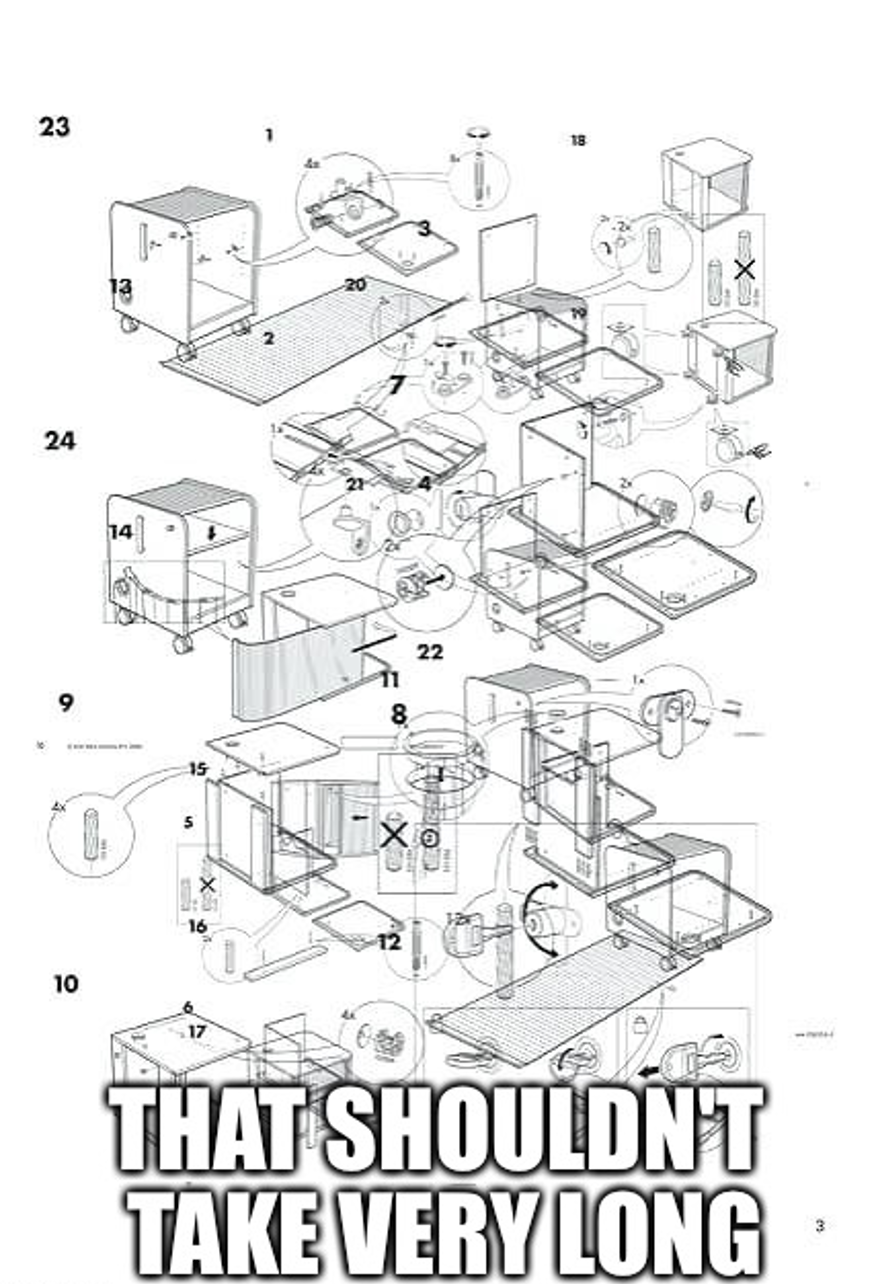
We have all had these bad experiences. Common ones include trying to complete confusing forms, living in a poorly designed house, navigating a phone menu and not being unable to reach a real person or struggling to find information on a website. Believe it or not, but at one point, Disney’s website had such poor UX that 20% of people inadvertently booked a reservation for a resort at Disneyland (in California) when they were planning to go to Disneyworld (in Florida)*. Likewise, most of us will probably have had a terrible experience trying to follow assembly instructions.
A good experience can easily go unnoticed. Good UX happens when there are no friction points. The person can accomplish what they set out to do in the way they expected. The experience is practical and easily forgettable. Examples might include easily finding the light switch in a hotel room or finding a water glass in the first cabinet you open at a friend’s house.
A great experience exceeds expectations and might even delight us. The person can easily accomplish what they set out to do and more. Imagine the experience of flying first class with comfortable seats, ample leg room and a private car that picks you up at the gate and drives you to your connecting flight.
 Image from 'These First Class Airplane Seats Are as Decadent As It Gets' – cntraveler.com
The Cost of Bad UX
- Costly rework
- Increased need for support
- Increased likelihood of human error
- Reputational risk
- Lost clients and users
- Confusion & misunderstandings
- Frustration and stress on all sides
Time-consuming or error- prone tasks lead to productivity issues and other lost revenue. A person might blame themselves for the bad experience, believing that the outcome was due to their lack of knowledge or experience OR they might tell others about their bad experience, publicly, or on social media and cause reputational damage.
The Benefit of good UX
Great experiences can produce the opposite outcome of bad experience.
- Minimize development costs
- Reduce wasted resources
- Reduced need for instructions, training, and customer support
- Improved customer loyalty and retention
- Delight
Great experiences can help save time, reduce errors, and even help people make better decisions. This can increase productivity and reduce expenses. People notice great experiences too. They might also tell others about their great experience and become loyal brand advocates and returning users.
Creating a good experience
Creating a good experience for someone requires understanding their goals, needs and behaviour (user needs and requirements). Experiences don’t exist in vacuums: context and constraints need consideration. There are also the business’ mission, goals and requirements (business goals). Available information including documentation, data, systems and processes need to be factored (information).
Peter Morville, a designer and information architect who has been working in the field since 1994, originally devised a three-circle diagram to convey how this relates to Information Architecture (IA), but it equally applies to UX.
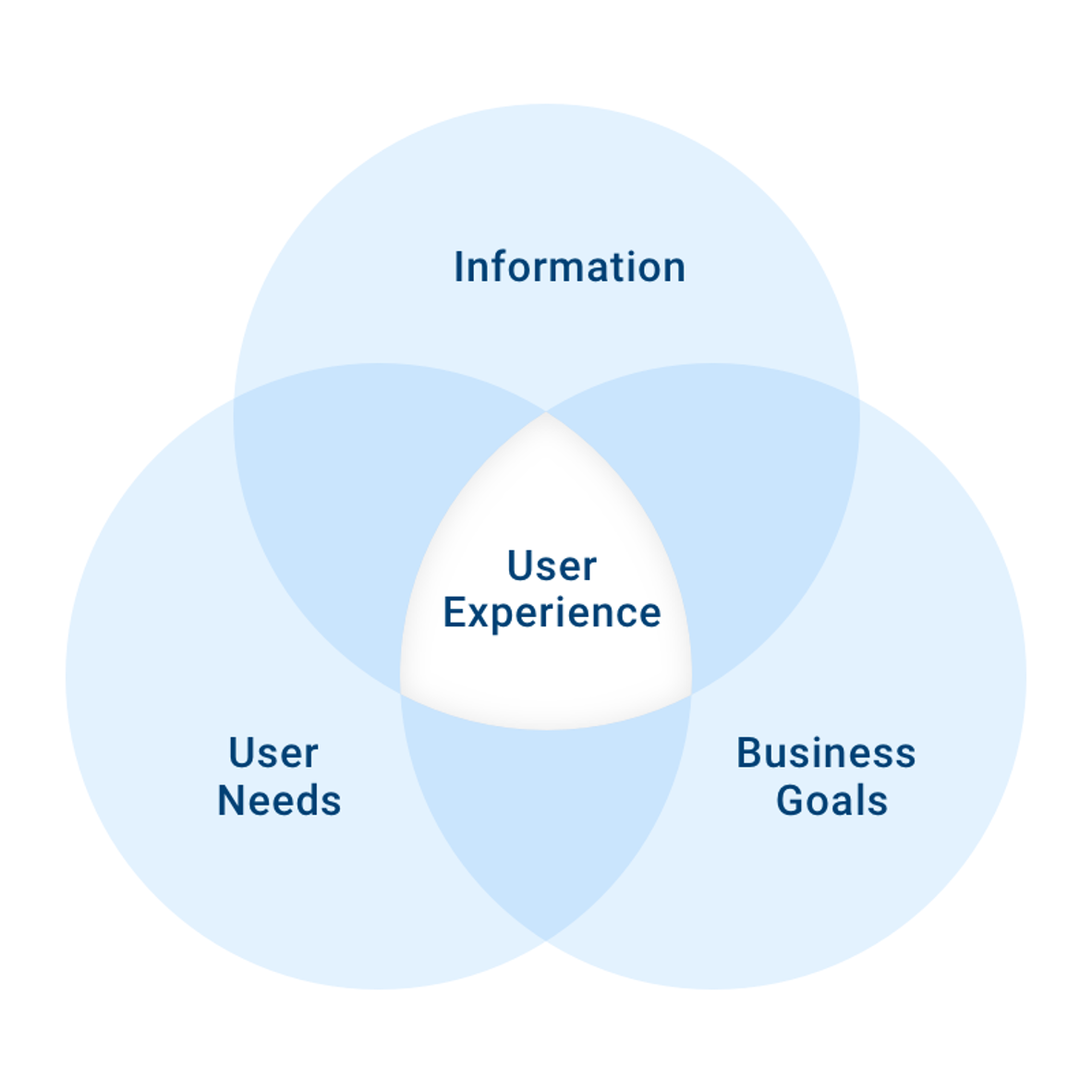 Image from 'User-Centered Design: Process and Benefits' – uxplanet.org
UX Process and methodology
UX processes and methodology are fundamentally an iterative problem-solving process where time is spent understanding and defining the problem and evaluating the solution.
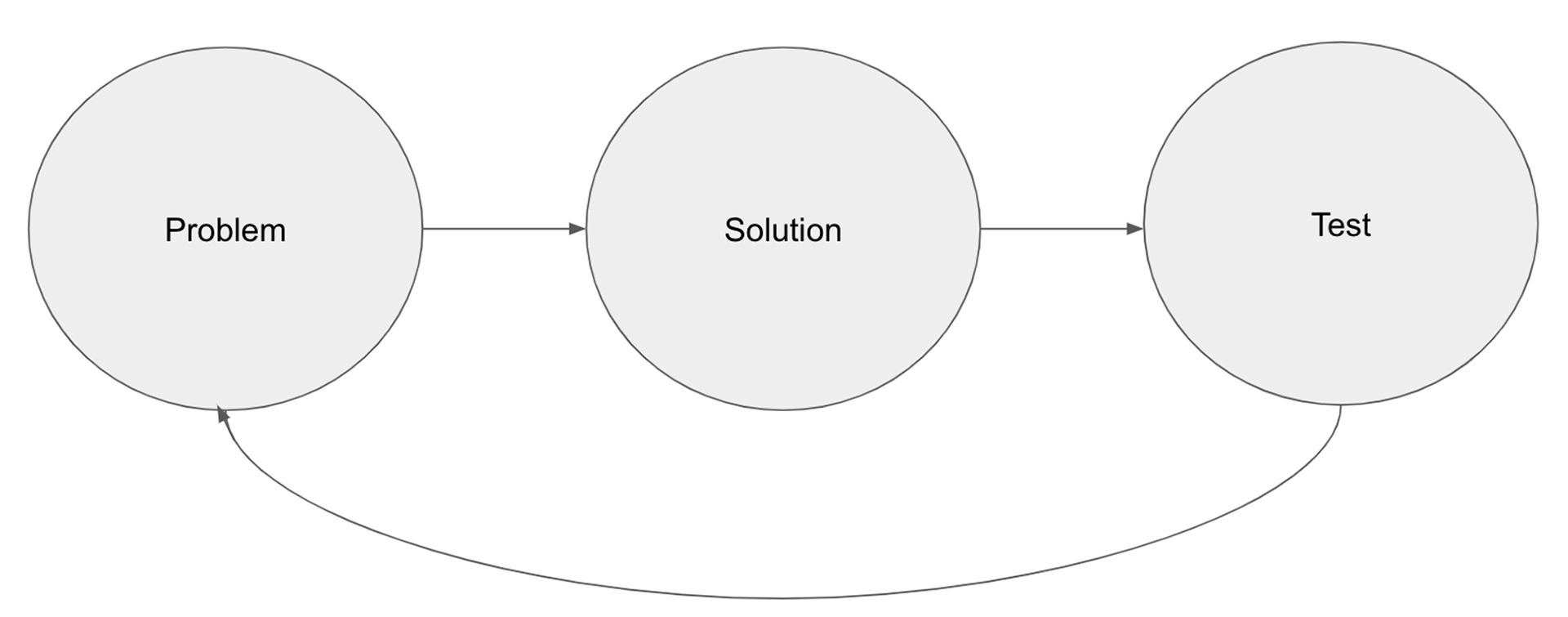
A successful design begins with understanding the right problem. If a design fails to meet the needs of the audience, it will ultimately fail no matter how aesthetically beautiful the design is or how well the solution technically works. Imagine that we are having low student engagement with orientation. We can think of this as the “what” of our problem. In order to solve our problem, we need to look at the “why” we have low student engagement. Do students know when orientation is happening? Do students understand what orientation is and do they see value in attending? Is orientation scheduled at a time and place that doesn’t work for most new students? Getting to the right problem means working to understand the problem in a larger context that includes our audience as part of the problem space. In order to create a great user experience, our audiences’ needs and their context must be considered in defining the problem space.
The process is iterative to help get us to a “good enough” solution. This is not about getting to the perfect solution.
One of the basic rules of the universe is that nothing is perfect. Perfection simply doesn't exist… without imperfection, neither you nor I would exist.
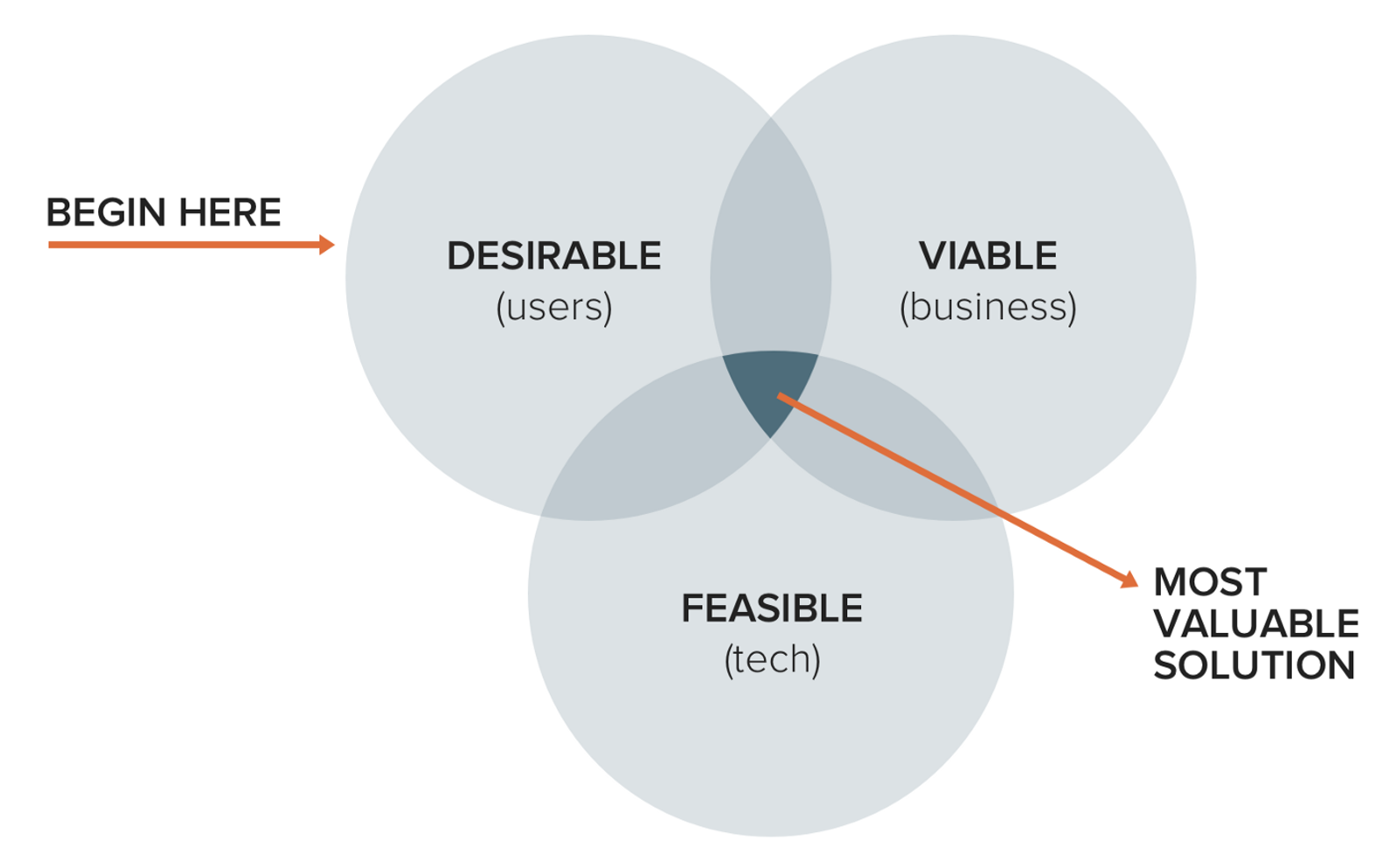 Image from 'What is User-Centered Design?' – medium.com
UX activities don’t need to be time consuming but investing in a UX approach will mitigate risk and save time.
Basic steps for UX
- understand what people need (including context & constraints)
- devise a way to address those needs
- evaluate how well the solution works & where it needs improvement
- repeat


