

Why storytelling still matters, according to alumna Jennifer Hollett


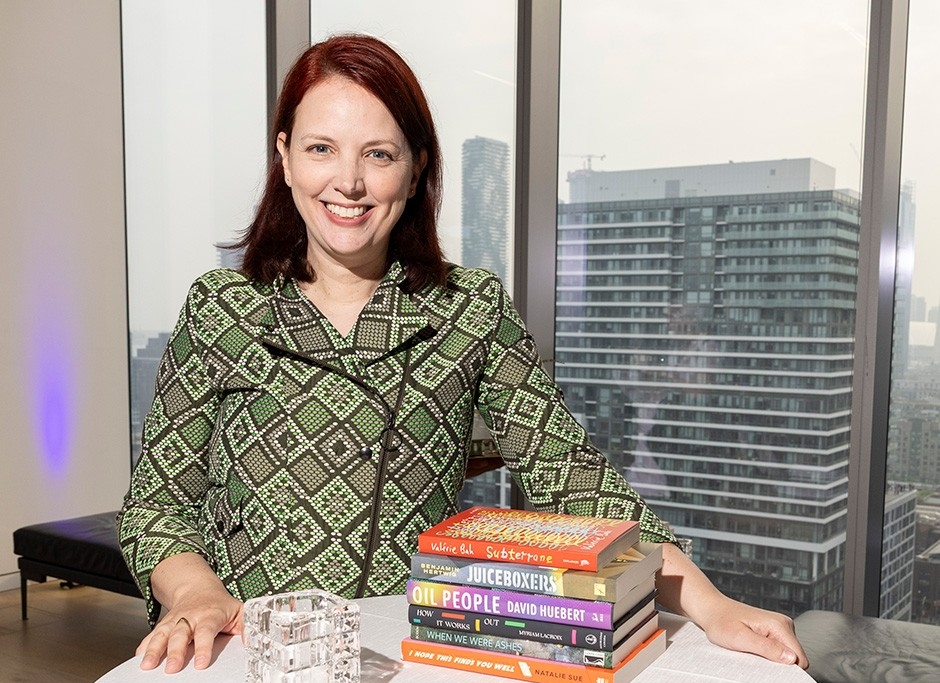 “Part of my job is to figure out how AI can play a role in our newsroom, while still bringing delight, surprise and fun to our magazine.” | Photo: Kennedy Pollard
You could say there is no shortage of worries in the media for Jennifer Hollett, BA 97 — the rise of artificial intelligence, the decline of print readership or the constant churn of heavy news headlines. But as executive director of The Walrus, one of Canada’s most respected news organizations, she is focused on strong, meaningful storytelling.
“I read a lot of Marshall McLuhan when I was at Concordia,” Hollett says with a laugh. “I call him my patron saint. The medium matters.”
That idea has guided much of her work since she joined The Walrus in 2020. “What I've been working really hard at is getting our team, our community and the public at large to see The Walrus beyond a magazine.”
That goal has been largely accomplished. Today, The Walrus is a multiplatform journalism organization, with its website publishing in-depth stories on politics, culture, technology and education. Many of those stories — led by editor-in-chief and fellow Concordia alum Carmine Starnino, BA 94, MA 01 — reach readers through a widely read e-newsletter, a growing slate of podcasts and speaker-led events across Canada, including a long partnership of public talks with Concordia, all designed to encourage thoughtful public conversations.
As a registered charity, the organization recently made a rare move by acquiring podcasting production service Lead Podcasting. Hollett says the decision grew out of an existing collaboration on sponsored audio projects for clients such as the Mount Pleasant Group and the Government of Canada, but she wanted to deepen their ties.
“The best podcasts are similar to magazine articles,” she says. “They can lend themselves to long-form, in-depth storytelling. This acquisition aligns with what we do at The Walrus. We’re not reporting breaking news — we’re helping Canadians make sense of it all.”
Leading a newsroom in a changing media landscape
Hollett began her career as a host on CTV and as a MuchMusic VJ before moving into broadcast journalism with CBC and CTV. She later worked at then-Twitter Canada as head of News Partnerships, gaining first-hand experience with how audiences consume news across platforms.
When she joined The Walrus as executive director, Hollett brought her wide-ranging media experience to work, guiding the organization through the challenge of sustaining ambitious journalism in a shifting media landscape.
The Walrus has consistently earned top honours at the National Magazine Awards (NMA) and the Digital Publishing Awards. Most recently, the magazine took home gold at the 2025 NMAs for its story “If He Wins: How Poilievre Will Change Canada.”
Still, Hollett — who was named one of Concordia’s 50 Under 50 Shaping Tomorrow in 2021 — knows the challenges facing the industry are real. A recent Reuters Institute report found that just 14 per cent of Canadians now read a print-based news source, down from 33 per cent in 2017.
“News fatigue is real, and so is AI in journalism,” she says. “Part of my job is to figure out how AI can play a role in our newsroom, while still bringing delight, surprise and fun to our magazine.”
For Hollett, the throughline — from her Concordia days in communication studies and journalism to her current leadership role — is clear.
“It all comes down to stories,” she says. “I don’t think there will be any replacement for telling great stories that connect and bring people together.”