

notice
From song into stone and glass by Dr. Steven Stowell


A peer-reviewed article by Dr. Steven Stowell
In late-medieval Florence, the confraternity of the Compagnia della Madonna di Orsanmichele met every weeknight in the oratory of Orsanmichele to sing devotional songs directly in front of a painting of the Virgin and Child that was believed to be capable of performing miracles. This oratory was once a grain market, which over the course of the fourteenth century was transformed into a grain repository and a lavishly-decorated and important devotional location, filled with sculptures, frescos and stained-glass windows, thus becoming a veritable feast for the senses. Focusing specifically on the windows, this article will examine the relationship between the visual environment and the devotional rituals practiced by the Compagnia. I will argue that the visual imagery of the windows resonated with the themes, emotions and desires expressed in the laude, and in so doing, encouraged devotees to reflect on their individual morality in such a way that might persuade the Virgin to protect the well-being of the city, and specifically their access to nourishment. I will also show how the windows draw attention to the power of repeated vocalizations and prayer, thus making the windows literally about the kinds of acts being performed by confraternity members.
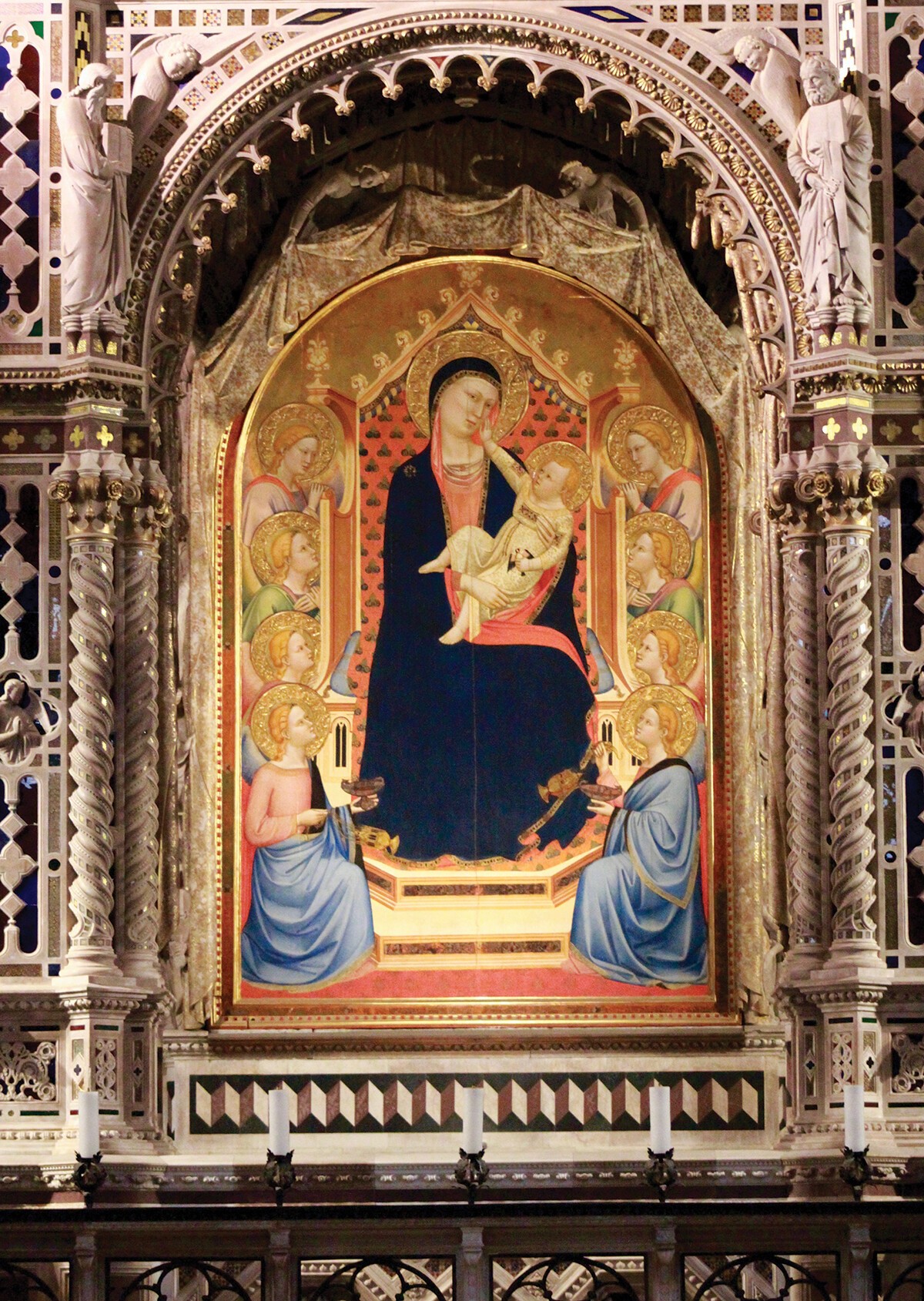 Bernardo Daddi, The Virgin and Child Enthroned with Eight Angels, c. 1347, Florence, Orsanmichele. Shown within: Andrea di Cione (Orcagna) and workshop, Tabernacle of the Virgin, c. 1359, Florence, Orsanmichele. Photo by Steven Stowell