

Blog post
Naming Matters: missing vs. enforced disappearance


Words shape how we understand violence and justice. In Canada, the disappearance and deaths of Indigenous women, girls, and Two-Spirit people are often referred to as ‘missing.’ In Colombia, similar abuses—affecting both Indigenous and non‑Indigenous persons—are referred to as “enforced disappearance.”
Though the contexts differ, international human rights obligations are the same for both states. However, Canada is yet to acknowledge that in addition to “missing” Indigenous persons, there are also cases of “enforced disappearances.” Meanwhile, Colombia, despite challenges and shortcomings, has acknowledged and implemented its obligations in both matters.
This raises urgent questions: What are the differences and impacts of both concepts – “missing” and “enforced disappearances”? What role can art play in engaging the public with the suffering of families still searching for loved ones? How do terms like “missing” and “enforced disappearance” overlap, and how do they diverge in practice?
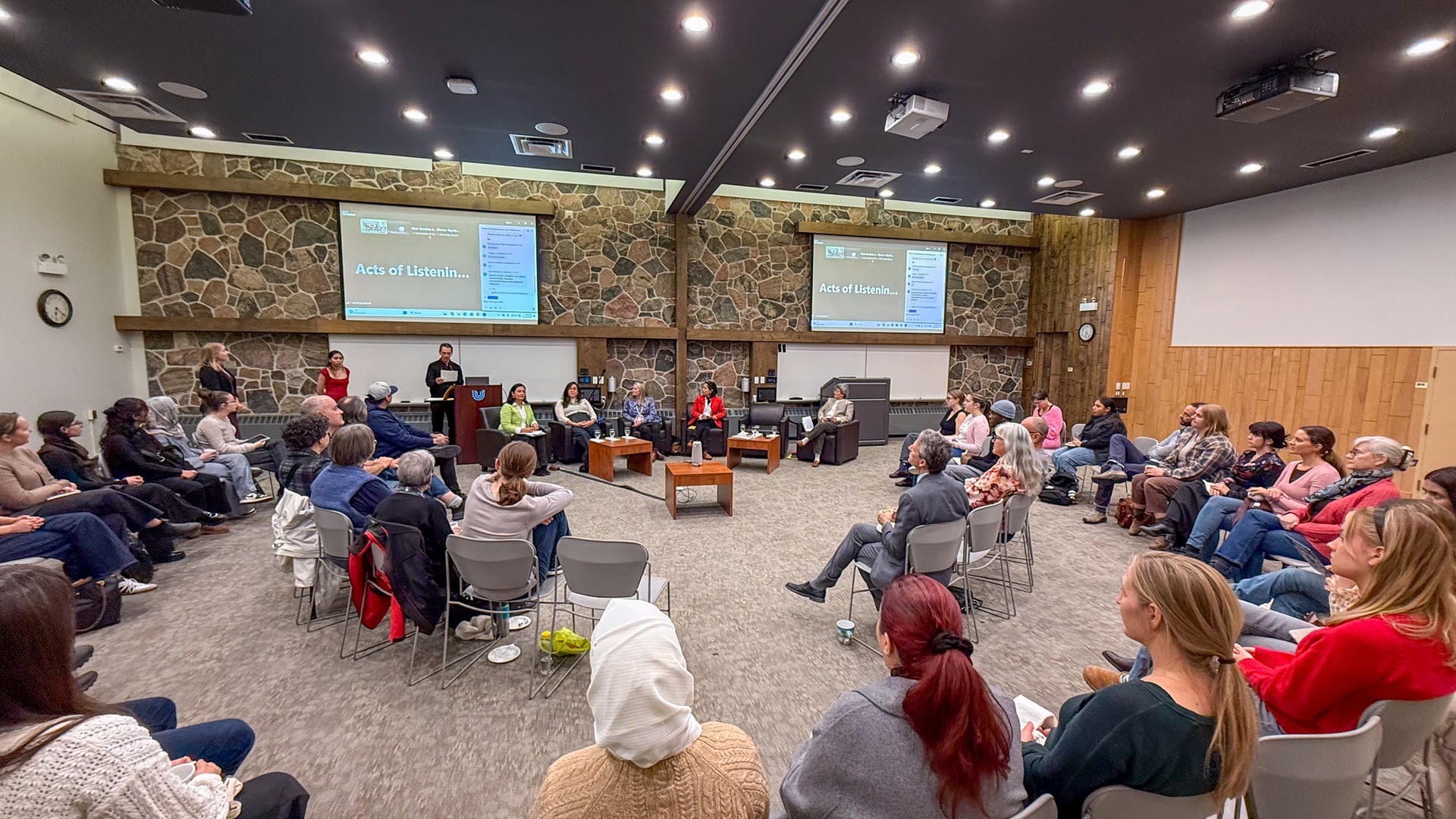
These questions were at the heart of a knowledge‑exchange event held on November 13, 2025, at United College at the University of Waterloo. The panel brought together Canadian and Colombian experts and artists to share experiences and insights.
The event marked the first knowledge‑exchange activity of ORLI (Orchestrating Listening Situations in Restorative Transitional Justice Initiatives), a SSHRC‑funded project exploring how institutions and artist‑educators in Canada and Colombia create spaces for victims, offenders, and communities to practice what could be termed restoratively oriented ways of listening.
Panelists and respondents included:
· Kimberley Murray, former Independent Special Interlocutor for Missing Children and Unmarked Graves and Burial Sites associated with Indian Residential Schools (Canada)
· Luz Marina Monzón, founding director of Colombia’s Unit for the Search of People Deemed Disappeared
· Artist Constanza Ramirez, known for flashmobs highlighting enforced disappearance in Colombia
· Mohawk writer Sara General, director of Indigenous Studies at United College
· Dr. Luis C. Sotelo (Acts of Listening Lab - Concordia University and ORLI’s principal investigator)
The discussion was chaired by Dr. Nancy Tapias (Human Rights, United College) and co-convened by her and Dr. Luis C. Sotelo. Dr. Tapias is a co-investigator in the ORLI project.
Dr. Kristina Llewellyn (McMaster University), also a co‑investigator in the ORLI research grant, was in attendance. More than sixty people participated, some of them joining remotely from Colombia.