

March 27, 2026 the Centre for the Study of Learning and Performance (CSLP) hosted the Japanese Confectionery: Nerikiri Workshop, organized by Concordia undergraduate students Sango Nakakuni and Chinatsu Mikami, along with CSLP student affiliates Ryuichi Suzuki, Vitor Yano, and Aya Halliday, under the Centre’s EmpowerGrad initiative and in collaboration with Concordia Japanese Language and Culture Community.
Engaging with the art of Japanese confectionery: Nerikiri workshop


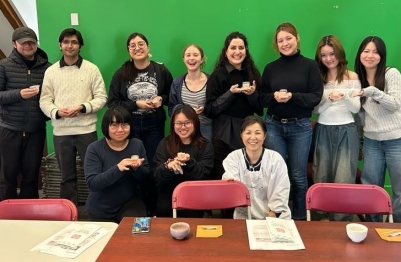 The workshop welcomed 20 Concordia undergraduate and graduate students from a range of programs to participate in a hands-on exploration of nerikiri, a traditional form of Japanese confectionery.
With support from the Concordia Council on Student Life (CCSL), the organizers invited KotoAn Wagashi, a Montreal-based nerikiri business run by Mr. Daisuke Tsutsumi and Ms. Misao Tsutsumi. The workshop was offered in two sessions, allowing participants to learn about nerikiri and engage directly in the confectionery-making process.
Ms. Misao began the session by introducing the cultural significance of nerikiri in Japan, where it is often enjoyed with matcha and reflects seasonal aesthetics through delicate designs and colors. She explained the key ingredients—sweet bean paste and glutinous rice flour—as well as the tools and techniques used in the process. To welcome the arrival of spring, she demonstrated a cherry blossom-inspired nerikiri and guided participants step by step through kneading, shaping, and detailing their own creations. As participants worked, the room grew quiet, filled with focused attention on the meticulous craft.


After completing their own pieces, participants also enjoyed a selection of nerikiri prepared by KotoAn Wagashi, served with green tea. This created a relaxed space for interaction, appreciation, and shared enjoyment among participants and organizers.
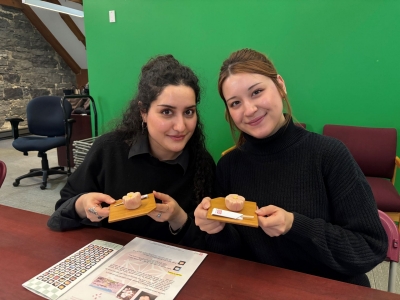 The event attracted Concordia students from a wide range of cultural backgrounds, many of whom had limited prior exposure to Japanese language and culture, fostering curiosity, intercultural awareness, and engagement.
KotoAn Wagashi, which has hosted similar workshops at institutions across Quebec, expressed appreciation for the initiative, noting that this was their first collaboration with Concordia University.
With support and mentorship from CSLP student affiliates, the event was also led by two exchange students from Japan, Sango Nakakuni and Chinatsu Mikami, who organized the workshop planning and coordination. They were involved in all stages of the process—from initial outreach and planning meetings to scheduling, promotion, and on-site facilitation.
Sango reflected on her experience: “It was a great experience to start from scratch. At first, I didn’t know how to contact the guest or manage the schedule, but I learned through the process and was happy to finally host the event. I was especially happy to see participants engaging with such enthusiasm and to witness connections forming through Japanese culture.”
Chinatsu added: “I was in charge of coordinating participants, so I learned how to communicate with them and send reminders about the event. It was also meaningful that we were able to offer this workshop accessibly to Concordia students without a participation fee.”
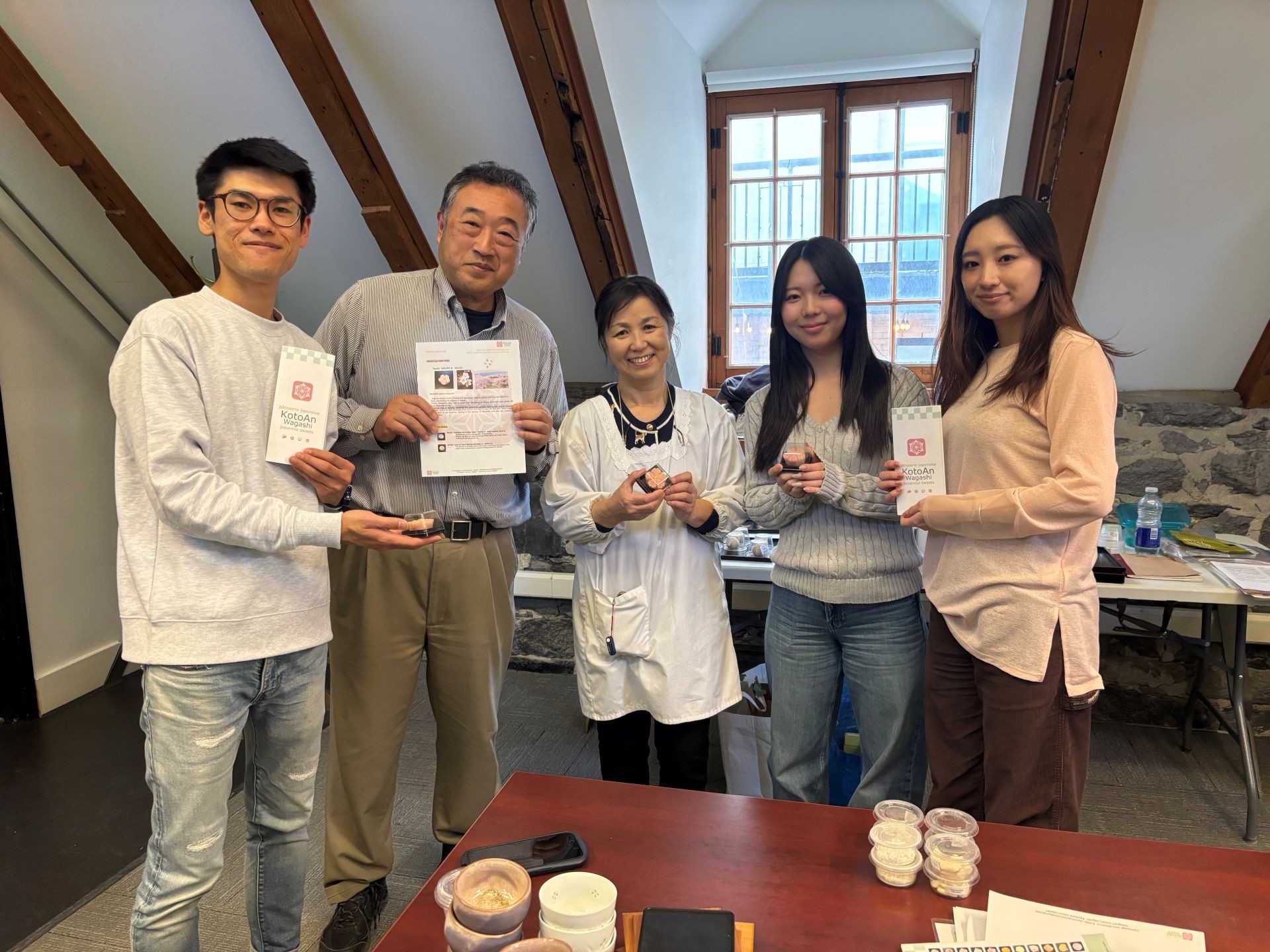 Ryuichi Suzuki, Mr. Daisuke, Ms. Misao, Chinatsu Mikami and Sango Nakakuni from the left.
With the support of CSLP and the Concordia Council on Student Life, the workshop—from planning to implementation—created a meaningful opportunity for cultural engagement and community connection.
This event was funded by funded by the Concordia Council on Student Life (CCSL).
Story submitted by Ryuichi Suzuki, Aya Halliday & Vitor Yano.
Photos by Ryuichi Suzuki
S’engager dans l’art de la confiserie japonaise : atelier de nerikiri
Le 27 mars 2026, le Centre d’études sur l’apprentissage et la performance (CEAP) a accueilli l’atelier Japanese Confectionery: Nerikiri Workshop, organisé par les étudiantes de premier cycle de Concordia Sango Nakakuni et Chinatsu Mikami, ainsi que par les affilié·e·s étudiant·e·s du CEAP Ryuichi Suzuki, Vitor Yano et Aya Halliday, dans le cadre de l’initiative EmpowerGrad du Centre et en collaboration avec la Concordia Japanese Language and Culture Community. L’atelier a réuni 20 étudiant·e·s de premier cycle et des cycles supérieurs de Concordia, issu·e·s de divers programmes, pour une exploration pratique du nerikiri, une forme traditionnelle de confiserie japonaise.
Avec le soutien du Concordia Council on Student Life (CCSL), les organisateurs ont invité KotoAn Wagashi, une entreprise montréalaise de nerikiri dirigée par M. Daisuke Tsutsumi et Mme Misao Tsutsumi. L’atelier a été offert en deux séances, permettant aux participant·e·s de découvrir le nerikiri et de s’initier directement au processus de fabrication.
Mme Misao a débuté la séance en présentant la signification culturelle du nerikiri au Japon, où il est souvent dégusté avec du matcha et reflète l’esthétique des saisons à travers des formes et des couleurs délicates. Elle a expliqué les ingrédients principaux — pâte de haricots sucrée et farine de riz gluant — ainsi que les outils et techniques utilisés. Pour souligner l’arrivée du printemps, elle a démontré la création d’un nerikiri inspiré des fleurs de cerisier et a guidé les participant·e·s, étape par étape, dans le pétrissage, le façonnage et les détails de leurs propres créations. Au fil de l’activité, la salle s’est faite silencieuse, remplie d’une attention soutenue portée à ce travail minutieux.
Après avoir complété leurs créations, les participant·e·s ont également dégusté une sélection de nerikiri préparée par KotoAn Wagashi, servie avec du thé vert. Ce moment a permis de créer un espace détendu propice aux échanges, à l’appréciation et au partage entre participant·e·s et organisateurs.
L’événement a attiré des étudiant·e·s de Concordia provenant d’une grande diversité de contextes culturels, dont plusieurs avaient peu d’exposition préalable à la langue et à la culture japonaises, favorisant ainsi la curiosité, la sensibilisation interculturelle et l’engagement. KotoAn Wagashi, qui a déjà offert des ateliers similaires dans plusieurs établissements au Québec, a exprimé sa reconnaissance pour cette initiative, soulignant qu’il s’agissait de leur première collaboration avec l’Université Concordia.
Avec le soutien et l’accompagnement des affilié·e·s étudiant·e·s du CEAP, l’événement a également été dirigé par deux étudiantes en échange du Japon, Sango Nakakuni et Chinatsu Mikami, qui ont assuré la planification et la coordination de l’atelier. Elles ont participé à toutes les étapes du processus, de la prise de contact initiale et des réunions de planification à la programmation, à la promotion et à l’animation sur place.
Sango a partagé son expérience : « C’était une excellente expérience de partir de zéro. Au début, je ne savais pas comment contacter l’invité ni gérer l’horaire, mais j’ai appris au fil du processus et j’étais très heureuse de pouvoir enfin organiser l’événement. J’étais particulièrement heureuse de voir l’enthousiasme des participant·e·s et de constater les liens qui se créaient autour de la culture japonaise. »
Chinatsu a ajouté : « J’étais responsable de la coordination des participant·e·s, ce qui m’a permis d’apprendre à communiquer avec eux et à envoyer des rappels pour l’événement. Il était également important pour nous de pouvoir offrir cet atelier gratuitement aux étudiant·e·s de Concordia. »
Grâce au soutien du CEAP et du Concordia Council on Student Life, cet atelier — de la planification à sa mise en œuvre — a constitué une occasion significative de mobilisation culturelle et de création de liens communautaires.
Cet événement a été financé par le Concordia Council on Student Life (CCSL).
Texte soumis par Ryuichi Suzuki, Aya Halliday et Vitor Yano.
Photos : Ryuichi Suzuki