

Date & time
Friday, May 29, 2026
11 a.m. – 1 p.m.
11 a.m. – 1 p.m.
Registration is closed


Registration is closed
This event is free.
4TH SPACE
J.W. McConnell Building
1400 De Maisonneuve Blvd. W.
Yes - See details
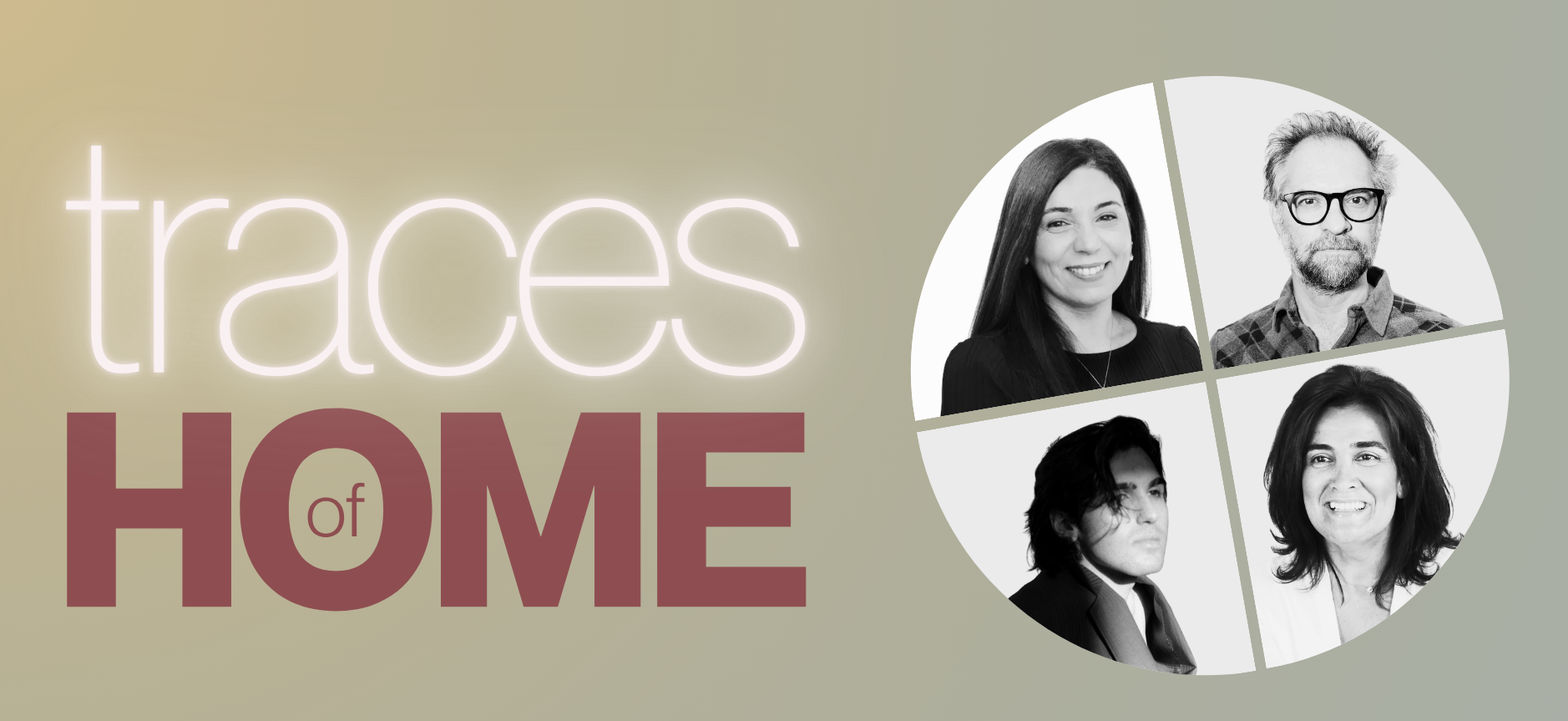
As part of the Unveiling Equity series, in partnership with CSLP, CPN-PREV, and the Indigenous Healing Knowledges Concordia Research Chair, this event invites a critical reflection on loss, memory, and resistance amid the ongoing demolition of villages in South Lebanon. Beyond physical destruction, the conversation centers the erasure of lived histories, homes that held childhoods, photographs, books and everyday life.
Framed as a “genocide of memory,” it asks: what does it mean to lose not only land, but the intimate archives of belonging? How do communities grieve when the material anchors of memory are erased?
An oral history dimension grounds the discussion across three generations: a daughter remembering a father who passed before witnessing the demolition of the home he built in his village; a son carrying the memory of a his Palestinian father; and a young man holding onto his grandparents’ call to return to Bint Jbeil as home.
The conversation also opens into an open mic, inviting participants to share their own stories of loss and grief, creating a collective space of witnessing. Through decolonial perspectives, speakers explore storytelling and remembrance as forms of resistance, and asks how dignity, identity, and connection to place can be reclaimed in the face of erasure.
How can you participate? Join us in person or online by registering for the Zoom Meeting or watching live on YouTube.
Have questions? Send them to info.4@concordia.ca

A co-founder and managing editor of Daraj Media, an independent media platform founded in 2017 in Beirut focusing on covering corruption and underreported stories.
Diana is a Lebanese journalist and documentary producer/director with almost 35 years of experience in media. Her coverage included hot zones in Lebanon, Afghanistan, Iraq, Yemen,Iran, Syria and many more. Diana has more than 50 hours of documentaries that tackled socio-political issues in the region and around the world covering :Women , minorities , human interest stories and many other titles addressing controversial issues that are underreported in Lebanon and in the Arab region. A columnist and a media & Gender trainer. Education: graduated from Lebanese University in 1991 (Faculty of Journalism).

French Canadian Palestinian, Guillaume Jabbour centers his practice around sound, research-creation and community engagement. He holds an MA in Media Studies, is currently pursuing a SSHRC-funded PhD in Communication Studies at Concordia University in Tiohtià:ke/Montreal. His research-creation project involves engaging with the lived experience of Palestinians, wherever they may be, through music, sound and radical acts of deep listening. Jabbour is a member of the Resisting Colonizations collective, a multidisciplinary academic and community working group, and is a Trudeau Scholar. As a musician and community sound artist, he regularly performs folk music and facilitates workshops exploring the beauty and power of sound.

Jad Orphée Chami is an artist-researcher and composer from Beirut, based in Tiohtià:ke/Montreal. A recipient of the Antje Bettin Intercultural Fund Prize, he was nominated at the age of 21 for the Iris Prize for Best Original Music for Antigone, the film that represented Canada at the 92nd Academy Awards. The SOCAN Foundation awarded him first place in its Emerging Screen Composers Competition in the documentary category for Bleu Tango by Marion Chuniaud.
He composes original scores for award-winning fiction, documentary, and animated films that have been selected, screened, and distributed in Quebec and internationally. These include the feature film Dorchester: au cœur de la mêlée, produced by Nemesis Films for Radio-Canada, and the animated short Bedroom People by Vivien Forsans, selected at the Annecy International Animation Film Festival. Also a performer, he was invited to take part in the iconic work This Situation by Tino Sehgal, presented at the Musée d’art contemporain de Montréal. He has been commissioned by the École de danse contemporaine de Montréal and MAI – Montréal, arts interculturels, and collaborates with artists such as Kimura Byol Lemoine, Moe Clark, Sona Pogossian, and Hoor Malas. Together with Noël Vézina, he leads the project How to Say ‘Longing’.
Supported by the Conseil des arts et des lettres du Québec, he is currently preparing his first EP, blending Levantine jazz with baroque pop and film music, produced by Adrien Poulin. He holds a Bachelor’s degree in Music from Concordia University and a Master’s degree in Arts, Technologies, and Creation from Paris VIII and Paris Nanterre Universities. He is currently pursuing a PhD in Art Studies and Practices at the Université du Québec à Montréal. His practice-based research explores the act of bearing witness in the face of grief in exile. He has been invited to participate in major international academic gatherings, including the conference Making Gender in Opera: East Meets West at the University of Oxford and the Oral History Research Summer Institute at Columbia University.

She is a social justice advocate, storyteller, and scholar working from a decolonial perspective at the intersection of forced separation, memory, and resistance. For over 25 years, she has challenged colonial systems of care that separate children from their families and communities, centering instead the lived experiences, knowledge, and dignity of those impacted.
Grounded in Indigenous ethics and oral history, she engages in research-creation and performance that resist dominant narratives framing separation as rescue. Her work on preventing violence centers the voices of those most silenced and most impacted by violence, insisting that prevention must begin with their lived realities, testimonies, and knowledges rather than institutional framings alone.
She is the Research Coordinator at the Centre for the Study of Learning and Performance (CSLP) and the Associate Director of CPN-PREV.
Description: A panel discussion exploring what it means to not only lose land, but also archives and memories in acts of violence, and how storytelling is an act of resistence and reclamation.
Organized by: Centre for the Study of Learning and Performance (CSLP); Canadian Practitioners Network for the Prevention of Extremist Violence (CPN PREV); Indigenous Healing Knowledges Chair
Participants:
Zeina Ismail-Allouche
Diana Moukalled
Guillaume Jabbour
Jad Orphée Chami
With: 4th Space
Spectrum ID: