

Date & time
Monday, January 26, 2026
2:45 p.m. – 3:45 p.m.
2:45 p.m. – 3:45 p.m.


Christopher Panaritis
This event is free
John Molson Building
1450 Guy St.
Room 6.425
Yes - See details
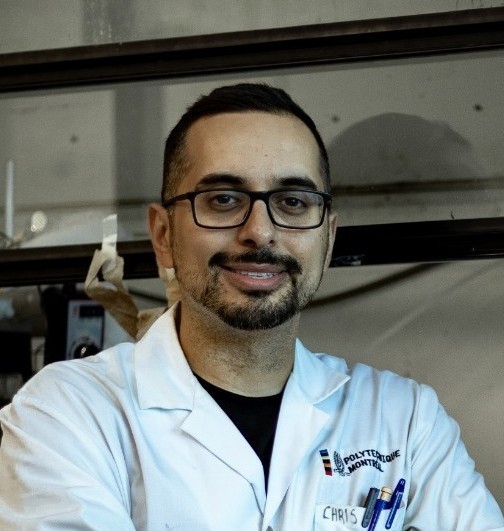 Christopher Panaritis
Global carbon dioxide (CO2) emissions have reached record highs resulting in atmospheric CO2 concentration of 54% above the industrial revolution (430 ppm vs 280 ppm). While globally we are at the brink of surpassing the 1.5 °C threshold set out by the Paris Climate Agreement to avoid irreversible climate impacts, there remains a critical opportunity to curb emissions. While society continues to rely on carbon-based fuels to power transportation, heavy industry and other sectors, the pace of the energy transition lags behind what is needed to meet climate targets.
Replacing fossil fuels with sustainable sources such as e-fuel (i.e. fuel derived from renewable electricity) treats CO2 waste as a resource to produce low-carbon products to reduce emissions without compromising energy needs. Among CO2 utilization pathways, the Power-to-liquid (PtL) process is the most scalable, as it converts CO2 with H2 into energy dense e-fuels. The PtL process encompasses the reverse water gas shift (RWGS) where CO2 is reduced into CO and H2O, followed by the Fisher-Tropsch (FT) to synthesize CO and H2 into hydrocarbon e-fuels ranging from gasoline (C5-C12) to jet fuel (C8-C16). At Carbon Exel, with collaboration with Polytechnique Montreal, my research has led the efforts to develop catalysts for both RWGS and FT reactions. Fe and Cu nanoparticles activate CO2 and H2 at temperatures as low as 300 °C (typical, 600 °C), providing a cheaper alternative to precious metals. As for the FT, Cu doped on Co/Al2O3 increased the selectivity to C5+ hydrocarbons. While there has been advances in catalytic development, the overall process remains energy intensive due to the high reaction temperature and multiple unit steps. Thus, to circumvent these limitations, we are employing process intensification strategies such as sonochemistry and membrane reactors. With these advances, Carbon Exel aims to increase energy efficiency by 50% and decrease the cost associated with producing low-carbon fuel.
During this seminar, Dr. Panaritis will present his start-up Carbon Exel and provide insights into the technology they are developing, which includes the synthesis, design and testing of nano-catalytic systems and concepts of process intensification incorporating ultrasound and membrane reactors, and machine learning to accelerate material design. This innovation significantly reduces emissions, costs, and space requirements, paving the way for more efficient and scalable carbon and hydrogen handling for sustainable fuel production. Furthermore, Dr. Panaritis will discuss his journey from academic researcher to entrepreneurship and how both worlds can be combined.
Chris Panaritis is the CEO and co-founder of Carbon Exel Inc. and a Post-doctoral entrepreneur fellow within the EPIC team led by Prof. Boffito at Polytechnique Montreal, where is he leading the technological development of his start-up, with five students on the team. He is the recipient of the MITACS Entrepreneur Fellowship and MITACS Business Strategy V1 Studio Lab-2-Market. Motivated by both the breakthroughs and challenges encountered during his research as an academic scholar, he founded Carbon Exel to commercialize a single-step reactor system bypassing the traditional multi-unit operation.
Beside his interest in CO2 conversion, his multidisciplinary expertise spans heterogeneous catalysis, nanotechnology, electrochemistry, process intensification, theoretical DFT (Density Functional Theory) simulations and entrepreneurship.
Dr. Panaritis has published/submitted 16 scientific articles, has co-authored 1 book chapter and 1 patent-pending. He has presented his work at over 20 national and international conferences and has pitched his startup in front of more than 10 professional audiences.
© Concordia University