

Date & time
Tuesday, March 10, 2026
12 p.m. – 2 p.m.
12 p.m. – 2 p.m.


Andrea Arias Gutierrez, Natasha Artokun, Karen Ayass, Teprine Baldo, Leanne Mckella Duncan, Amanda-Faith Noble-Gelinas, Deanna Gene , Maya Goss, Philippe Hamel, Lily Hutchison, Kelly Ann Kyle, Anthony Lemelin, Arielle Limoges, Juana Gomez, Viviane Macedo de Oliveira, Blythe Middlebrook, Sophie Mortimer, Maya Oliva-Kreysa, Gabriella Oliveira Trajano, Thomas Valle Painter, Kat Plamondon, Chloe Robichaud, Stephanie Schmidtke, Cristina Sciortino, and Misha Solomon
This event is free and open to the public but please register
Loyola College for Diversity & Sustainability/Sustainability Research Center & School of Health
4TH SPACE
J.W. McConnell Building
1400 De Maisonneuve Blvd. W.
Yes - See details
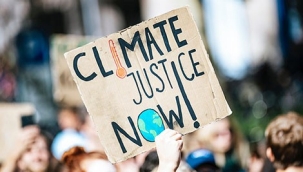
Students from HENV 680: Advanced Seminar in Environmental Science present 3-minute-thesis style arguments on topics related to sustainability and environmental sciences. Students presenting are from the Department of Geography, Planning and Environment - Master's of Environmental Assessment, Graduate Diploma in Environmental Assessment, Master's of Science, Geography, Urban and Environmental Studies PhD, Individualized Graduate Studies Master’s Program, and Humanities (CISSC) PhD Programs.
The United Nations definition of genocide is incomplete. The destruction of a group can come through other means that are not directly seen as killing. This presentation opens the discussion to redefining the term genocide to include ecocide, cementing the destruction of the environment as an international crime.
Climate change has been an ongoing global challenge for decades and has negatively impacted public health. Heat-related illnesses, arising from heat stress, have affected vulnerable populations such as low-income families, children, outdoor workers, and elderly people. Adaptive climate strategies are needed to prevent and mitigate future heat-related health risks.
Campus seed libraries are emerging as sustainability infrastructure that supports food security, biodiversity, and community resilience. Using literature on seed sovereignty and food justice, this presentation argues that equitable access to seeds strengthens social-ecological systems, public health, and sustainability, positioning seed access as fundamental to just and resilient food futures.
Brazilian wildlife rescue centers are overcrowded with healthy capuchin monkeys from the illegal pet trade. Lacking essential survival skills, these vital seed dispersers face lifelong captivity. Implementing specific rehabilitation protocols to teach them how to survive enables successful reintroduction, effectively restoring forest ecosystems and saving the lives of these animals.
Recycling cannot offset accelerating plastic production. The Great Pacific Garbage Patch symbolizes a system where waste outpaces accountability. With under 10% recycled and production set to triple by 2060, responsibility must shift from consumers to corporations through caps, reporting mandates, and producer accountability for pollution and cleanup.
Canada’s 2019 Impact Assessment Act prioritizes efficiency, limiting cumulative effects analysis. Using the Webequie Supply Road, Highway 413, and Cedar LNG projects, this presentation demonstrates how road impacts are compartmentalized within project-level.
The circular economy is promoted as a solution to electronic waste, yet health inequities persist in informal recycling sectors. With 62 million tonnes generated annually and only 22% formally recycled, toxic exposure remains concentrated in marginalized regions. I call for integrating environmental justice and planetary health into circular economy transitions.
Due to atmospheric warming, extreme heat events are becoming more frequent and severe globally. Heat events carry significant mortality risks, with risks being more severe for low-income renters and people experiencing housing insecurity. This talk discusses how housing policies in Canada can address and reduce these sources of heat vulnerability.
Global plastic consumption is a growing concern. Concurrently, the rate of urbanization in the Global South is outpacing the expansion of accessibility to formal waste collection services. Consequently, many resort to burning their waste. This has various environmental and health consequences since the burning of plastic negatively affects air quality.
What if your town was designed in a way that everything you need is within a short, safe walking distance? This presentation will highlight the environmental and social benefits of mixed-use neighbourhoods in towns over the typical North American model of car-dependent suburbs, and mention challenges to their implementation.
Indigenous communities can participate in the sustainable development of extractive projects through negotiations of Impact Benefit Agreements (IBA), which outline how affected communities will share in the benefits of development projects. Although negotiations are usually overshadowed by institutional power imbalances, despite this there are opportunities for improvement.
How can we define realistic, evidence-based restoration and conservation targets amid a growing biodiversity crisis? This presentation explores paleoecology's potential to strengthen decision-making and target-setting, with case studies of how paleo research can be applied for species reintroductions, restoration planning, and forest management.
Marine Protected Areas generate huge amounts of underwater video, creating a monitoring backlog that can slow conservation action. AI can automatically identify species, speeding up analysis while keeping disturbance to habitats low. While AI has environmental costs, it is essential for protecting marine biodiversity in a timely, evidence-based way.
Amphibians all migrate at the same time when environmental conditions are suitable leading to mass movement across the land. Fragmentation by roads, land-use change and climate change greatly limit the success of seasonal migration. Habitat requirements of amphibians and seasonal migration drivers should be studied to inform conservation planning.
As society has recognized that the environment is not pristine, nor isolated, the use of survival activism and media will provide platforms for knowledge sharing, petitions, & protest. Shifting collaboration by removing colonialist ideologies. However, it creates a gap for marginalized communities that have limited access to education and the internet.
Habitat fragmentation, due in part to urbanization, is a major cause of global biodiversity loss. Restoring connectivity through ecological corridors is therefore important for biodiversity in fragmented urban areas. Discussing the Darlington Ecological Corridor in Montreal, we see how ecological corridors can simultaneously improve human and ecological health in cities.
This presentation will outline the potential role that Higher Education Institutions can play in facilitating the broader energy transition. Energy communities are characterized by decentralized distribution, participative decision-making, and community ownership. By acting as intermediaries and participants in these systems, universities can help foster more sustainable societies for the future.
Urban agriculture serves as an effective strategy for mitigating the impacts of climate change. It reduces greenhouse gas emissions, enhances biodiversity, and strengthens community cohesion. By integrating food production into city landscapes, it generates environmental, social, and economic benefits that foster food security and support sustainable urban development.
Climate change and unsustainable consumption effects act as stressors that can negatively impact a person’s mental health through acute, chronic, and indirect exposure. These stressors can result in eco-anxiety and solastalgia, amongst many others. Strategies exist to cope with these negative feelings by supporting yourself and others.
Soil salinization is intensifying due to climate change and land degradation, threatening ecosystem resilience. Restoration efforts often overlook pioneer organisms. This presentation argues that bryophytes can survive and regenerate in highly saline substrates, stabilizing soil and facilitating early successional processes essential for long-term ecological recovery.
Green roofs offer a creative solution to expanding green space access in urban centers. Drawing from examples on Concordia University’s campus’ this presentation will explore the benefits of green roofs and highlight how different green infrastructure can improve planetary, public, and personal health and well-being.
The Arctic is warming three times faster than the global average, facilitating the introduction of non-native species. These changes have cascading effects on Indigenous traditional practices, subsidence fisheries and marine food webs. Effective policies, factoring in the rapid changes in the Arctic should be prioritized to mitigate environmental consequences.
Adapting computer vision to identify individual Japanese macaques and measure their social interactions from video enables large-scale behavioural analysis. Because shifts in play and social integration often precede visible ecological decline, monitoring these interactions can serve as an early, ethical indicator of resilience in conservation, supporting proactive environmental decision-making.
A poetic treatise on the impossible choices facing humans (Homo sapiens) in this epoch of eschatological fervour, on the genealogical annihilation of non-reproduction for only children, and on the hazardous cost of corporate Swedish goodwill for one lonely Japanese macaque (Macaca fuscata).
Renewable energy development in the contemporary world is underpinned by a capitalistic logic of accumulation and has many potentially harmful effects, particularly for marginalized communities. Understanding how the social and environmental impacts of these developments are connected is therefore critical for uniting counter-hegemonic social and environmental justice movements.
This event is brought to you by the Loyola College for Diversity and Sustainability and the Loyola Sustainability Research Centre in partnership with the School of Health, with generous support from Future Earth and the Department of Department of Geography, Planning and Environment.