

Date & time
Monday, March 9, 2026
10 a.m. – 11 a.m.
10 a.m. – 11 a.m.


Sarah Sajedi
This event is free and open to the public. In addition to online, it will be availble in RF 110 on the Loyola campus.
Loyola College for Diversity & Sustainability/Sustainability Research Center & School of Health
Online
This event is part of the Planetary, public, and personal health, well-being, and justice conference
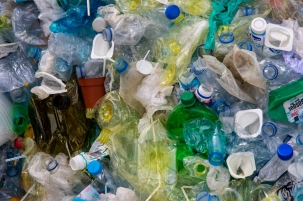
Plastic has become woven into the fabric of modern life, yet its smallest fragments may carry the biggest risks. In this keynote, Sarah Sajedi explores how microplastics and nanoplastics from everyday items, especially single-use water bottles, enter our bodies and ecosystems, and why their health impacts are more significant than once believed. Drawing on global survey data, behavioral insights from more than 15,000 participants, and cutting-edge exposure modeling, she illustrates how culture, convenience, and infrastructure collectively shape our reliance on plastic. This talk highlights what science now understands, what remains unknown, and what meaningful solutions, individual, societal, and policy-level, we can implement to protect both human health and planetary sustainability. Blending science and actionable pathways forward, this keynote aims to inspire a healthier, more sustainable future.
Sarah Sajedi is Director of Research and Development and co-founder of ERA Environmental Management Solutions, a leading provider of environmental, health and safety software. She is currently pursuing a PhD in the Department of Building, Civil and Environmental Engineering at the Gina Cody School of Engineering and Computer Science.
Planetary, public, and personal health, well-being, and justice conference
This event is brought to you by the Loyola College for Diversity and Sustainability and the Loyola Sustainability Research Centre in partnership with the School of Health, with generous support from Future Earth, and the Department of Department of Geography, Planning and Environment.