

'Why I traded my corner office for a cause'

Concordia graduate Gary Fabian shares strategy for transition to non-profit sector
September 3, 2013
|
By Shelly Bayless, BA 74


In his book The Third Act: Reinventing Yourself after Retirement (Penguin Group 2002), author Edgar M. Bronfman describes life in three stages. He redefines retirement as the third act and the first two acts as the years spent learning and working.

Gary Fabian, executive director of the Canadian Gastrointestinal Society for Quebec and Atlantic Canada, finds himself between the second and third acts of life.

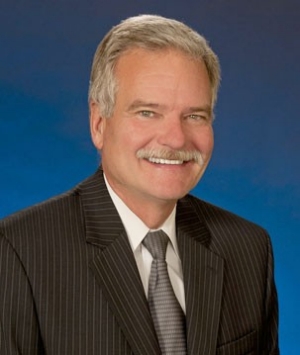
Gary Fabian, BA 74 Gary Fabian, BA 74, executive director of the Canadian Gastrointestinal Society for Quebec and Atlantic Canada. | Photo: JBL Group

He was formerly vice president, public affairs and external relations at IMS Health Canada, a position he held for 11 years. In 2008, after 33 years in the corporate world, he decided to migrate towards retirement by joining the non-profit sector.

The transition felt natural, he says. “I was already volunteering my time as a founding board member and treasurer for the West Island Palliative Care Residence (WIPCR).”

Fabian graduated with a BA in economics and urban planning from Concordia in 1974 — at a time when finding employment was seemless.

He first landed a job as a paralegal with a Montreal law firm and, after two years, switched to a business and worked for AC Nielsen. In 1986, he joined IMS Health and spent 23 years with the firm.

How did Fabian find transitioning from a corporate to the nonprofit sector?
“While in my corporate profession, I was fixated on the organization’s performance,” he says. “Towards the latter part of my corporate career, I started to understand the relevance of companies giving back to society and recognizing corporate social responsibility.”

In the ’70s and ’80s, corporate social responsibility was not really top of mind within organizations. “It was mostly in the mid-’90s that people and corporations evolved,” he ventures.

When asked what it is like to reduce his salary for the benefit of a good cause, Fabian admits, “You have to make the transition. You have to adopt a mindset that a nonprofit cannot pay you what you earned in your corporate life. My advice is not to do it until you can afford it.”

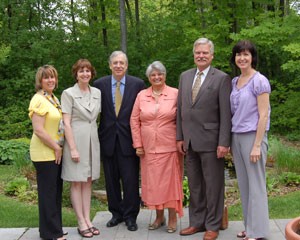
West Island Paliative Care Residence (WIPCR) West Island Paliative Care Residence (WIPCR) garden. From left: Rose De Angelis, WIPCR assistant executive director and head nurse; Teresa Dellar, WIPCR executive director; Francis Scarpaleggia, MP for Lac-Saint-Louis; Senator Sharon Carstairs; Gary Fabian WIPCR board member and treasurer, Leslie Mitchel, WIPCR assistant head nurse Photo: West Island Palliative Care Residence.

How did Fabian feel about losing the perks of the corner office in favour of a cause that matters? “I made that decision willingly because the corporate perks were no longer important to me. My new bonus was giving back to society and working for a cause that I know affects more than 60 per cent of Canadians.”

Was it hard promoting a charitable organization that is not well known? Fabian says that such a challenge calls for moxie. “As a VP, I used to sign the cheques to charitable requests and now I have to do the asking,” he says. “However, I am not only fundraising. I am also creating awareness through outreach programs and public information sessions.”

What are other advantages of this new role? “I work a shorter work week and can set my own hours, which offer me the balance of enjoying my extended family that includes a grandchild and more time for hobbies, sports and travel.”

Looking back, what advice would he give to his younger self or the next generation? “My advice to young people today, including my own son and daughter, is how their most important tool is their contact list. You don’t realize just how many dots are out there during your working lives that eventually connect.”

Related links


Back to top

© Concordia University