Date & time
Thursday, December 10, 2026
3 p.m. – 5 p.m.
3 p.m. – 5 p.m.


Hybrid
This event is free.
4TH SPACE
J.W. McConnell Building
1400 De Maisonneuve Blvd. W.
Yes - See details

Join us for a conversation between Dominic Thibault, electronic musician, composer, improviser, coder, and educator, Eldad Tsabary, Professor of Music and Electroacoustics and Head of Music at Concordia University’s School of Performance and Michel Rochon, Author, journalist, speaker and musician.
Together, these speakers' various perspectives move the conversation beyond whether AI can produce convincing music. Rather they ask us to consider which parts of musical creation we still strive to understand, where and how we continue to exercise agency and take responsibility, and what kind of musical culture do these choices create?
How can you participate? Join us in-person or online by registering for the Zoom Meeting or watching live on YouTube.
Have questions or if we can make this event more accessible for you: Contact us at info.4@concordia.ca
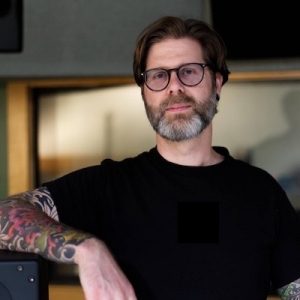
Dominic Thibault is a member of the duo Tout Croche and co-director of the record label The Silent Howl. His music lies at the intersection of musique concrète, noise, minimal techno, and soundscape composition. He is an Associate Professor at the Faculty of Music of the Université de Montréal where he teaches electroacoustic composition and creative coding. He is co-director of Laboratoire formes · ondes and he is an active member of CIRMMT and RCMS.
Dominic Thibault’s work focuses on the interactive systems that emerge within digital music practices. He asks a concrete question: once a machine-learning system has analyzed and organized a collection of sounds, how can musicians navigate it and make music with it? For Dominic, the very act of creating collections of sounds to feed the algorithms is itself a new aspect of musicianship. Musicking becomes the construction of a territory that the artist can later explore and extend.
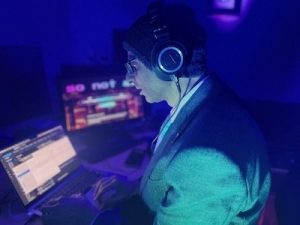
Eldad Tsabary is the founder of the Concordia Laptop Orchestra (CLOrk). His work explores improvisation, collective music-making, and the relationships between sound, technology, and human creativity. His current research uses artificial intelligence as a mirror for examining creativity, social behaviour, and human agency. He uses generative systems as instruments of inquiry. Through _The AI Mirror_, he describes a method of "discovery-by-synthesis": building and testing AI platforms to investigate society, creativity and the human condition. His Vibe Coding course brings this inquiry into tool-making: students use AI coding agents to develop music software, then learn to understand its architecture and behaviour, test and debug it, and remain accountable for the results.
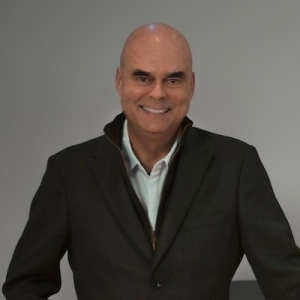
Michel Rochon has dedicated his live to bringing science in the media. Trained as a physiologist, he spent 30 years working as a health and science journalist for different radio and television shows for Radio-Canada (CBC). As an author, he wrote three essays on the relationship between music and science including Le cerveau et la musique that is now edited in six different languages. He taught journalism at Université du Québec à Montréal (UQAM) and is the past president of l’Association des communicateurs scientifiques du Québec (ACS).
Michel places today’s generative music within the long history of technologies humans have used to make and experience music, while asking what changes when music is no longer only a conversation between human beings. Can a system with no ears, emotions or capacity for self-reflection nevertheless produce music that moves us? What happens when convincing songs can be generated in seconds and at enormous scale? His work examines the consequences for copyright and ownership, employment in the music industry, music education, live performance, the environmental cost of AI, and an emerging ecosystem in which human-made, co-created and fully generated music may coexist. Rather than claiming to know exactly what will happen, Michel insists that these remain hypotheses and returns to two fundamental questions: What music do we want, and what future do we want?
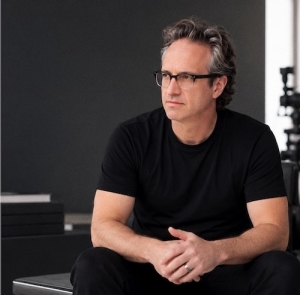
Christian Beltrami has worked internationally at the intersection of technology, storytelling, and the audiovisual industries, exploring how emerging tools, and now AI, can amplify narrative forms and strengthen the impact of film and media. During his residency at Concordia University, Beltrami will lead a three-credit intensive undergraduate course, offered from May 11 to June 1, 2026, alongside a year-long series of public events beginning in April 2026.
Description: A panel discussing if AI can produce convincing music.
Organized by: Fannie Gadouas; Christian Beltrami
Participants:
Christian Beltrami
Dominic Thibault
Eldad Tsabary
Michel Rochon
With: 4th Space
Spectrum ID: