

Date & time
Tuesday, May 5, 2026
10:15 a.m. – 6 p.m.
10:15 a.m. – 6 p.m.
Registration is closed


Registration is closed
This event is free.
4TH SPACE
J.W. McConnell Building
1400 De Maisonneuve Blvd. W.
Yes - See details
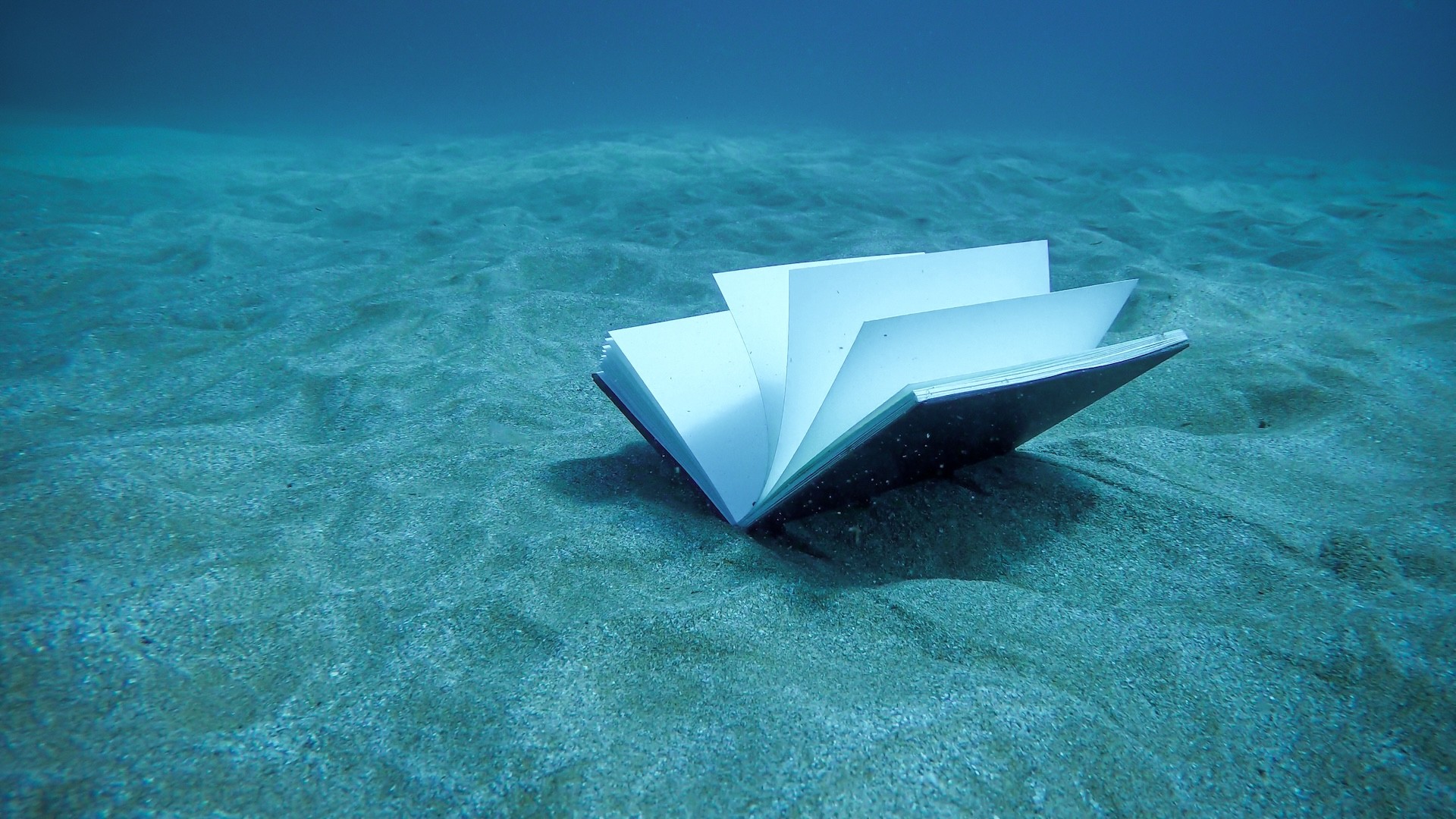
Embodied Witnessing—a one-day symposium and research-creation exhibition—brings together scholars and practitioners engaging artistic and/or watery practices as modes of resistance and survival. The event emerges in relation to trauma, grief, memory, kinship, and healing under conditions of systemic oppression, colonialism, forced migration, gendered violence, incarceration, illness, climate crisis, and cultural erasure. Witnessing is approached as embodied and relational processes—lived, felt, and negotiated across individuals, communities, ecosystems, other-than-human presences, and waters bearing histories of violence and survival.
Through a panel, somatic workshop, keynote (Dr. Ayana Omilade Flewellen, Assistant Professor of Anthropology, Stanford University, online), and research-creation exhibition, the event explores how artistic and watery practices might open more fluid conditions for communication, render perceptible internal often unseen dimensions of lived experience, and contest institutional frameworks that impose linearity, fixity, and closure.
Coffee and refreshments will be served throughout the day, as well as a pizza lunch (with vegan, vegetarian, and gluten free options).
How can you participate? Join us in person or online by registering for the Zoom Meeting or watching live on YouTube.
Have questions? Send them to info.4@concordia.ca
| Schedule | |
|---|---|
| 10:00am - 10:15am | Exhibition on View |
| 10:15am - 10:30am | Opening remarks by Laura Magnusson |
| 10:30am - 12:00pm | Panel Presentations - Embodied Witnessing: Watery Approaches Meghan Moe Beitiks, Florencia Marchetti, Bruna Bonanno, Julie Patarin-Jossec, Ellie Schmidt, Fenyx Florentiny |
| 12:00pm - 12:15pm | Break |
| 12:15 - 1:00pm | Panel Discussion + Q&A for Embodied Witnessing: Watery Approaches |
| 1:00pm - 1:30pm | Lunch (Exhibition on View) |
| 1:30pm - 2:15pm | Talk and Experiential Offering with Danielle Garrison |
| 2:15pm - 2:30pm | Break |
| 2:30pm - 4:00pm | Keynote with Dr. Ayana Omilade Flewellen |
| 4:00pm - 4:15pm | Break |
| 4:15pm - 4:30pm | Exhibition Introduction and Symposium Closing Remarks by Laura Magnusson |
| 4:30pm - 6:00pm | Exhibition - Embodied Witnessing: Artistic Strategies Multidisciplinary Art, Activities, Conversation with Artists |

Ayana Omilade Flewellen (they/she) is a Black Feminist, an archaeologist, an artist scholar, and a storyteller. As a scholar of anthropology and African and African Diaspora Studies, Flewellen's intellectual genealogy is shaped by critical theory rooted in Black feminist epistemology and pedagogy. This epistemological backdrop not only constructs the way they design, conduct, and produce their scholarship but acts as foundational to how she advocates for greater diversity within the field of archaeology and within the broader scope of academia. Flewellen is the co-founder and current Board Chair of the Society of Black Archaeologists and sits on the Board of Diving With A Purpose. In July 2022, they joined the Department of Anthropology at Stanford University as an Assistant Professor. Her research and teaching interests address Black Feminist Theory, historical archaeology, memory, maritime heritage conservation, public and community-engaged archaeology, processes of identity formations, and representations of slavery and its afterlives. Flewellen has been featured in National Geographic, Science Magazine, PBS, and CNN; and regularly presents her work at institutions including The National Museum for Women in the Arts.
Submerged in the Wake: Archaeology, Memory, and Oceanic Archives of the Transatlantic Slave Trade
This keynote explores how the excavation of 16th–19th century slave shipwrecks is generating unprecedented ways of feeling and reckoning with the afterlife of slavery. Through underwater ethnographic work with divers who excavate these vessels, analysis of museum exhibits that use newly recovered artifacts to build immersive slave ship hull reconstructions on land, and exploration of emerging artistic practices—ranging from visual works depicting artists submerged in oceanic depths to underwater memorials to the Transatlantic slave trade—I trace how the physical act of diving to these wreck sites creates new forms of embodied historical memory that surface from the ocean floor to reshape contemporary understandings of the Middle Passage.

Fluid: Gender, Perception and Ecological Entanglement
Artist Meghan Moe Beitiks discusses the role of water in their Research-Creation project "Systems of Pain/Networks of Resilience," which looks to commonalities across species and disciplines as means of developing resilience and cultivating communities. Rather than paint a picture of glorious potential utopias, Beitiks takes a hard look at herself as an embodiment of the values explored in the work, and stays with the difficult work to be done. Originally a series of performances, videos and installations, the work was published as a book entitled "Performing Resilience for Systemic Pain" with Routledge in 2022.
Meghan Moe Beitiks (she/they) works with associations and disassociations of culture/nature/structure. They analyze perceptions of ecology through the lenses of site, history, emotions, and her own body in order to produce work that examines relationships with the non-human. The work emerges as video, performance, installation, writing or photography depending on what arises from her process of research and improvisation.
They received her BA in Theater Arts from the University of California, Santa Cruz, where they studied playwriting, acting, movement and scenic design. They have an MFA in Performance Art from the School of the Art Institute of Chicago, where she studied Bio Art, Social Practice, Environmental Chemistry, and performance methodologies.
They have presented work in California, Chicago, Brooklyn, Wales, London, Latvia, Australia and Russia. She has been a Fulbright Student Fellow in Theater to Latvia, a MacDowell Colony Fellow, an OxBow LeRoy Neiman Fellow, a Bemis Artist in Residence, and the School of the Art Institute of Chicago’s recipient for the Edes Foundation Prize for Emerging Artists. She is currently an Assistant Professor in the Department of Theatre at Concordia University, with a focus on Ecology, Performance and Design.
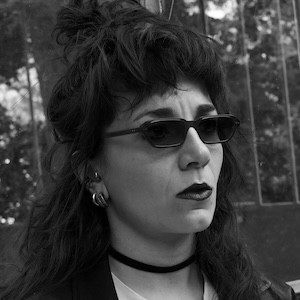
The joy of being many (pirates)
The proposal moves around and beyond the concept of 'pirate dramaturgy', exploring the intersections between performance studies, blue humanities and anarchist theories. Working on watery actions, it presents the festival 'mycto.forme' curated by 'salmastra', literally brackish, an interdisciplinary collective based in Sicily, collaborating with the fishing community of San Giovanni Li Cuti in Catania –– a liminal site that becomes both witness and act of witnessing to an alternative way of inhabiting the south through and from the sea.
bruna bonanno (Catania, 1997) is a dramaturg and PhD candidate at the University of Milan with a research project focussed on dramaturgical practices engaged with radical democracy and salt waters. She is a co-founder of salmastra, an interdisciplinary collective that works with the sicilian fishermen’s community and member of PERLa – Performance Epistemologies Research Lab of Iuav University of Venice where she is a teaching assistant in Dramaturgy. Recently, she has been a visiting scholar at the Antwerp Research Institute for the Arts (ARIA) of University of Antwerp, at the Public Exchange Bureau at Deakin University in Melbourne, at St John's University with Steve Mentz in New York City and at S:PAM of the University of Ghent. Her latest dramaturgical project was recently awarded at the 2025 Venice Teatro Biennale and will be premiered directed by Motus in June 2026.

Aqueous Frictions: Narratives of a Diasporic Transmateriality
This presentation moves through a queer diasporic watery methodology, where bodies leak, absorb, and transform. Thinking with mangroves, mucus, and sargassum, it approaches the body as a porous archive shaped by friction—between territories, memories, and more-than-human worlds—proposing witnessing as a fluid, relational, and decolonial practice.
Fenyx Florentiny is a Martinican visual artist currently pursuing a master's degree at UQAM. Their hybrid practice, rooted in both Martinique and Quebec, draws inspiration from queer, decolonial, and ecofeminist thought. They create sensory ecosystems where the body becomes a site of archives, rituals, and reappropriation. Assemblage, contamination, failure, and care guide their transdisciplinary research, blending performance, experimentation, sound, and video. Their practice explores margins, interstices, and borders as fertile ground for creation, transforming the exhibition space into a shared experiential terrain.

Atmospheric wit(h)nessings
This presentation will share key moments in the process of becoming an atmospheric thinker. The talk will include video clips and photographic documentation drawn from a long term ethnographic research-creation project on the social memories of political violence and military repression in Argentina and more recent investigations on the material, ethereal, and more-than-human landscapes that compose our lives.
Florencia Marchetti is a multimodal thinker and maker, a creative consultant, a dialogic facilitator, and a migrant mother living in Tiohtià:ke/ Mooniyaang/ Montréal. Born in Argentina during times of political upheaval, their master’s and doctoral research projects explored the atmospherics of terror produced by the military dictatorship that ruled their home country during the first years of her life. Through experimental ethnographic writing and participatory compositional practices, she creates sensory-attuned memoryscapes that convey the political and affective resonances of violent and tender pasts in everyday lives. Her early documentary work is housed at the Provincial Memory Archive and also featured in the permanent exhibit at Campo de la Ribera, a site museum and state-funded space for the promotion of human rights, both in Córdoba, Argentina. Her research-creation works have been showcased in local and international academic, artistic, and communal settings.

Queer bodies, the torch, and the "inorganic compound"
My presentation contextualizes my performance and short film "I hear the quivering of that flame" (produced in 2024-2025) based on my ethnographic fieldwork with commercial divers, especially underwater welding. In this performance and film, substituting the welding torch for a tattoo pen, and tattooing my skin instead of welding underwater, constitutes visual language I developed to think both my impact on underwater ecosystems as a diver (especially in the case of welding practice) and the mutual violence experienced by non-human and queer bodies in Western androcentric ecology. By doing so, this performance and film further discuss how extraction and harm are expressed in gender-based violence and environmental "slow violence" (both being characteristics of commercial diving and underwater construction).
Julie Patarin-Jossec holds a PhD in sociology from the University of Bordeaux, and is Visiting Assistant Professor at DePaul University. She mostly teaches on gender, the environment, and photography. She is co-editor of Visual Studies (Taylor and Francis), founding co-editor of Echographies: Journal of Sound Ethnography, and Curator for the International Visual Sociology Association. Her current research explores queer research methods through curation and video art, alongside her ethnographic fieldwork on sea extraction.

Breath Drawings
After over a decade of experience in various forms of tech-forward underwater documentation –– video, photography, photogrammetry, hydrophones –– I recently have been experimenting with a new/old kind of documentation: drawing with water-resistant materials. As a longtime swimmer, these drawing exercises help me experience a different kind of embodied observation.
Ellie Schmidt is a visual artist and filmmaker living between Los Angeles, California and Sitka, Alaska. Through art practice, free diving and fishing, Ellie explores social, ecological and physical “sites of exchange” of Pacific coastlines through film, swimming, boating and love stories. She is interested in developing new vocabularies for considering mutual exchanges (hunting, eating, free-diving, osmosis) that define contemporary relationships between humans and wild places, especially in Southeast Alaska and Southern California. In the context of widespread ecological damage, how can arts practice lead us towards a more enmeshed and reciprocal relationship with the world? She uses documentary films, poems, creative nonfiction and interactive installation to ask what different types of interfaces — romantic attachment, subsistence, cutting fish — can teach us about these landscapes of love and loss.

Laura Magnusson is a Montreal-based interdisciplinary artist and 2025–26 Public Scholar at Concordia University, where she is pursuing a PhD in Interdisciplinary Humanities. Working across video, drawing, sculpture, installation, and underwater research-creation, she develops artistic strategies to communicate lived impacts of sexual violence and its institutional aftermath. Magnusson positions art as visual testimony, drawing on her experiences as a survivor to render visible affective and relational dimensions of violence often excluded from official accounts.
A trained scuba diver who has filmed underwater in Iceland and Mexico, Magnusson thinks, writes, and creates performative work at depth, exploring how underwater embodiment supports the processing and communication of traumatic knowledge. Her work asks how watery practices might disrupt fixed, linear expectations of institutional reporting, opening to more fluid conditions for witnessing.
Magnusson has presented work in exhibitions, film festivals, and conferences internationally with support from the Social Sciences and Humanities Research Council (Doctoral Fellowship) and Canada Council for the Arts.

Tethering: Affective Touch in Horizontal Aerial Fabric, Somatic Sensing, and Heart-Centered Relational Ethics of Consent
This talk introduces tethering — a consent-based horizontal aerial methodology integrating somatic practice and real-time biometric heartbeat technology. By reorienting vertical fabric into a horizontal plane, tethering transforms aerial arts into a relational practice where the fabric mediates touch and the heartbeat guides nervous system awareness. The presentation explores how tuning into the body's own rhythms creates embodied pathways for communicating consent beyond normalized yes and no. Participants will be invited into a brief experiential practice — sensing the heartbeat as a gateway to relational awareness.
Danielle K. Garrison is a doctoral researcher, aerial artist, and consent educator completing a cotutelle PhD in Humanities (Dance) at Concordia University and Université Paul Valéry Montpellier 3. Holding an MFA in Dance from the University of Colorado Boulder, her research develops a consent-based horizontal aerial methodology grounded in Consent Theory, Feminist New Materialism, Polyvagal Theory, and affect theory — deepened through somatic research including Alexander Technique and Body-Mind Centering™. Tethering reorients vertical fabric horizontally, integrating biometric heartbeat technology to invite participants into a full spectrum of relational expression while honoring difference in how bodies meet and move together. A two-time Fulbright recipient (Scholar, 2017–2018; Specialist, 2021–2026), she has carried this research across eight countries and three continents, with recent residencies at Mondes Visuels (Chalon), Zepetra (Montpellier), Milieux (Montréal), and Nils Obstrat (Paris).
Description: A full day of conversation and research creation about water and watery practices that can function as modes of resistance and survival, opening lines of communication for those experiencing trauma, grief, and healing under systems of oppression.
Organized by: Laura Magnusson, Interdisciplinary Humanities
Participants:
Laura Magnusson
Meghan Moe Beitiks
Florencia Marchetti
Bruna Bonanno
Julie Patarin-Jossec
Ellie Schmidt
Fenyx Florentiny
Danielle Garrison
Dr. Ayana Omilade Flewellen
Badewa Ajibade
Karen Andrews
Sara Balkis
Sophie-Anne Bélisle
Fadwa Bouziane
Risa Dickens
Janie Paul and Annual Exhibitions of Artists in Michigan Prisons
Rowan Renee
With: Public Scholars Program, School of Graduate Studies; CISSC; Visual Methods Studio (VMS); Concordia Council on Student Life (CCSL)
Spectrum ID: