

Date & time
Tuesday, March 24, 2026
10:30 a.m. – 12 p.m.
10:30 a.m. – 12 p.m.
Registration is closed


Registration is closed
This event is free.
4TH SPACE
J.W. McConnell Building
1400 De Maisonneuve Blvd. W.
Yes - See details
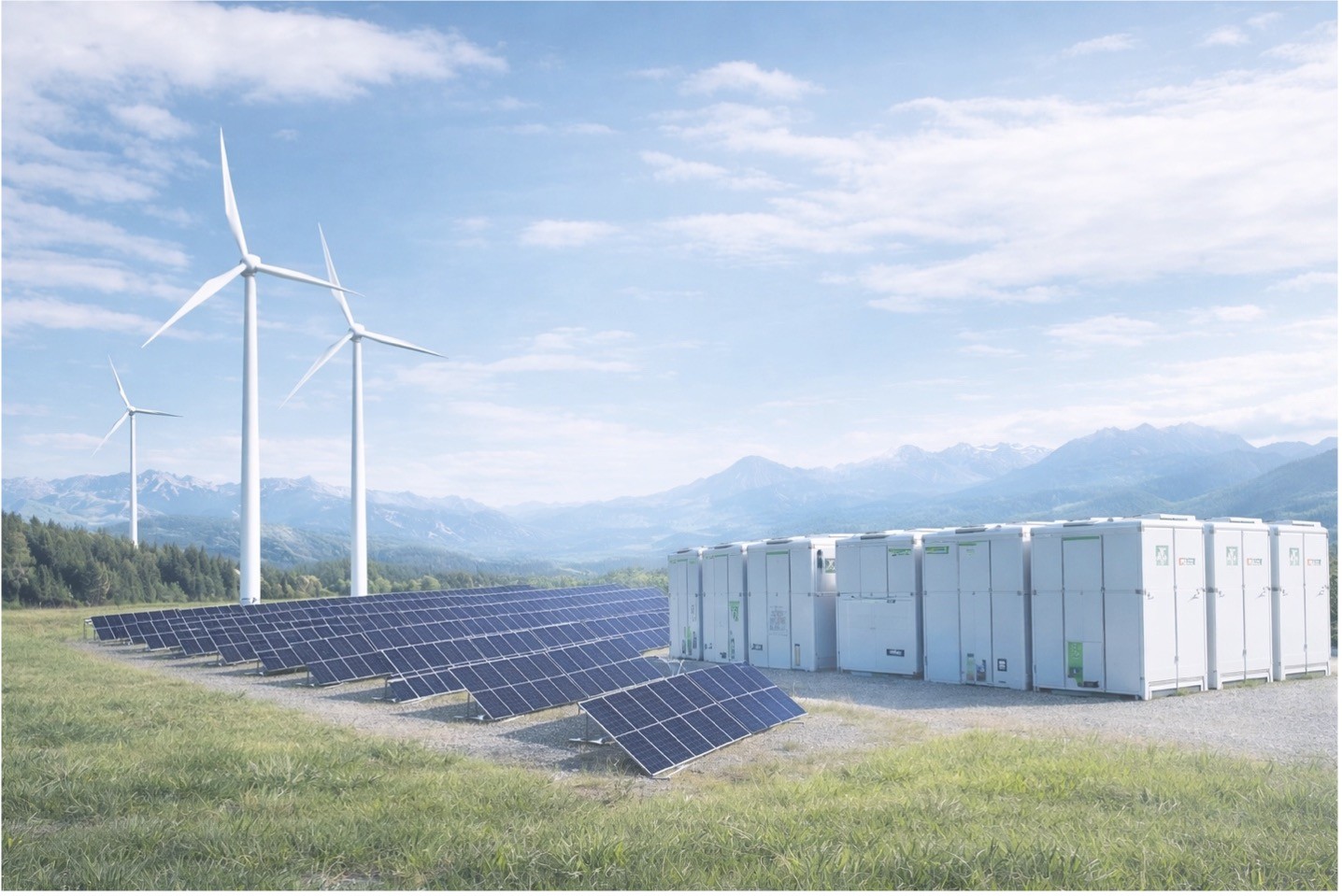
Renewable energy sources are an important aspect for a net-zero future. However, critical questions arise about whether renewable energy sources will be able to cope with energy demands now and in the future. One way of addressing these issues is by building large-scale energy storage systems. These would be capable of storing excess renewable energy when it’s abundant and deploying it when needed. However, moving energy storage technologies from research and innovation to real-world deployment requires collaboration across industry, policy and academia.
This event brings together leaders from these sectors to discuss the needs and challenges surrounding large-scale energy storage. Speakers will share perspectives on market needs, deployment experiences, regulatory frameworks and research that can support a more resilient and sustainable energy system.
The event will feature short presentations followed by a panel discussion and audience Q&A, offering attendees an opportunity to gain insights from experts working at the forefront of energy storage development and deployment.
How can you participate? Join us in person or online by registering for the Zoom Meeting or watching live on YouTube.
Have questions? Send them to info.4@concordia.ca
Dr. Marc-Antoni Goulet is an assistant professor in the Department of Chemical and Materials Engineering at Concordia University. As the originator of the symmetric cell testing methodology for flow battery durability, Dr. Goulet is the leading expert in this area and has been integral to the development of the most stable electrolytes currently known. In addition, Dr. Goulet was responsible for spearheading efforts for electrolyte regeneration and lifetime extension via precise control of battery operating conditions. Overall, these contributions have helped reduce battery capacity fade rates from ~10%/day down to ~0.01%/day and have expedited the formation of Harvard flow battery spinout Quino Energy for which he is currently a scientific advisor.
Sonia St-Arnaud has been working in the energy sector for over 25 years and has extensive experience in commercialization, project and infrastructure development, strategic planning and finance. Now President and CEO of EVLO Energy Storage, she started with EVLO in 2018 and has served as Chief Operating Officer and as Chief Financial Officer. Fellow of the Order of Chartered Professional Accountant (FCPA), Sonia holds a Bachelor of Business Administration from Université du Québec à Trois-Rivières. Sonia’s career began in 1993 with PricewaterhouseCoopers, to join Hydro-Québec in 1998. There she has been a Controller with the Production Division and then Director Projects Development and Strategies. She has also held positions as Treasurer and Administrator with various Production Division subsidiaries and was a member of the Plan Nord Committee.
Andrew is Vice President of Policy and Government Relations with Energy Storage Canada. Andrew joins ESC with over 10 years of experience working in the energy and environmental sectors having previously held roles with Bruce Power, the Ontario Chamber of Commerce and Ontario Government. Andrew is also a graduate of the Munk school of Global Affairs the University of Toronto with a master’s degree in public policy and public affairs.
Meysam Maleki (he/him) is a doctoral candidate in the Department of Chemical and Materials Engineering. As renewable energy sources like solar and wind become more affordable and widespread, their variable nature remains a key challenge to energy reliability. Meysam’s research aims to address this issue by developing sustainable, water-based flow batteries capable of storing excess renewable energy at large scales and delivering it when needed.
Description: A panel discussing the scale and demand of large energy storage, grid capacity, cost, industry and policy, and the challenges these present.
Organized by: Meysam Maleki, Department of Chemical and Materials Engineering
Participants:
Dr. Marc-Antoni Goulet
Sonia St-Arnaud
Andrew Thiele
Meysam Maleki
With: 4th Space
Spectrum ID: