

Date & time
Thursday, March 5, 2026
1 p.m. – 4:30 p.m.
1 p.m. – 4:30 p.m.
Registration is closed


Registration is closed
This event is free.
4TH SPACE
J.W. McConnell Building
1400 De Maisonneuve Blvd. W.
Yes - See details
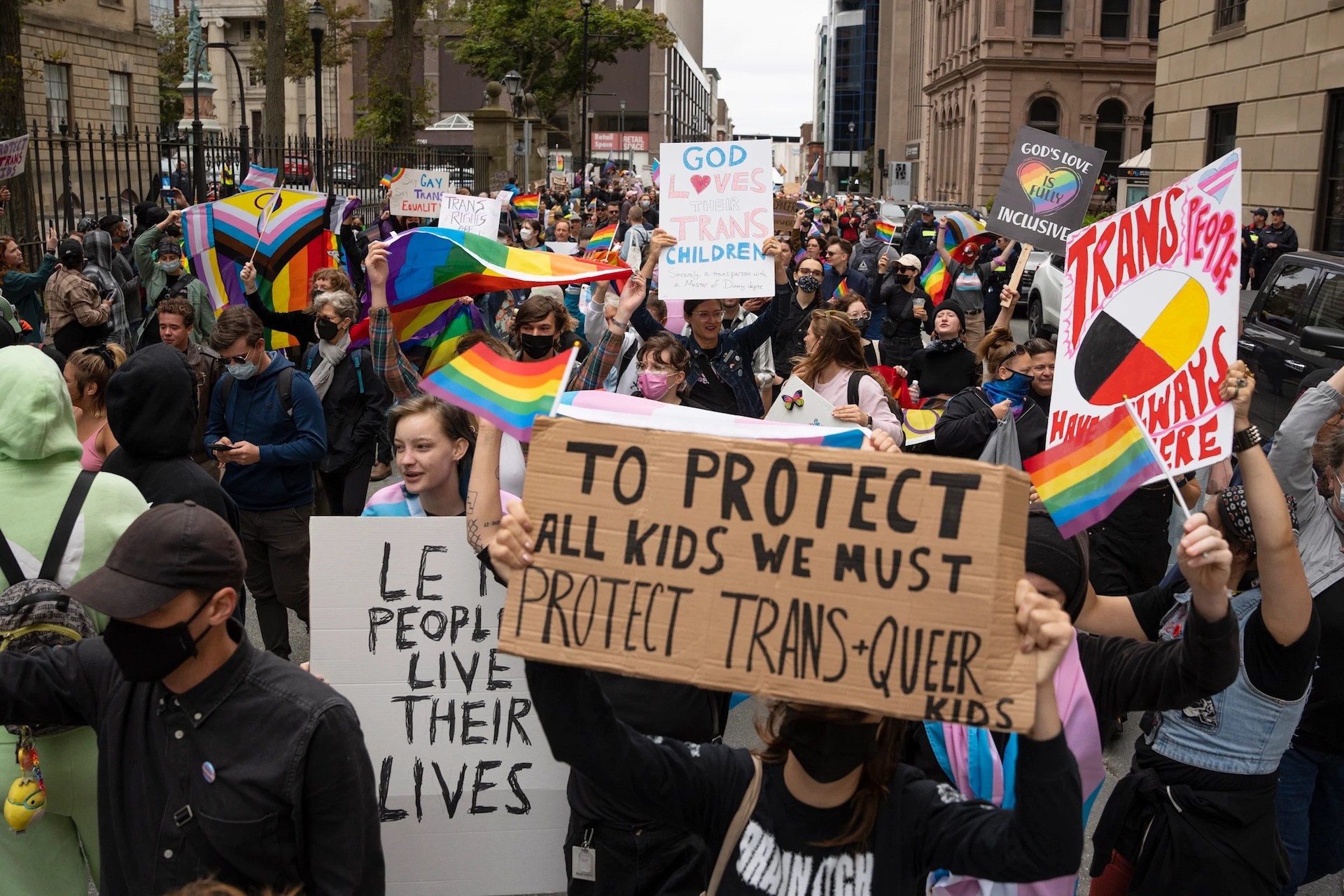
As part of their term as a Concordia University Public Scholar, Francesco MacAllister-Caruso is hosting a one-day public forum on the state of 2S/LGBTQ+ rights in Canada.
Drawing on his research in political representation and public policy, the event examines how Canada has responded to queer and trans political claims in recent decades. From media narratives and legislative change to administrative systems and legal advocacy, the forum explores how rights are shaped across institutions and public debate.
Bringing together scholars, practitioners, and community advocates, this free hybrid event is open to all and accessible both in person and online. Simultaneous interpretation (English to French) will be provided.
This event is made possible through the generous support of Concordia's Public Scholars Program and the Pierre Elliott Trudeau Foundation's Public Interaction Program (PIP).
How can you participate? Join us in person or online by registering for the Zoom Meeting or watching live on YouTube.
Have questions? Send them to info.4@concordia.ca
See panel information below:
Over the past several decades, Canada has seen a major shift in how it responds to the political claims of 2S/LGBTQ+ people—from the legalization of same-sex marriage to the criminalization of conversion practices. While often framed as signs of progress, these changes raise ongoing questions about whose voices are heard in political debates, which issues are treated as legitimate policy concerns, and which remain contested.
This panel takes a broad look at contemporary 2S/LGBTQ+ representation in Canada by asking: whose perspectives have gained visibility, why some issues attract broad political consensus while others provoke controversy, and how media, electoral politics, and digital spaces shape who gets heard, and by whom. The panel will also consider how queer and trans issues are framed differently across jurisdictions, highlighting the diversity of political contexts within Canada.
It is well established that formal legal recognition does not guarantee substantiveequality. While courts and legislatures play a critical role in shaping 2S/LGBTQ+ rights, many of the most consequential policy outcomes are produced through administrative systems, professional regulation, corporate governance, and other sites of institutional power that operate beyond public view. This panel focuses on how 2S/LGBTQ+ rights are interpreted, implemented, and constrained in practice. Panelists will examine the role of administrative tribunals, regulatory bodies, professional training, and non-state actors in shaping access to justice, inclusion, and accountability for 2S/LGBTQ+ people.
By bringing legal scholarship into conversation with lived experience and governance expertise, this panel highlights the gap between rights on paper and rights as lived realities. It asks how institutional design, discretion, and accountability mechanisms can either advance or undermine equality—and what this means for future 2S/LGBTQ+ policy advocacy in Canada.
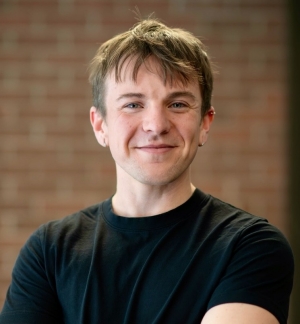
Kit Chokly (he/they) is a PhD student in Communication Studies at McGill University studying the intertwined histories of trans identity and computing through the life and work of Lynn Conway. Kit completed his Bachelor's and Master's degrees in Communication Studies at Carleton University, writing his Master’s thesis on digital media and trans world-building. Kit works with the Transgender Media Lab at Carleton University and has helped design and build the Transgender Media Portal (https://transgendermediaportal.org/), an online tool which aims to circulate the diversity of trans-made audiovisual media to the public. Kit is a 2024 Pierre Elliott Trudeau Scholar, a 2022 Tomlinson Doctoral Fellow, and a 2020 Governor General’s Academic Medal awardee, and has published in the Journal of LGBTQ Youth, TOPIA: The Canadian Journal of Cultural Studies, the Canadian Journal of Communication, and has a collaborative article forthcoming from the Canadian Historical Review.
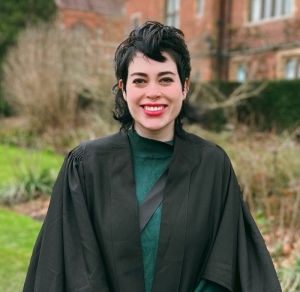
Leah Madelaine Schmidt (she/her) is a 2025 Trudeau and SSHRC PhD Scholar in Gender Studies at the University of Cambridge. Her work junctures policy and academia, focussing on poststructuralist crip/queer theory and cultural expressions of geopolitical insecurity. She is Editor-in-Chief of the Cambridge Review of International Affairs and Leverhulme Centre for Future Intelligence Student Fellow.
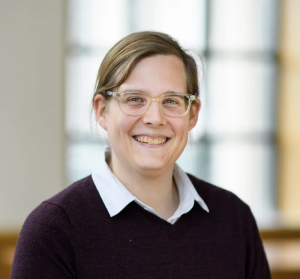
Quinn Albaugh (they/them) is an Assistant Professor of Political Studies at Queen's University. Their work focuses on gender and sexuality in electoral and party politics in Canada. Their ongoing work focuses on identifying barriers facing 2SLGBTQ+ candidates in politics, examining how 2SLGBTQ+ people vote, explaining and reversing declining support for 2SLGBTQ+ rights (especially trans rights) in Canada, and improving the inclusion of trans and nonbinary people within data on government and politics. They provided recommendations to the Consortium on Electoral Democracy (C-Dem) on improving the inclusion of trans and nonbinary people in the Canadian Election Study, the longest running academic political science survey in Canada.
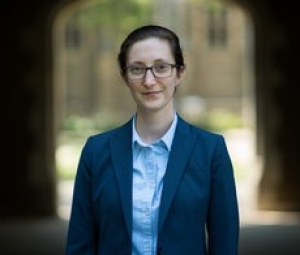
Elizabeth Baisley (they/them) is an Assistant Professor in the Department of Political Studies at Queen’s University. Their research and teaching span LGBTQ2S+ politics, gender and politics, and Canadian politics. One of their ongoing research agendas examines growing challenges to LGBTQ2S+ rights in Canada amid rising backlash and policy retrenchment. Another major strand of their work identifies the opportunities and barriers facing LGBTQ2S+ political candidates, shedding light on the factors that shape who is able to run for and win elected office. Baisley also contributes to research on the political behaviour of LGBTQ2S+ voters, such as their reactions to candidates.
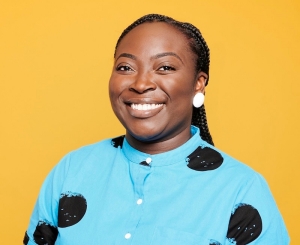
Debbie (she/her) is the Co-Director of Policy and Advocacy at Action Canada for Sexual Health and Rights. Before joining Action Canada, she was the Executive Director of the Canadian Centre for Gender & Sexual Diversity (CCGSD) and has been instrumental in advancing the rights of 2SLGBTQ+ youth and communities. She has spoken at Parliamentary and Senate standing committees, and has appeared in numerous media outlets. She has held several advocacy and policy-oriented positions in government and non-profit organizations, including Oxfam Canada and Global Affairs Canada. Debbie is an accomplished community educator, feminist activist, and social justice advocate driven by the mission of creating a more inclusive, equitable, and safe world. She has continued to dedicate her time to local progressive organizing, including most recently, as a commissioner for the Ottawa People’s Commission on the Convoy Occupation.
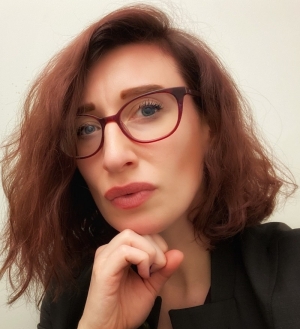
Zoe M. Savitsky (she/her) is a Ph.D. candidate at Osgoode Hall Law School at York University, where she researches comparative constitutionalism, mis/disinformation, and transnational corporate accountability. Her broader research agenda examines corporations as social actors, and the wider and stranger theoretical, critical, and social dimensions of law’s “persons.” Prior to her doctoral studies, she spent over a dozen years in government and nonprofit litigation and leadership roles in the United States, managing teams and leading cases focused on racial, economic, housing, education, health, and climate justice. She also worked in public policy, and has spoken and published individually and collaboratively on a range of legal and policy topics, as well as on her experiences as a dis/abled cancer survivor. She lives in Toronto (Tkoronto) with her partner and their dog.
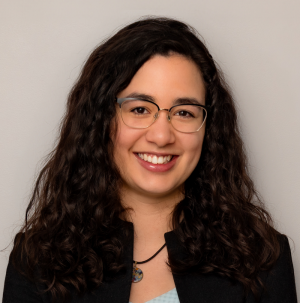
Madison Dabbs-Petty (MEd) (she/her) is a third-year PhD student in Counselling Psychology at the University of Alberta, supervised by Dr. Taymy Caso. Madison’s research interests focus on sexuality education, LGBTQ+ and BIPOC health, and disability justice. Her master’s capstone examined gaps in human sexuality training for aspiring psychologists in Canada and the U.S., and her doctoral research expands this work by identifying barriers to comprehensive sexuality training among Canadian counselling psychology programs. Madison embodies the scientist–practitioner–advocate model through her academic, clinical, and community roles. She has contributed to projects on sexuality and technology, Black mental health, disability and neurodivergence, and reproductive justice for LGBTQ+ and racialized communities. Her scholarship and advocacy have been shared at national and international conferences. Madison’s work has been recognized with the Pierre Elliott Trudeau Foundation Scholarship, the SSHRC Canada Graduate Scholarship, and the Alberta Graduate Excellence Scholarship.
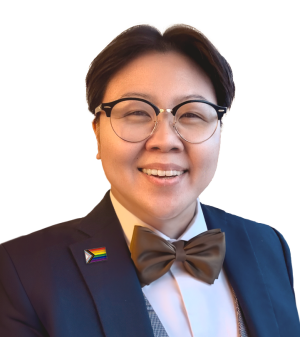
Mic (they/them) is a Montréal-born, Ontario-based lawyer and professional engineer (P.Eng), and a PhD candidate at the University of Ottawa working at the intersection of law, governance, and equality. Their research examines how 2S/LGBTQIA+ rights are interpreted and operationalized through administrative decision-making and professional regulation, with a focus on trans, non-binary, and gender non-conforming people. Mic brings a practice-based perspective from work at a full-service law firm with offices across Southwestern Ontario, including files touching family, employment, and human rights issues. They focus on the gap between formal rights and lived outcomes: how discretion, institutional incentives, and “neutral” professional standards can enable protection or produce constraint. Among other accomplishments, Mic was a 2022–2025 Pierre Elliott Trudeau Foundation Scholar and a Vanier Scholar, was named among Engineers Canada’s 2022 EDI Leaders in Engineering Workplaces, and received the 2025 Ontario Network of Women in Engineering Research Impact Award.
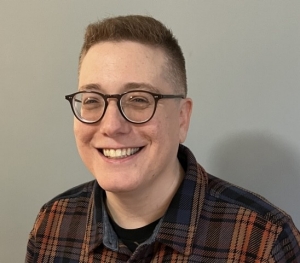
Samuel Singer (he/they) is an Associate Professor at the Faculty of Law at the University of Ottawa. His research focuses on tax administration and dispute resolution, the regulation of non-profits and charities, and critical tax theory. He is also a scholar and advocate on trans legal issues and regularly presents his work to the legal profession. In trans legal studies, Professor Singer is currently leading a research project on advancing trans equity in the legal profession, funded by the Canadian Foundation for Legal Research. He was the OBA Foundation Chief Justice of Ontario Fellow in Legal Ethics and Professionalism Research (2020) and guest editor of a special issue of the Canadian Journal of Law and Society on “On the Margins of Trans Legal Change.” His article, “Trans Rights Are Not Just Human Rights: Legal Strategies for Trans Justice,” received the Canadian Law and Society Association English Article Prize in 2021 and was cited by the Supreme Court of Canada in Hansman v. Neufeld, 2023 SCC 14. A long-time advocate for trans communities, Professor Singer worked with Action Santé Travesti(e)s et Transexuelles du Québec (ASTTeQ) before law school and later supervised the Trans Legal Clinic in Montreal (2014–2017). In 2022, he received the Canadian Bar Association’s SOGIC Hero Award.
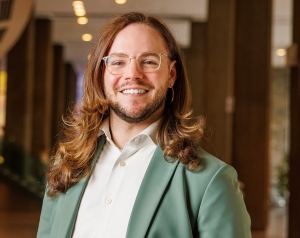
Francesco MacAllister-Caruso (he/they) is a Trudeau and Vanier Scholar and PhD candidate in political science at Concordia University. Their research focuses on the citizenship, political representation and policy issues affecting Two-Spirit, trans and nonbinary people in Canada.
With over a decade of experience in grassroots organizing, Francesco grounds their work in community-based, participatory research approaches. For the past three years, he has coordinated a national study on the advocacy experiences of affirming parents of trans children. From 2020 to 2025, Francesco also served on the communications team at the Community-Based Research Centre, where they developed engaging materials to support research and advocacy on queer and trans health in Canada.
Description: Two conversations that look at the political and social representation of 2S/LGBTQ+ people in Canada, and the policies, legislature, and governance that can advance and undermine equality.
Organized by: Francesco MacAllister-Caruso
Participants:
Francesco MacAllister-Caruso
Kit Chokly
Leah Madelaine Schmidt
Quinn Albaugh
Elizabeth Baisley
Debbie Owusu-Akyeeah
Zoe M. Savitsky
Madison Dabbs-Petty
Mic Liu
Samuel Singer
With: Concordia Public Scholars Program; Pierre Elliott Trudeau Foundation's Public Interaction Program (PIP)
Spectrum ID: