

Date & time
Monday, June 10, 2024
3 p.m. – 4 p.m.
3 p.m. – 4 p.m.


Cao Thang Dinh
This event is free
John Molson Building
1450 Guy
Room MB S1.235
Yes - See details
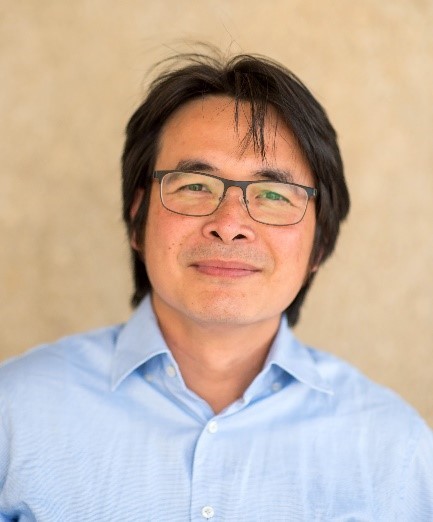 Dr. Cao Thang Dinh
The electrochemical carbon dioxide (CO2) conversion to fuels and chemicals, powered by renewable electricity, presents a compelling avenue for reducing CO2 emissions while facilitating large-scale and long-term renewable energy storage. Over the past decade, there have been promising steps in the production of fuels and chemicals (e.g., methane, ethylene, and ethanol) through electrochemical CO2 conversion. Specifically, advancements in catalyst and system designs have enabled high selectivity for methane and ethylene (>70%) at high current densities (100 – 1000 mA/cm2).
While high selectivity at high current densities has been demonstrated, the stability of electrochemical hydrocarbon production remains far below what is needed for practical applications. Copper (Cu)-based materials are the most efficient catalysts for hydrocarbon production; however, they undergo morphological, structural, and chemical changes under CO2 reduction conditions, resulting in a shift in product selectivity. Flooding and salt precipitation within gas diffusion layers further reduce the lifetime of gas diffusion electrodes for CO2 conversion.
In this talk, Cao Thang Dinh will discuss various strategies aimed at overcoming stability challenges in electrochemical CO2 conversion. The focus will be on exploring innovative concepts in designing catalysts, electrode, and electrochemical systems, alongside unconventional operation strategies that enable long-term stable CO2 conversion.
Cao Thang Dinh is an assistant professor of chemical engineering and Canada Research Chair (Tier II) in Sustainable Fuels and Chemicals at Queen’s University. He received his PhD in Chemical Engineering from Laval University in 2014. From 2014 to 2019, Dinh was a postdoctoral fellow in the Department of Electrical and Computer Engineering at the University of Toronto.
Dinh’s research focuses on developing electrochemical processes for fuel and chemical production from carbon dioxide, water and renewable electricity. He has published over 100 papers and co-invented 6 patents. Dinh is the recipient of the Waterloo Institute for Nanotechnology Rising Star Award (2021) and the Prize for Excellence in Research for Outstanding Emerging Researcher at Queen’s University (2022). In 2023, Dinh was awarded the “Science Breakthrough of the Year 2023” by the Falling Walls Foundation for his innovative work in carbon capture and conversion. He was listed as a “Highly Cited Researcher” in the field of Chemistry in 2021, 2022 and 2023 by Clarivate. Dinh is the founding editor-in-chief of the new interdisciplinary journal Cambridge Prisms: Carbon Technologies published by Cambridge University Press.
© Concordia University