

Date & time
Tuesday, March 10, 2026
4 p.m. – 5:30 p.m.
4 p.m. – 5:30 p.m.


Damon Matthews, Peter McQueen, Dominique Paquin, and Snigdhodeb Dutta
This event is free and open to the public but please register
Loyola College for Diversity & Sustainability/Sustainability Research Center & School of Health
Loyola Jesuit Hall and Conference Centre
7141 Sherbrooke St. W.
Room 110; also available online via 4th Space
Yes - See details
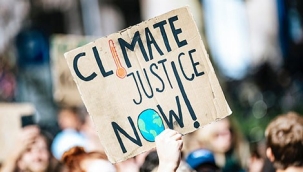
Effective responses to climate change depend on both rigorous scientific research and clear, meaningful communication across sectors. Researchers, policymakers, practitioners, and communities often operate with distinct timelines, priorities, and decision-making frameworks, which can hinder the translation of climate knowledge into actionable outcomes. This interactive workshop brings together representatives from academia, government, and applied organizations to explore practical strategies to improve climate communication with diverse audiences.
The session will emphasize discussion and solution-oriented engagement rather than traditional presentations. Through a moderated roundtable and collaborative activities, panelists and participants will examine how climate information is interpreted across different professional fields, identify sources of communication disconnects, and assess methods to bridge these gaps. Particular attention will be given to communicating uncertainty, maintaining scientific accuracy while ensuring accessibility, and aligning research outputs with practical decision-making needs.
Participants will participate in a small-group exercise to translate climate-related research findings for specific audiences across policy, public, and operational contexts. This activity will illustrate how framing, language, and emphasis adapt to audience needs and constraints, while also highlighting communication principles that remain consistent across sectors.
The workshop will conclude with a collective synthesis of key lessons and practical takeaways for application in research, policy, and professional practice. By fostering dialogue across disciplines and sectors, the session aims to strengthen connections between climate knowledge producers and users, thereby supporting more informed and effective climate action.
Damon Matthews is a Full Professor in the Department of Geography, Planning and Environment at Concordia University. He is internationally recognized for his work in policy-relevant climate science, as well as for initiatives such as the Climate Clock that use digital visualization and web-based technologies to motivate and accelerate climate action. Damon is the Scientific co-Director of Sustainability in the Digital Age, and directs the NSERC CREATE in Leadership in Environmental and Digital Innovation for Sustainability (LEADS) program, which aims to train graduate student researchers at the intersection of sustainability science and digital innovation.
Peter McQueen is the City Councillor for the Borough of Côte-des-Neiges–Notre-Dame-de-Grâce in Montreal. He has spent much of his career advocating locally for social and environmental causes.
Dominique Paquin is the coordinator of the Climate Simulation and Analysis group at Ouranos. She contributed to the development of the Canadian Regional Climate Model (CRCM) and has studied the impacts of climate change on numerous phenomena such as ice storms and snowstorms, in addition to contributing as a climate science expert on multiple climate change adaptation projects.
Snigdhodeb Dutta is a PhD student in the Department of Biology at Concordia University. His research investigates the impacts of climate change on freshwater fish populations, with a focus on brook trout, across various spatial and temporal scales. Snigdhodeb is working under the supervision of Dylan Fraser.
This event is brought to you by the Loyola College for Diversity and Sustainability and the Loyola Sustainability Research Centre in partnership with the School of Health, with generous support from Future Earth and the Department of Department of Geography, Planning and Environment.