

Date & time
Monday, March 9, 2026
1:15 p.m. – 3:45 p.m.
1:15 p.m. – 3:45 p.m.


Jessica Bleuer, Madeline Montgomery, Atlas Wutapumitukew Lowry, and Bill Yong
This event is free and open to the public
Loyola College for Diversity & Sustainability/Sustainability Research Center & School of Health
Loyola Jesuit Hall and Conference Centre
7141 Sherbrooke St. W.
Room 110 or online (link on conference webpage)
Yes - See details
This event is part of the Planetary, public, and personal health, well-being, and justice conference
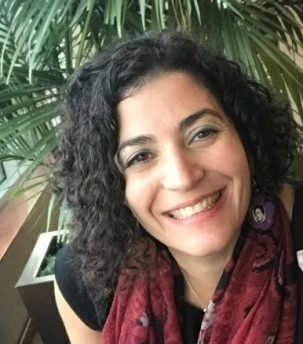 Professor Jessica Bleuer
Many people experience climate change through feelings of overwhelm, guilt, and helplessness—emotions that can make taking action feel impossible. Research suggests, however, that when these difficult emotions are acknowledged and processed collectively and creatively people are more likely to feel motivated toward pro-social behaviour and participating in climate justice initiatives (Bleuer et al., 2025). This workshop invites participants to try evidence-based experiential exercises (Harnden, 2025), drama therapy and applied theatre techniques to explore emotional responses to climate change. The workshop moves participants through the identification of shared emotional patterns and challenges related to climate change, using creative methods to explore—and gently disrupt—the ways the crisis’s enormity can generate a sense of futility, and a belief that individual or collective efforts are meaningless. Through collective processing, the workshop seeks to open pathways toward connection, meaning, and renewed capacity for action.
Jessica Bleuer, PhD, Assistant Professor Concordia University teaches in the MA in Drama Therapy program and works on issues related to the polycrisis. Her research looks at the intersections between individual mental health and system oppression and geopolitical strife. She is currently engaging in various projects that look at how processing the impacts of climate change through drama therapy processes can support co-regulation, wellbeing and motivation to get involved in climate justice initiatives.
Atlas Wutapumitukew Lowry, MA (they/iel) is a drama therapist working with Indigenous, Queer, and neurodivergent children, youth, and families. As a Queer person with Lumbee and mixed European heritage, Atlas is particularly interested in examining the impact of the climate crisis on communities enduring the long-term trauma from colonization.
Madeline Montgomery, M.A. (she/her/hers) is a drama therapist living and working as a guest on the unceded traditional territories of the xʷməθkʷəy̓əm (Musqueam), Sḵwx̱wú'mesh (Squamish), and səlilwətaɬ (Tsleil-Waututh) Nations, colonially known as Vancouver, British Columbia. Madeline is a member of the Métis Nation of Alberta, and as such she strives to honour and respect both her Indigenous and settler heritage while protecting our land, water, and air for the generations that are to come.
Bill Yong (容偉彪), MA (he/him) is a drama therapist currently based in Tiohtià:ke (Montreal). He works with families and youth at an outpatient addiction centre through a systemic and harm reduction approach. As a child of political prisoners, both his clinical and artistic work investigates the systemic impact and responses to intergenerational violence and land displacement. Something the urgent and ongoing climate crisis perpetrates within his own communities and the people he works with.
Bleuer, J., Oluoch, A.E., Lowry, A.W., Yong, B., Sweett, E., Kothare, E., Montgomery, M. and Dadzie, S.D., 2025. Wearing sunglasses to see more clearly: Drama therapy calls attention to the climate crisis. Drama Therapy Review, 11(1), pp.47-75.
Harnden, B., 2025. Our embodied presence and the climate crisis: Clinical commentary on the interplay between trauma, the nervous system, the climate crisis and drama therapy. Drama Therapy Review, 11(1), pp.107-116.
.
Planetary, public, and personal health, well-being, and justice conference
This event is brought to you by the Loyola College for Diversity and Sustainability and the Loyola Sustainability Research Centre in partnership with the School of Health, with generous support from Future Earth, and the Department of Department of Geography, Planning and Environment.