

Date & time
Thursday, January 22, 2026
4 p.m. – 6 p.m.
4 p.m. – 6 p.m.


Pasha Dashtgard
This event is free
Online
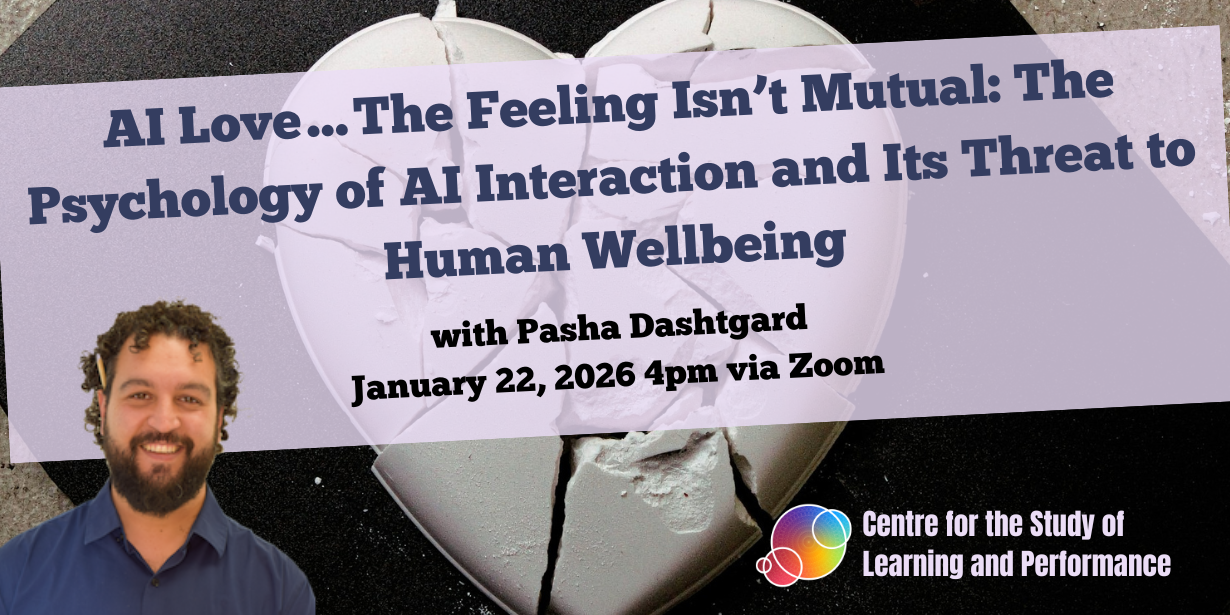
This presentation examines three interconnected psychological risks of widespread AI adoption: the exploitation of innate cognitive vulnerabilities, the developmental harms of AI companionship, and the emergence of AI-induced psychosis. AI systems exploit fundamental human cognitive tendencies, including anthropomorphization, susceptibility to affirmation, and our evolved association between language and conscious thought. These exploited vulnerabilities facilitate addictive engagement patterns and disproportionately harm socially isolated individuals. The rise of romantic and emotional attachments to AI chatbots undermines users' capacity for authentic human relationships by distorting expectations around affirmation, reciprocity, and mutual compromise. AI psychosis represents an emerging public health crisis, with particular risks for individuals with dissociative tendencies or pre-existing mental health vulnerabilities, though extended AI use can induce reality detachment even in previously healthy individuals. AI companies lack incentives to address these harms within current business models, necessitating urgent public health intervention and regulatory frameworks to protect vulnerable populations.
About the Speaker
Pasha Dashtgard is Director of Interventions at the Polarization and Extremism Research and Innovation Lab (PERIL). He holds a PhD in Social Psychology from UC Irvine and has broad experience in mental health, online radicalization, and resilience-building interventions. His work includes projects on misinformation, conspiracy thinking, masculinity studies, PTSD, and the psychological impacts of AI.
© Concordia University