Yixuan Ma is an award-winning public-interest communications practitioner focused on sustainable development and community well-being. Her writing has appeared in The Hill Times and CityNews Montreal. She is also a One Young World Ambassador, a 2024–2025 CUSEF Scholar, and an Anti-Racist Youth Leader selected by the Canadian Race Relations Foundation.
What the Main Knows: Murals, Radio, and How Montreal Thinks in Public
by Yixuan Ma
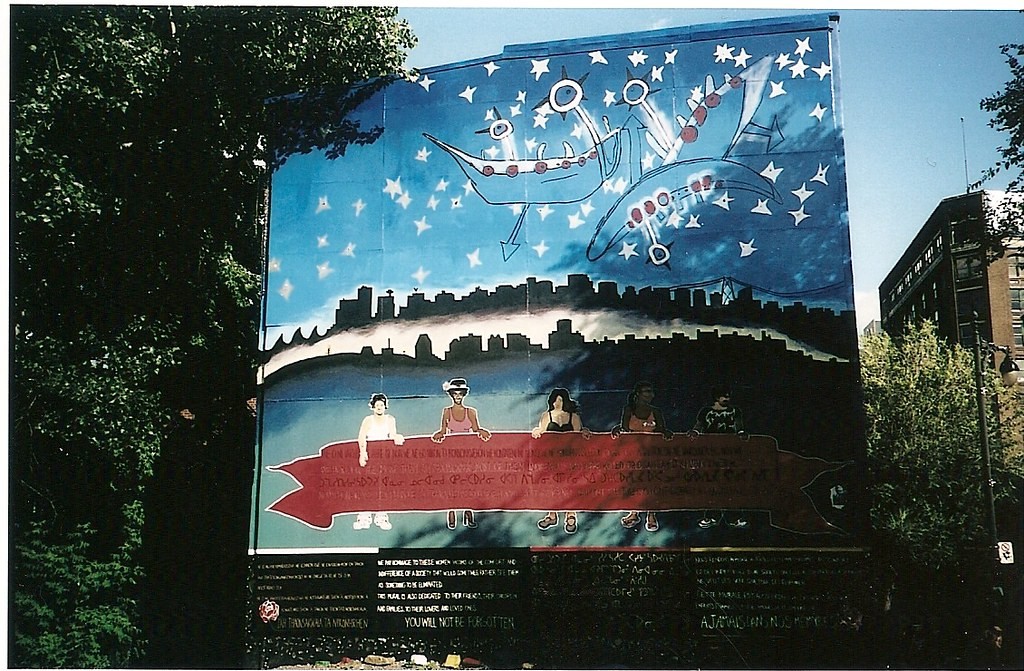 Photo by Renegade98
This piece was selected as part of SHIFT's special edition issue Research by and for Community (September 2026), which invited pieces from our community related to explore what it would mean to have research and learning environments that better reward relationship-building, curiosity, co-inquiry, and shared power.
What if a mural on Saint-Laurent holds knowledge about this city that no journal article could fully capture?
From June 4 to 14, 2026, the 14th MURAL Festival turned a two-kilometre stretch of the Main into an open-air studio. Fifteen murals took shape at once as pedestrians watched artists work. Projet TYXNA, the Montreal collective behind Mémé la Main, created a comic-book world inspired by Dead by Daylight, the Montreal-made video game marking its tenth anniversary.
The Main produces knowledge in layers. Some murals endure; others disappear beneath new work. Yet visibility alone does not make public art community-led. A wall may be open to everyone even when the surrounding community has limited say in what appears on it. The more revealing question is not simply whether a mural can hold knowledge, but who decides what the city remembers, what it paints over and whose interpretation earns recognition.
Communities are building knowledge through their experiences, conversations and creative work. They are researchers in their own right.
The question of recognition is also a question of whose knowledge counts. Artistic creation and academic research are often treated as separate ways of working, with research presented as something universities produce and later share with the public. That distinction misses what is already happening. Communities are building knowledge through their experiences, conversations and creative work. They are researchers in their own right.
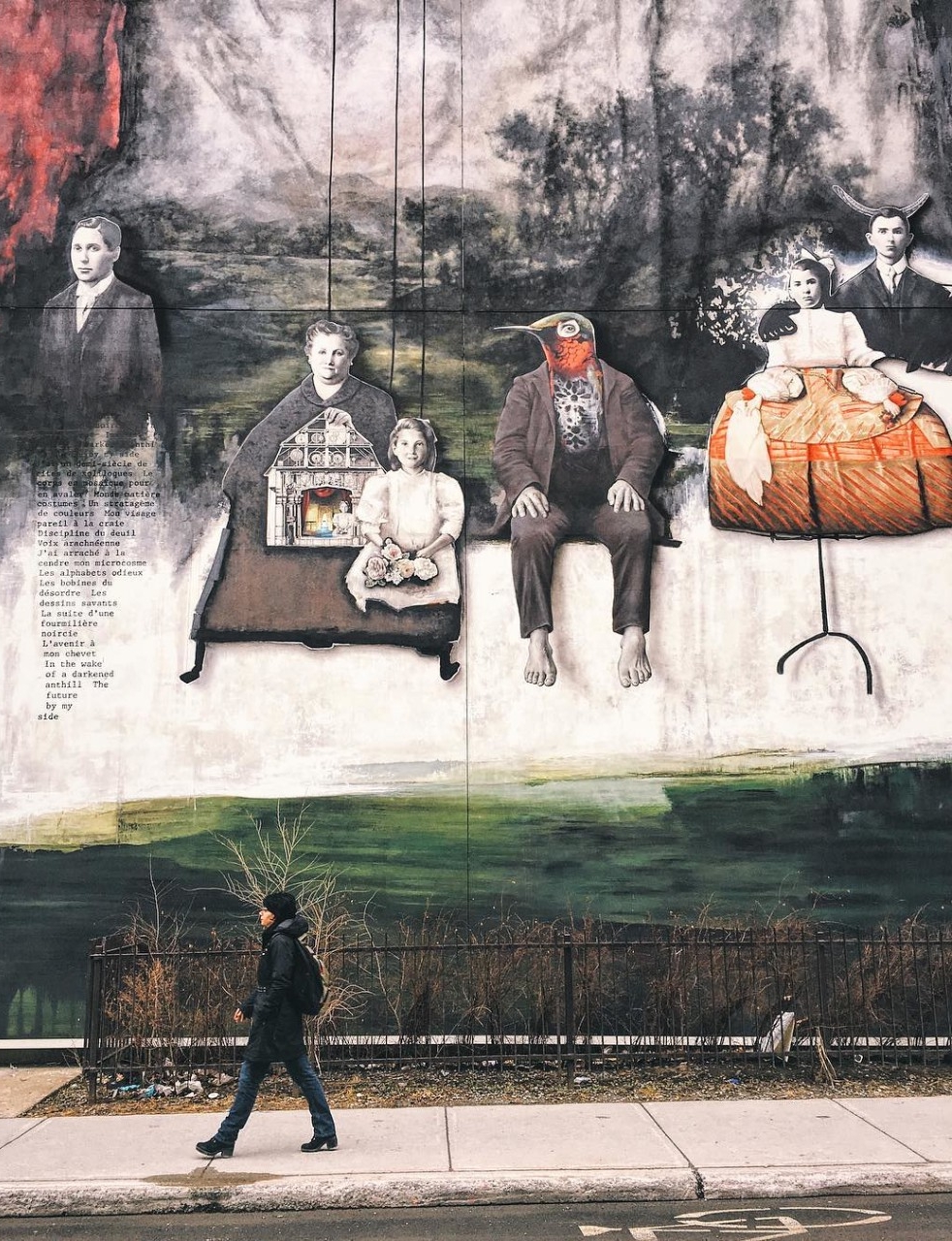 Photo by Marco Bellucci
Tune the radio a few blocks away and the city’s research is already being broadcast.
CKUT 90.3 FM has been on the air since 1987, with roots in McGill’s radio club founded in 1921. The nonprofit, member-owned station is made up of hundreds of volunteers who create its programming and participate in its collective management. Its archive does more than record what happened in Montreal. It preserves how communities understood what was happening to them.
Through spring 2026, the monthly program Radio Renoviction invited Montreal tenants to tell their stories of displacement, anonymously if they preferred, alongside analysis and possible solutions. These broadcasts were firsthand evidence, interpretation and counter-memory produced by people living through the crisis and made immediately available to others facing it.
Community knowledge is often recognized as research only after it has passed through an institution and been translated into academic language. The people who created it may be credited as participants, while authorship goes to those who collected and analyzed it.
In August 2025, the Canada Black Music Archives, CKUT and the University of Toronto’s Afrosonic Innovation Lab produced nearly 15 hours of programming dedicated to Montreal’s Black musical history. DJs, musicians, promoters, and historians traced a cultural lineage spanning jazz, reggae, hip-hop, Kompa and Afrobeat. The organizers described the project as cultural preservation, research and documentation. This history was carried in the voices, rhythms and arguments of the people who made it.
Concordia University offered another model in early 2026 with Activism in Print, an exhibition of zines, posters and photographs created through Montreal organizing campaigns between 2000 and 2025. The collection documented struggles including climate justice, Indigenous sovereignty, and migrant and refugee rights. These materials were recognized as a living archive for public education, not simply preserved as relics.
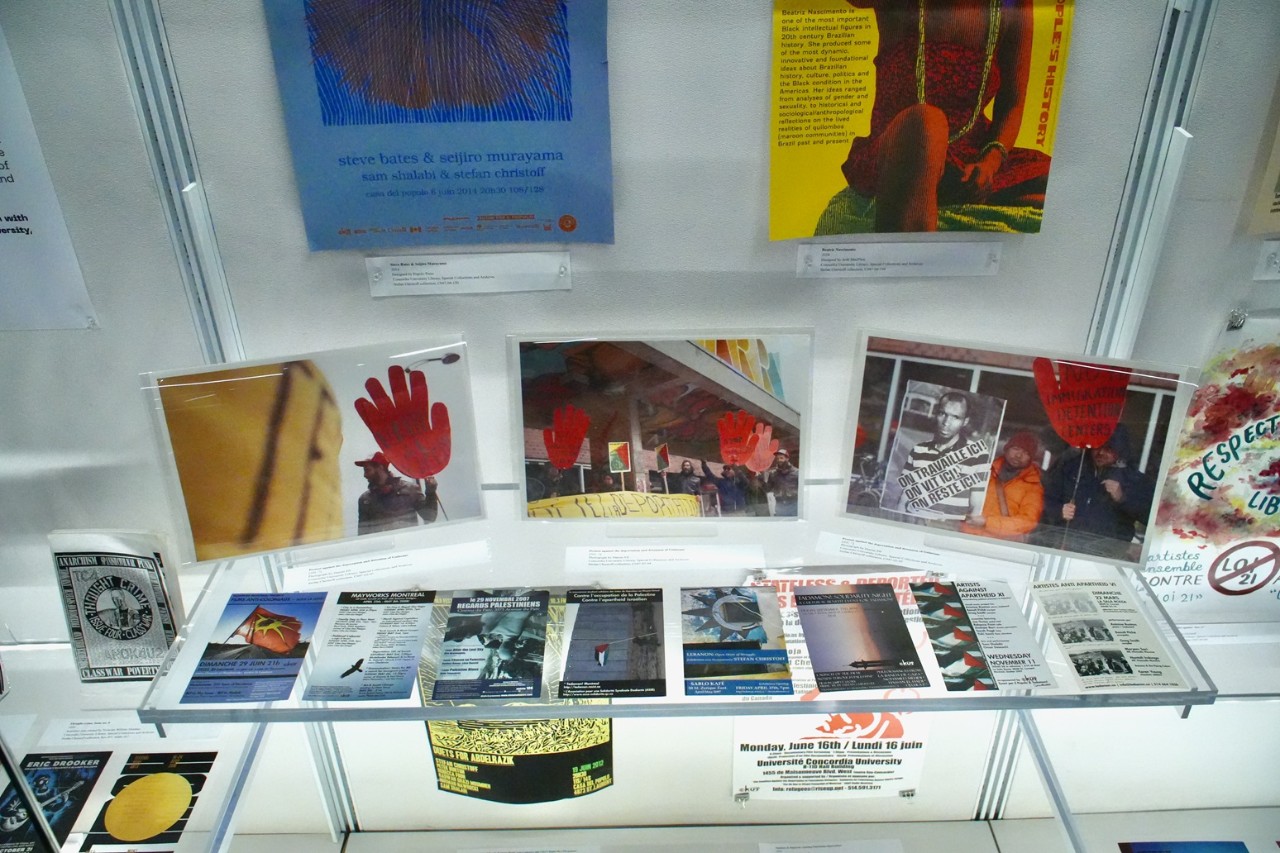 Activism in Print exhibition in the Concordia University Library
This recognition matters. Community knowledge is often recognized as research only after it has passed through an institution and been translated into academic language. The people who created it may be credited as participants, while authorship goes to those who collected and analyzed it. Institutional affiliation can still carry more weight than intellectual contribution in determining whose work counts. That imbalance shapes whose work is cited, funded and preserved.
Universities can accelerate the change [...] Knowledge holders should be credited and compensated as authors and collaborators, with meaningful control over how their work is interpreted, accessed and preserved.
Montreal already knows how to create knowledge in public. The next step is to ensure the people doing it have the recognition and resources to carry that knowledge further.
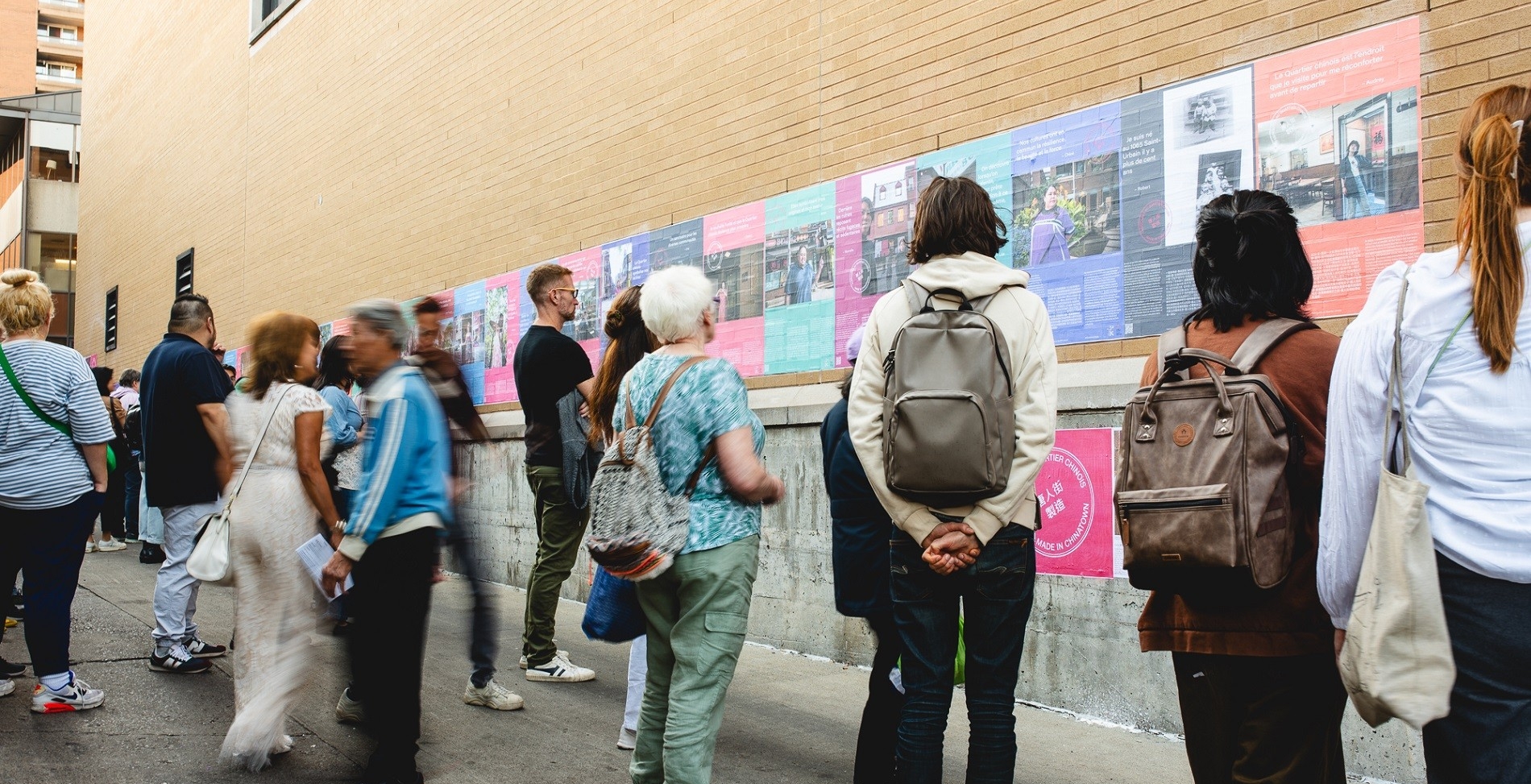
Universities can accelerate the change. A radio documentary should be able to stand as a final research output without requiring a companion paper to legitimize it. Research funding can go directly to community creators, not only to those studying their work. Knowledge holders should be credited and compensated as authors and collaborators, with meaningful control over how their work is interpreted, accessed and preserved.
Give a research fellowship, not only an artist residency, to a graffiti writer. Let a neighbourhood publish its findings on a wall.
The Main is not waiting for permission to produce knowledge. It already does. The question is whether institutions will observe it from a distance, or share authority and resources with the people who make the city intelligible to itself.