As SHIFT's Communications Assistant, Hannah Vogan works closely with the Learning and Storytelling Lead to communicate SHIFT's offerings and mobilize community knowledge. She brings her valuable experience as a writer, editor, and storyteller in her efforts to further SHIFT's mission to socially transform Montreal and beyond. Hannah is currently doing a double-major in Journalism and Creative Writing.
Forging Pathways Towards Peace and Liberation Through Conversation and Collective Action
by Hannah Vogan

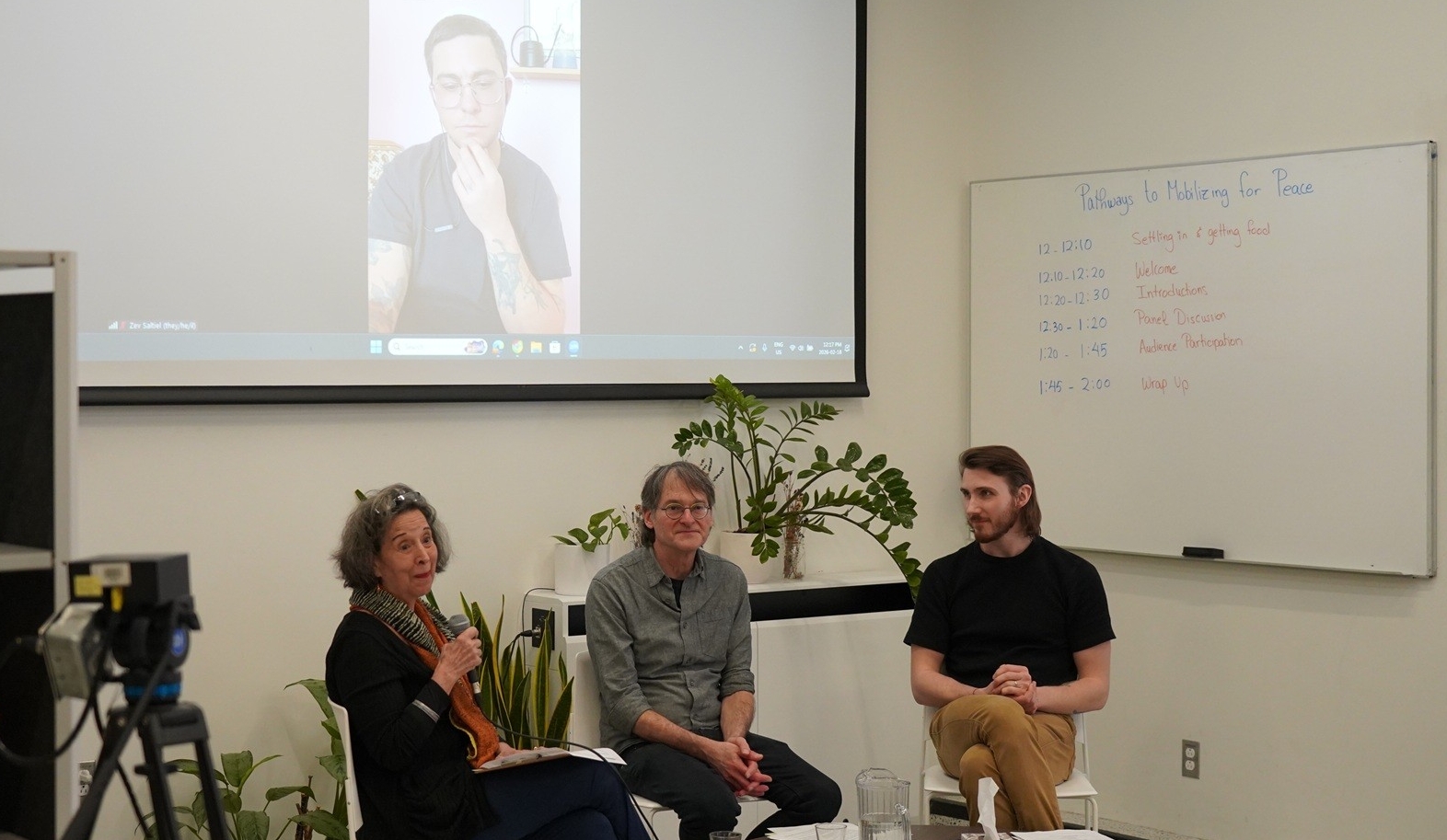
On February 18th, 2026, community members gathered at the SHIFT Centre to discuss and explore anti-war efforts in and around Montreal. Leading the discussion panel were Sharon Gubbay Helfer, Zev Saltiel, and Glenn Rubenstein. All three panelists approached the topic with diligence and offered solutions stemming from their respective experiences in mobilizing for peace in a world rampant with division.
With backgrounds in humanitarian work, oral storytelling, community building, and peace advocacy, Helfer, Saltiel, and Rubenstein, along with passionate audience members, laid the groundwork for fruitful discourse, navigating pathways for effective ways to mobilize peace.
Here are some key moments from the event, summarized if you missed it or want a quick refresher.
...is it really peace if there’s an absence of violence? Or what is the minimum level of peace that is necessary to enable justice?
What is peace?
To determine a viable pathway towards mobilizing for peace, it was imperative for the panelists and audience members to reflect on what peace means for them—here opinions varied, making way for liberation as a worthy opponent. For Helfer, peace is something one should not give up on. Peace for her is equivalent to safety, although difficult, it is achievable through commitment, engagement, and respect. To create a strong bond of respect, there must be prolonged and profound commitment to one another. To achieve peace, there must be a baseline of respect for one another, that allows for the reception of diverse perspectives. In Saltiel’s understanding, peace is policed and a term used by entities that inflict violence, serving as a dog whistle to advocate against collective uprisings. They continued, emphasizing that to pursue anti-war efforts, one must act to achieve liberation, fighting as a community harmoniously towards a shared goal. Rubenstein, on the other hand, sat at a healthy middle ground between the two takes on peace. He explained how war creates a situation in which no one is prepared to communicate, thereby destroying all facets of life. With a reluctance to communicate, some groups seeking justice will consequently use violence to try to achieve peace or liberation. Which then brings about the idea of violence against fascism: is it really peace if there’s an absence of violence? Or what is the minimum level of peace that is necessary to enable justice?
Reflection Questions:
What does peace mean to you?
In terms of anti-war efforts, is peace an achievable goal? Or the means to a goal?
Can peace exist without or within violence and pressure tactics?
Confronting local and global systematic crisis collectively
When discussing one’s role in anti-war efforts, the room tacitly had reached a general consensus about the best course of action: getting involved in any way you can. One audience member shared how getting involved with a local cause is less daunting than it may seem. While some organizations may focus more on justice than peace, they noted that there is room in each sector for everyone, and that newcomers looking to get involved should use their skills to their advantage: do as much as you can within your capabilities. Echoing the audience members' sentiment, Rubenstein raised the issue of Canada's increased militarization, noting the importance of developing a more coordinated movement to propose a better project for Canada and a better use of resources. He professed that this begins with involvement: “There are plenty of opportunities to join organizations that work for peace or against war. Sign up, contribute, volunteer. Get involved. We need to devote ourselves to the cause that we believe in.” The notion of developing connection dually arose again, with another helpful strategy towards peace being listening to one another with an open mind—this can be found through music and art as an alternative means of connection. Helfer stressed the importance of leading with curiosity as it usually disarms people, not putting pressure on people, and knowing that a conversation about varying opinions may not solve everything, yet it is still meaningful and impactful. While as Saltiel put it, it can be difficult to mobilize for a cause when you aren’t impacted by it, the act of getting involved and educating yourself on issues pries one's eyes open, making it harder to shut them to adversity.
Reflection Questions:
What empowers you to get involved in a cause, both locally and globally?
What does mobilization look like for you?
To dismantle imperialism, collective action must be at the root of any effort combating the entities responsible for aiding and abetting war, genocide, and terrorizing of civilians and the environment.
Lessons learned from working in anti-war causes
While taking different forms yet working towards the same goal, each of the panelists—seasoned in anti-war efforts—shared various approaches and lessons from their groundwork. One clear lesson was making room in one’s advocacy and mobilization to bring to the forefront the voices of those directly affected by a given crisis. One may feel passionate about sharing their opinion, fighting for the cause, yet should allow for breathing space to those in the thick of a crisis and echo their stories when possible—in the absence of affected peoples. Similarly, with the intention of being non-extractive, taking the time to sit with affected peoples, listening to their stories with care and diligence, and applying that to one’s advocacy. Additionally, being patient when faced with opposing opinions creates the space for calm and productive dialogue that widens all perspectives on a given topic.
Reflection Questions:
What makes you feel listened to and heard wholeheartedly? Is it something you practise when listening to others?
In a debate, where is the line between passionately expressing yourself, not overpowering other opinions, and openness to fresh perspectives? Can thinking critically be clouded by passion?
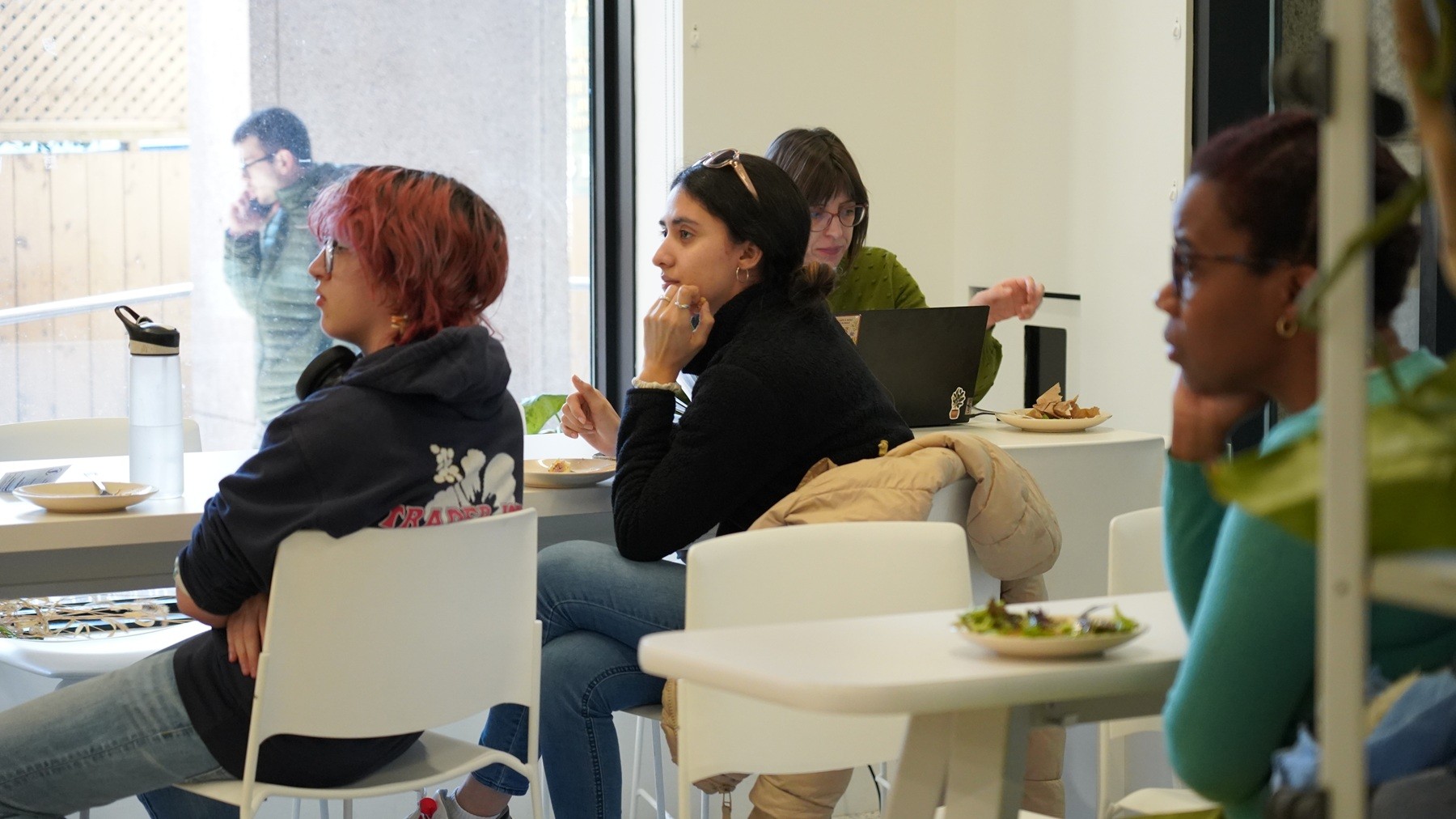
While the definition and effectiveness of peace as a means of conflict resolution vary, one thing remains true: collective action is needed now more than ever. There is fervent power in nurturing a community and listening to your neighbour. To dismantle imperialism, collective action must be at the root of any effort combating the entities responsible for aiding and abetting war, genocide, and terrorizing of civilians and the environment. The Pathways to Mobilizing for Peace event at SHIFT was an example of such collective action; Montrealers and Concordians gathering to share and hear one another, collaborating to empower one another and make a change in the world—whether through peace or liberation.