


As SHIFT's Communications Assistant, Hannah Vogan works closely with the Learning and Storytelling Lead to communicate SHIFT's offerings and mobilize community knowledge. She brings her valuable experience as a writer, editor, and storyteller in her efforts to further SHIFT's mission to socially transform Montreal and beyond. Hannah is currently doing a double-major in Journalism and Creative Writing.
Understanding Democratic Institutions: Recognizing and Challenging the Parameters
by Hannah Vogan
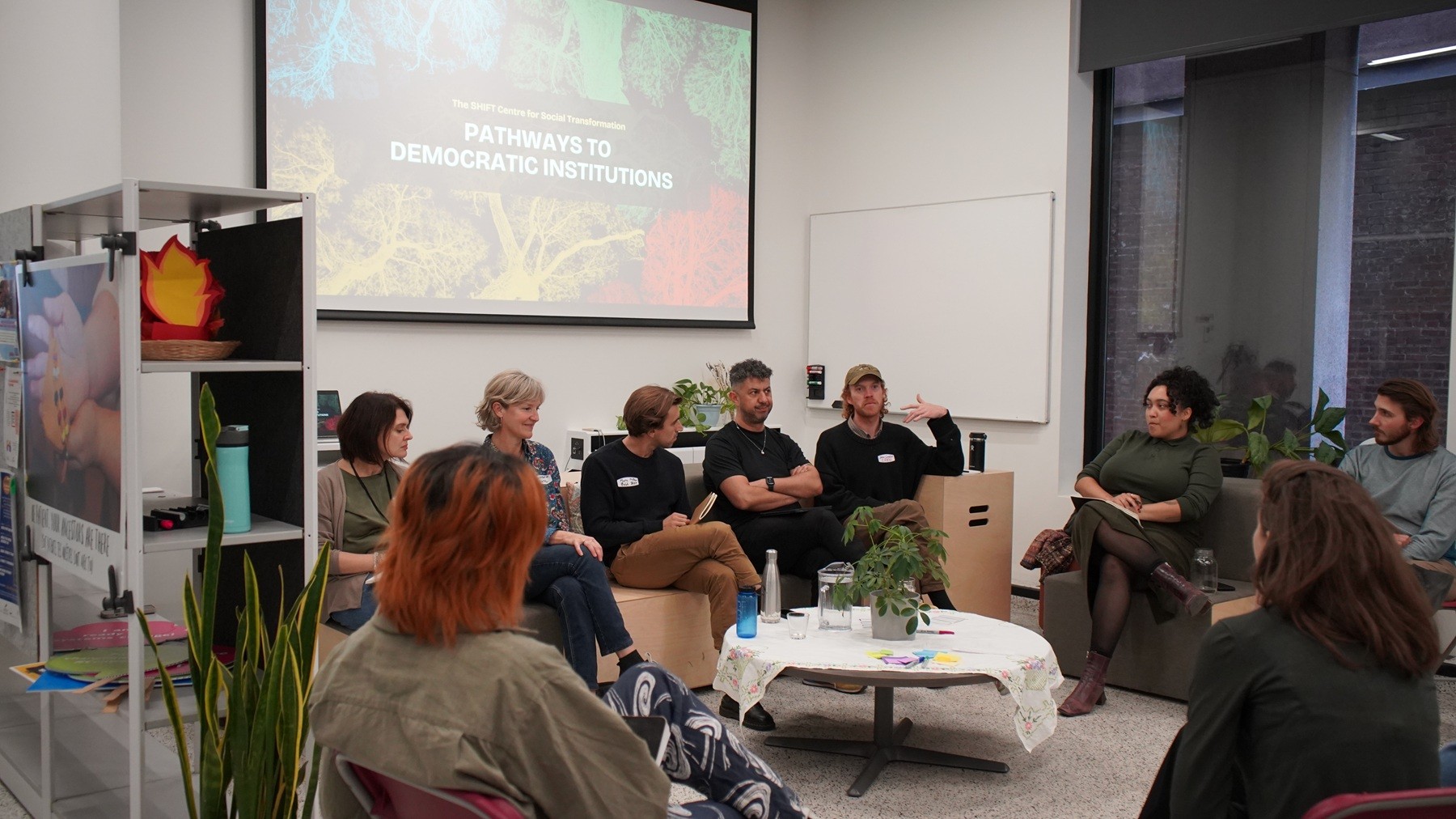
On October 21, 2025, the SHIFT Centre hosted the newest addition to the Pathways speaker series: Pathways to Democratic Institutions. The showcase included a panel of five speakers, all of whom have robust experience working in varying organizations in Montreal and beyond.
The speakers included Vira Kovalova from Fondation du Grand Montreal (FGM), Marc Lachapelle from Fondation Béati, Naoufel Testaouni from QueerTech, as well as Élisabeth Rivest from the Ville de Montreal participatory budget team and Jason Langford from Concordia Research and Education Workers Union (CREW).
The event ran with the purpose of creating discussion around how different, but seemingly similar, organizational structures operate democratically when making decisions, representing diverse populations, and managing resources.
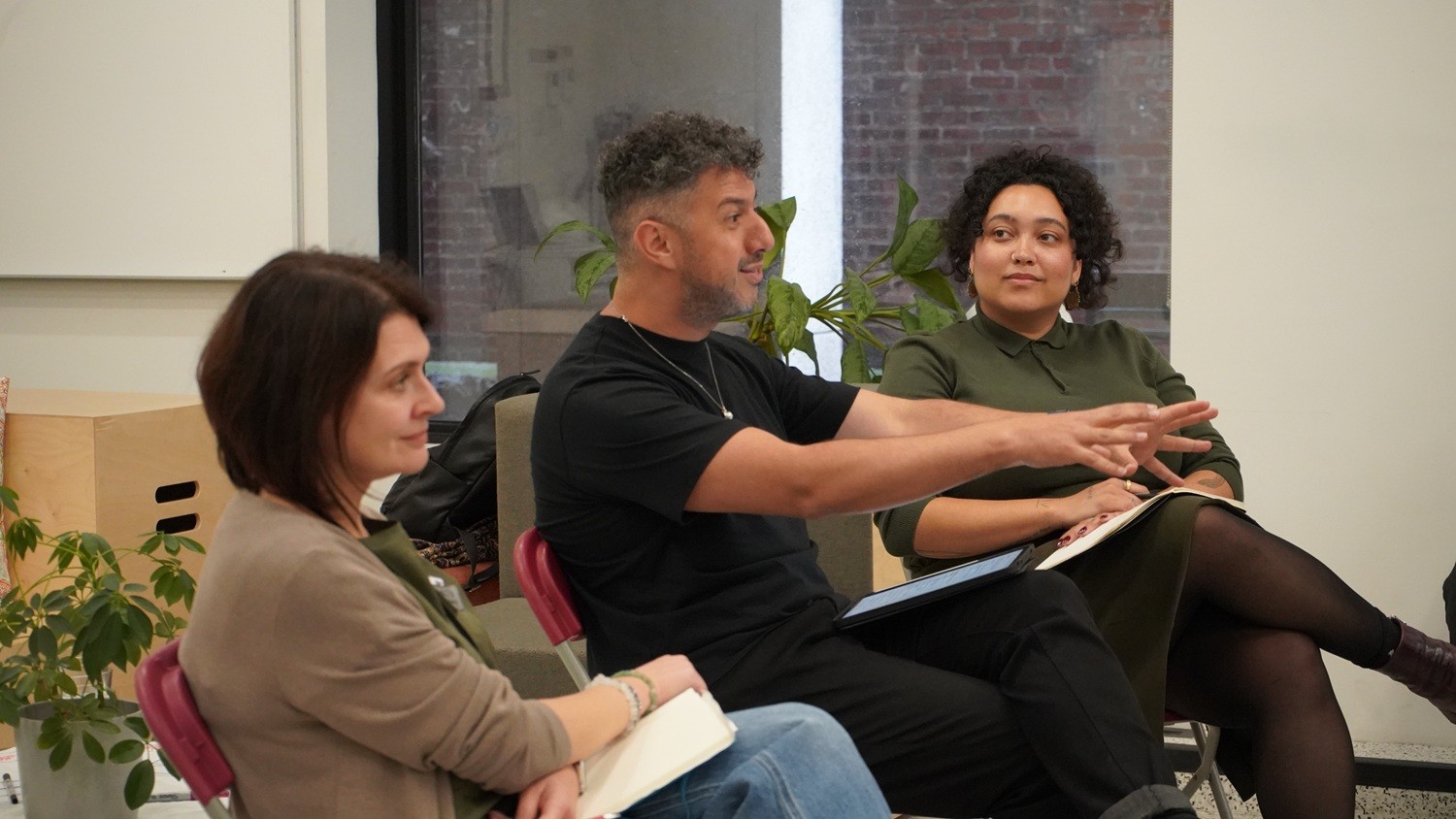
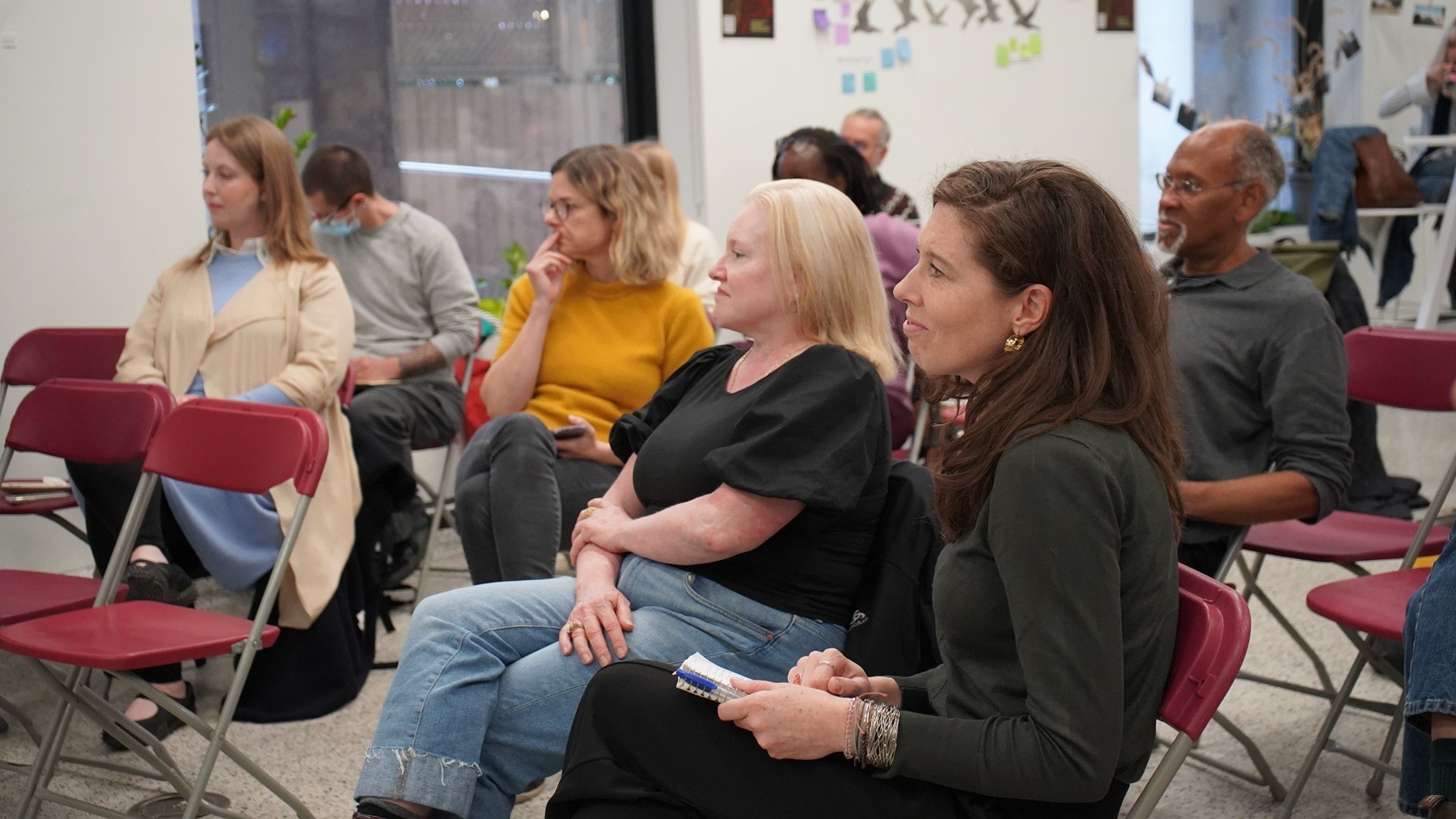
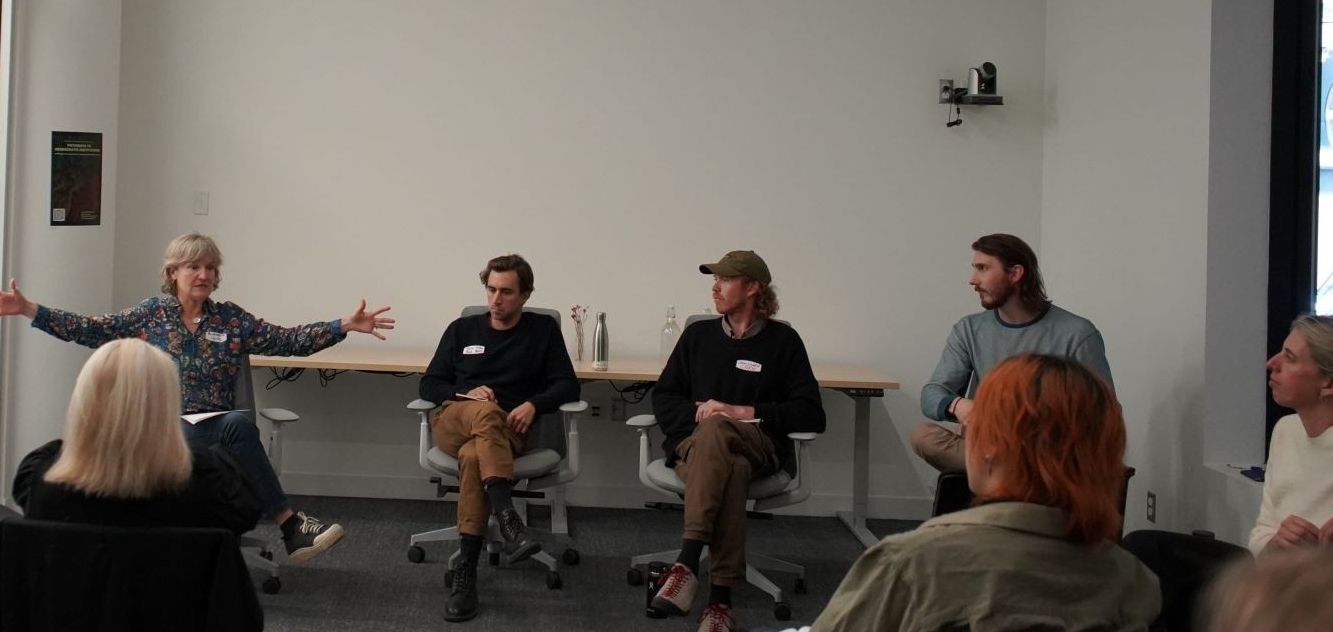
After panelist introductions, the event shifted towards building intimate conversations between panelists and attendees: the room was split in two—for French conversations and English—allowing for the blossoming of understanding and birth of ideas within smaller circles where the moderators asked questions related to the topic for discussion, then opened the floor for participants to inquire.
The English discussion featured Richenda Grazette (SHIFT’s Lead, Community Leadership & Capacity) as moderator, Testaouni, and Kovalova; the French, Christian Favreau (SHIFT’s Learning and Storytelling Lead), as moderator, Lachapelle, Rivest, and Langford.
The speakers began by prefacing the makeup of their organizations, offering context to the framework they operate with and are used to.
Organizations must question themselves about who's not around the table and what are processes are missing, as well as think critically about how to truly empower people so that they can make informed decisions.
QueerTech, as Testaouni explained, is a grassroots nonprofit that merges its origins with the corporate model of an organization, and since 2022 have been primarily governed by a Board of Directors (BoD). Similarly, the FGM also takes the classical approach of being governed by a BoD. Kovalova described how FGM works solely to serve the greater community of Grand Montreal, and despite their governance structure, FGM is very attached to sustainable development goals locally. One way the FGM looks to evolve its structure is by ensuring that it is built around feedback—something particularly difficult in a cut and dry hierarchical structure.
Working more broadly across Quebec, Fondation Béati is also led by a Board of Directors and is similarly wrestling with the paradoxes and at times irreconcilable tensions between philanthropy and social justice. But for Béati, this necessarily invites humility and active reflection. “Our values must be enacted,” said Lachapelle. “Organizations must question themselves about who's not around the table and what are processes are missing, as well as think critically about how to truly empower people so that they can make informed decisions.”
This latter point is echoed by Rivest; engagement in the participatory budget process that reflects the diversity of impacted communities is paramount. And while Montreal's participatory budget allows citizens to propose ideas for large-scale projects, public awareness is an ongoing challenge. The process of bringing one of these projects is also a long one: after submitting their project ideas, citizens must wait for the city or boroughs to analyze their feasibility. Lucky projects will make it on the final list to be voted on by the population of Montreal. Each small step of this lengthy process presents an opportunity for citizens to disengage. The participatory budget is a rather new initiative, too, having only started in 2020, so the three-person team has had to focus primarily on outreach and sustaining engagement. Rivest emphasized the importance of showing participants that it’s worth their time and effort.
CREW is made up of Teaching Assistants (TAs) and Research Assistants (RAs) at the university. The union’s policies, hiring, and mandate are designated by a General Assembly of all members—the union’s highest decision-making body—that meets twice per semester. Between General Assemblies, elected representatives from each department meet monthly as the Organizers’ Council to oversee and guide the union’s activities. The Executive Committee, of which Langford is a part, runs the day-to-day administration.
Institutions, organizations, and the challenges
“The challenge is, 11 people are making decisions for 11,000 people,” Testaouni said of QueerTech’s governing structure. QueerTech has over 10,000 members and counting accounted for in the organization. Testaouni shares how blind spots are inevitable when a Board is set to represent many individuals, elaborating on the constant struggle to adequately represent the membership while serving a vast community with varying needs. Testaouni begs the question constantly in flux at QueerTech: “How do we service queer individuals across the board?”
For Kovalova, when working with pillars of a democratic institution, it can be difficult to confront its flaws when systemically we are stemming from paternalistic thinking—thinking that shapes and guides most contemporary societies. A lot of FGM’s work seeks to withdraw from paternalistic thinking and instead foster an environment that rethinks its many processes. FGM is a distributor of grants, and their decision committee is entirely comprised of volunteers. Kovalova shared the importance of heeding who can afford to take part in the committee, how each member’s positionality affects verdicts and how its process can be less extractive, given the emotional and financial cost of the position.
Democracy needs curated spaces
Langford explained how mobilization within CREW can be difficult, especially during the process of open bargaining, citing conflicting schedules as a main source of the issue. To remedy this inertia, they assembled new and varying ways for members to get engaged like kickstarting new committees that promote involvement, for example the free lunch committee. By allowing members to suggest ways to engage their co-workers and, what's more, to fund those ideas, ensured a sense of collective ownership in decision-making and boosted membership commitment and retention.
The Ville de Montreal has been struggling with involvement in the participatory budget program. Rivest shared how even with outreach, it can be difficult to ensure that those involved are representative of Montreal’s diverse community. She continued by stressing the importance of participation from voices who aren’t always heard—especially young people, for whom the democratic process lacks accessibility.
Holding people accountable in a decision-making process
The responsibility of open governance must be maintained by the organization, Lachapelle explained. He noted how it is important to be self-reflexive within an organization as there needs to be accountability in recognizing who is around the decision-making table, who isn’t, and what process are missing. Critical thinking is integral to this philosophy: if an organization wants to be held accountable, they must meditate on how to truly and rightfully empower people to ensure they have enough information to make decisions.
“Democracy needs curated spaces,” explained Kovalova, as she elaborated on the ever-changing curation of FGM’s committee system. She explained how the committee needs to constantly question their effectiveness and is always looking to improve its operations sustainably. One way this is achieved is with an emphasis on intentional relationship building; this is mandatory and strategically held prior to finalized decisions. With the understanding this team will spend sufficient time together, prioritizing solid relationships within the committee allows for a more seamless and cohesive procedure and judgement.
... accountability is persistence; to build trust within the budget committee, is to remain committed to the community.
At QueerTech, their community has a shared vision that they are all collectively aligned with: to Queer the tech ecosystem by breaking down barriers, creating spaces, and connecting communities to support and empower 2SLGBTQIA+ people to thrive. This vision guides decision making processes to be as wholly representational as possible. However, Testaouni notes that – based on their previous experience as a former member of Fierté (Pride) Montréal’s Board – even within Montreal’s queer community there are varying agendas and ideas about what Pride should be. This struggle creates an apparent paralysis in decision making. Testaouni poses the dilemma of how a structure of a board should operate when the community is made up of many different views of what the organization should be, as moving from grassroots to professional an organization should be cognizant that not everyone will be involved in the conversation.
For Rivest, accountability is persistence; to build trust within the budget committee, is to remain committed to the community. She explained how when one takes a persistent position within a decision committee it reflects to the community you are representing one’s legitimacy, strengthens connections, and eases recruitment for participation in governance.
The panel concluded with both breakout groups reconvening in the main space to share ideas expressed, struggles and solutions discussed. While there is a collective understanding that ethically navigating democratic institutions requires individual curation, these organizations are diligent in finding the right fit for them; one that strives to account for all. The panel allowed participants and speakers, to find new ways, critiquing existing ones, to make informed decisions that draws on diverse perspectives holding the organization accountable. In addition to exploring varying avenues of decision making to reflect diverse perspectives and values, it was agreed that, coupled with the initiative, there should be strides towards reconfiguring the democratic process itself so that it is more accessible; thus, tacitly encouraging more voices absent from the conversation. This community deliberation proved a fruitful step forward with minds from diverse industries and organizations mingling to depart from binary thinking and release its talons on democratic institutions.
