


Letters for mapping home
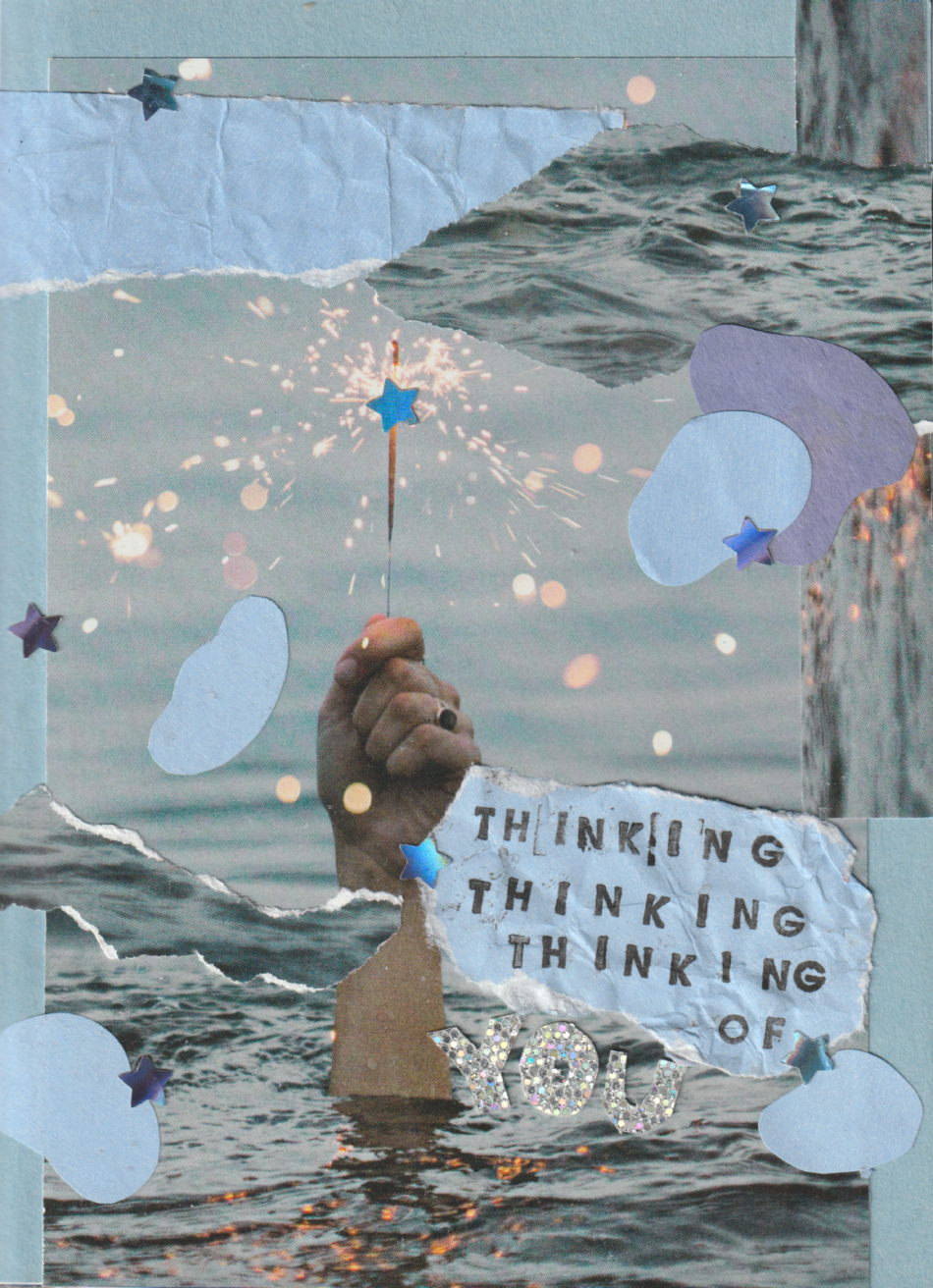 Artwork by Daylen (@its.daylen)
Our memories of both tangible and intangible homes lay pathways for our internal journeys, sometimes “backward” to a home left behind, sometimes “forward” as maps to future places. Our bodies function that way too: through our senses we can exist again in different places, find places can truly “hold” us, and reach our hands across space to connect with what we’ve left behind or lost. The pieces in this section speak to that embodied experience of grief, strength, and what it means to move on.
In this special edition of the SHIFT Journal, we invited submissions from our community that answered the questions: what does it mean to love a place that's imperfect, or even antagonistic? What do we yearn for, wish for, or fight for in lands that we've left or still inhabit? Read more of our love letters.
Fabrics of everyday life
Binds Together
Ancient Future
Do the fabrics of your everyday life wrap you tender
Does your language tend the land
Who is you
To whom am I speaking with?
You and your inanimate words with your inanimate Mouth
Are you friends with your flesh
Are you a bodyless walking
Could you comprehend sacred if it scrubbed raw into tender skin
forced slowly down into generational throats until it became spine
Into moon womb and bodily fluid
Until it became blood body mind
Forcing S A C R E D
Until sacred became the land
Body To hear the sound of land is to hear the language of reciprocity
To learn the language of land is to learn
Language as love love as law love as treaty
Everyday a ceremony
You come from aki, home is everywhere around your skin
You come from a drop of life as delicate as the maple water
Pimadiziwin Wiidamo Aki kisigan kisikigik dish ooki aki
(say I love you to the land, the land loves you back)
Her fabrics of everyday life
Binds together
Ancient Future
- Aanjeni
(translations - Ayabeh: young moose, Pimadiziwin: life, Kidamoo: lily pad rhizome)
Dear Lebanon
Dear Lebanon,
I miss you in ways that don’t make sense to people who’ve never had to leave.
I miss the smell of food drifting through open windows, the sound of my mom calling me from the balcony, the chaos that somehow felt like warmth. I miss my family, my childhood, my home, my streets. The beach and the mountains living too close to each other, like they couldn’t bear to be apart. With you, everything was loud, alive, excessive. So was I.
There is a version of me that only exists with you.
She knows how to belong without asking. She moves through memory easily. She remembers joy without effort.
But love doesn’t cancel truth.
I couldn’t live in you anymore. You asked for too much in return for too little. Safety became a luxury. Dignity became conditional. A future felt like a gamble instead of a promise. Corruption ate away at the basics—electricity, water, security—until even hope felt unstable. You became a place where survival replaced living, and that is not where I could raise my children.
So I left.
Canada is my country now. My home.
I’m sorry if that feels like betrayal—but you broke us first. Leaving wasn’t abandonment; it was self-preservation. I had to choose a place that could hold my body without constantly threatening it.
And still, I carry you.
I see you here, in Canada, more often than I expect. In streets that look like yours. In a building that feels familiar. In a smell that stops me for a second. I’ve made my home carry pieces of you—the Cedar (Arz) tree, the “Tarbouch”, and the “Kuffiyeh”.
I miss you while refusing to return. I love you while keeping my distance. I remember you through the good—sometimes by refusing to remember the hard. Maybe that’s my way of surviving you. Maybe that’s my boundary.
Loving you now means not romanticizing what hurt me. It means wanting better for you without sacrificing myself to prove it. It means imagining a Lebanon that protects its people instead of draining them.
I can’t promise I’ll come back.
But I wish—for healing, for dignity, for a version of you that knows how to love its people back.
Always,
Samiha
- Samiha Olwiyah
Khuda hafiz (ﻆﻓﺎﺣ اﺪﺧ)
Khuda hafiz,
may God be your guardian,
said in love,
in sadness,
in grief and longing.
Khuda hafiz,
how quickly it slips from the tongue
a bandage laid,
over a bleeding heart.
When I was a child,
I imagined an angel’s wings
closing in on me
the moment someone said it,
followed by Safar-e-Salamat—
may your journey be peaceful.
Dry your tears.
Let it guide you.
The seasons cannot be hurried:
winter, summer,
the long year turning.
I’ll be there
among the roots of the persimmon trees,
amid the birds lifting into flight,
Khuda hafiz,
when the nights become cool
and each day becomes unpromising.
At long last
when you’ve reached home
all the words
remain at the tip of your tongue.
You stand paralyzed.
Nothing comes out right.
My hand finds yours,
until we bid our next goodbye.
- Sidra Mughal
Khuda hafiz is a love letter to home as language and ritual. The phrase itself, spoken at parting, carries protection, care, and the hope of safe return. It is tied to memory, migration, and the way cultural expressions become emotional infrastructure when physical distance or uncertainty makes belonging fragile. This poem reflects on loving a home carried throughout the seasons, in gestures, and repeated goodbyes. It considers how care persists even when words fail, and how saying goodbye can itself be an act of love and continuity.
where am i?
TI-bok ti-BOK
my father's mind catches up to the heart that he gave me
the uneven beat reminds him
it's a strong one, your lolo gave it to me to pass on to you
it has saved me many times
my mother's hands
cover the mouth that she gave me
but my father tells her, it's ok
this one has a way of saying
the hard things
she sighs, hands getting to work
massaging the hotspots on my lola's feet
bakit kaya?
this body seems to remember
so much pain... coursing through every vessel
so much grief and longing... painting every line
and shame... hiding the darkness in the skin
only the sun from a foreign sky can recognize
"see, others will burn themselves just to look like you"
kailan pa ba?
does the promise of a brighter future
outweigh the sacrifice of leaving everything behind
your children might forget
but their bodies will remember
they say you never forget your first love.
i didn't even know i loved you so much, until i returned
17 years later, and yet the second i breathed in your air
i knew, i am home
- the land cannot be separated from its people
- by Charlene Flianca
This is a poem to my home country, the Philippines. I always felt that my body wasn't mine alone, that it was given to me piece by piece, by my ancestors and by the land that ceaselessly nourishes me. I miss my homeland so much, but I always forget that I have this body to connect me to her and allow me to come home whenever I wish to.