


Rebeca Esquivel is a second-year PhD student whose research focuses on climate change education within both formal and informal spaces in Quebec. She is particularly interested in identifying the supports that educators need to effectively take up this vital work, including professional development, resources, and community engagement. Rebeca's work explores different frameworks used to integrate climate change education into 3 diverse educational settings in just and equitable ways.
Growing together: Reflections on community-rooted urban agriculture and social transformation in Montreal
by Rebeca Esquivel
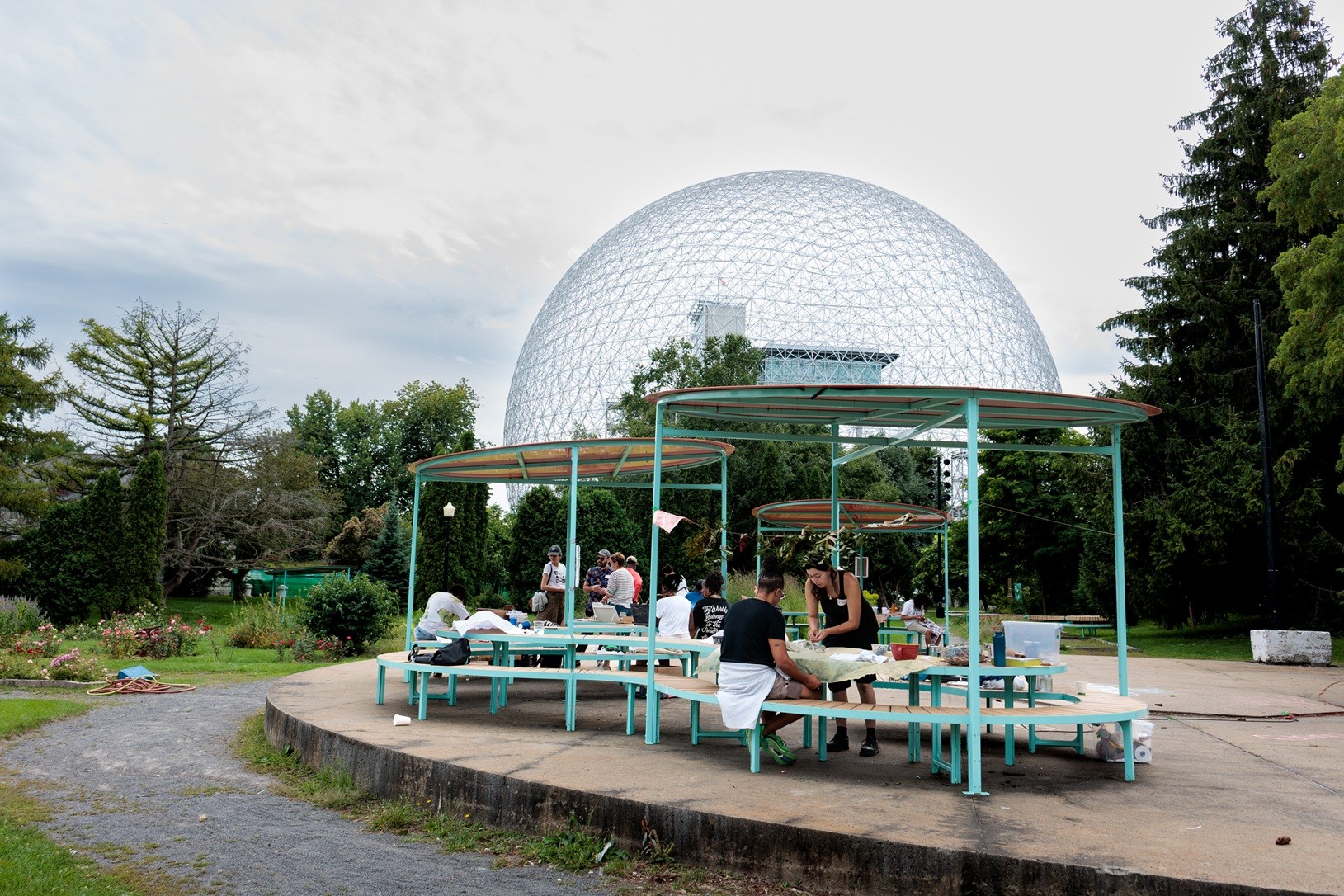
This piece was selected as part of SHIFT's special edition issue Research by and for Community (September 2026), which invited pieces from our community related to explore what it would mean to have research and learning environments that better reward relationship-building, curiosity, co-inquiry, and shared power. This piece in particular was written by one of the 2025-26 SHIFT Research & Advocacy Fellows about their community-led research project.
Note: To preserve the anonymity of the participants of the conversations addressed below all participants are referred by their “title”: municipal/city official, community organizer, and garden organizers. Likewise, it should be noted that many of the claims presented below are derived from personal communication with the participants. A heartfelt thank you to everyone who took the time to talk with me.
My fellowship year with the Research and Advocacy Program (RAP) began with a fairly conventional (albeit complex) question: How can Montreal’s Urban Agriculture and Collective Garden strategies be used to serve the needs of marginalized and racialized communities in neighbourhoods vulnerable to gentrification?
This question presupposes two truths:
- That city-wide policies directly and positively impact the lived experience of community members, in particular marginalized and racialized communities.
- That urban agriculture is an important element in these communities.
To answer this question, I spent a year analyzing the city’s policies and engaging in conversation with nine stakeholders in urban agriculture across the island of Montreal, from community garden coordinators and volunteers to community organization leaders, and municipal and city employees. These conversations drew into question the two assumptions, and inspired a larger, harder set of question s to answer: For whom are these projects sustainable, to what end, and at what cost?
[G]arden organizers are able to begin collective gardens but are not guaranteed more than one growing season due to lack of material resources, or paid positions.
As I began answering my original question, I quickly realized that policy documents would not provide the insight I hoped. Gardens are well established mainstays in both public opinion and government policy around sustainability (Jackson, 2009). They are identified as providing community spaces, green urban environments and are important fixtures in food security discussions (Ville de Montréal, 2021), although their actual food output, role in beautification of cities and even social benefits are not always critically considered (Tornaghi, 2014). While all forms of garden certainly add to the greenery of urban spaces, they also advance the gentrification of boroughs, pricing residents out of their historical communities. In neighbourhoods such as NDG or the historic Chinatown in Ville-Marie, gardens can be both beneficial and problematic, and city-wide strategies do not account for these nuances. Montreal’s Urban Agriculture Strategy for example, details figures, visions and timelines, but does little to illuminate the very real challenges faced by small community organizations working in their specific cultural or ethnic communities.
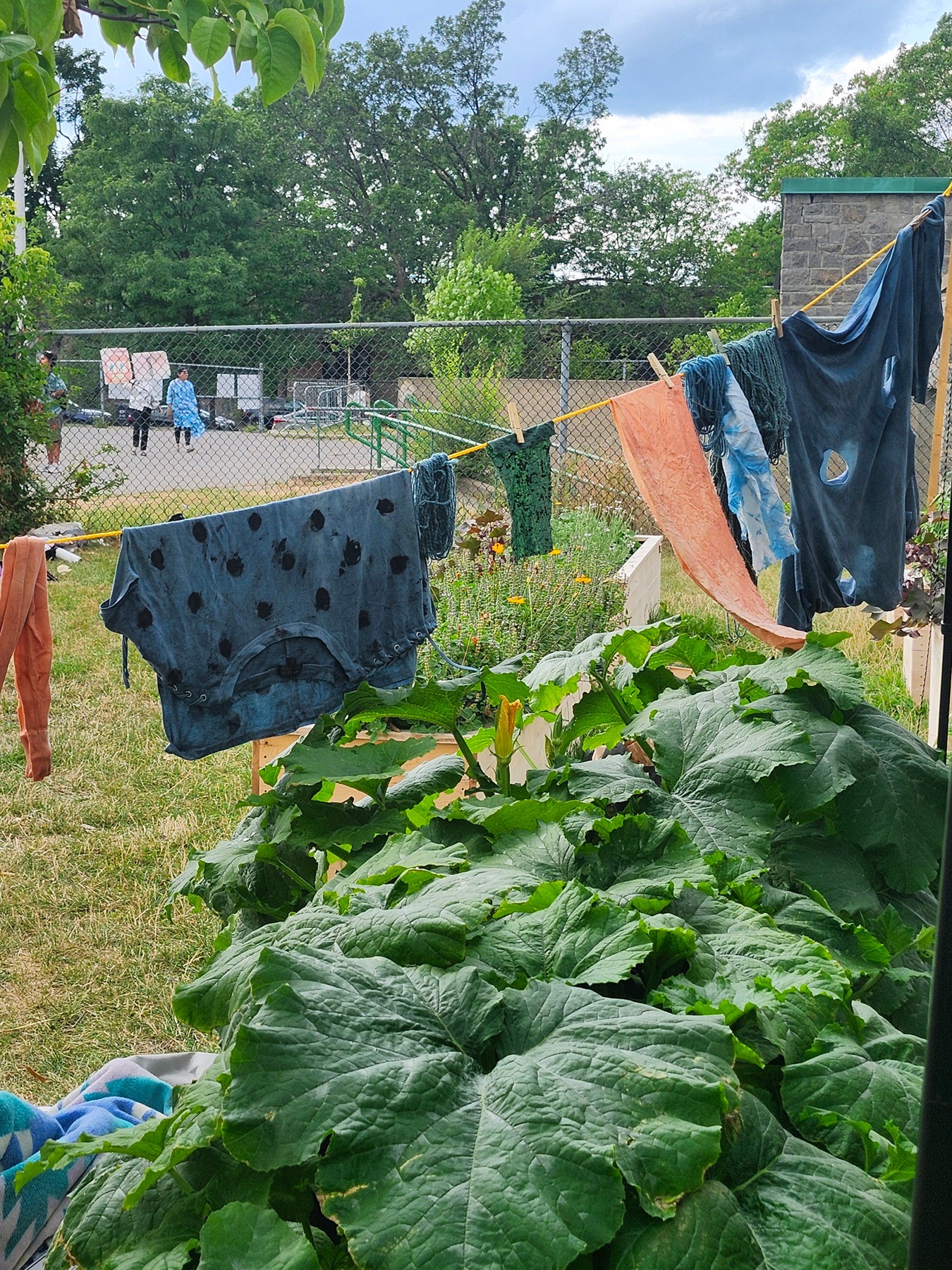
Collective or collaborative gardens such as those who were the object of this research, stand separate from other forms of urban agriculture in Quebec broadly, and specifically in Montreal. Tasks and decisions are shared, building rapport amongst community members and supporting the development of gardening knowledge. Accordingly, these spaces benefit from the presence of facilitators and knowledge holders (Gouvernement du Québec, 2026). Interviews with community members very quickly highlighted that this work often falls to the wayside due to a lack of ongoing municipal or city support beyond initial (sometimes literal) seed funding. This lack of core funding results in volunteer and paid staff burnout, resulting in “loss of institutional knowledge [and] relationships (Imagine Canada, 2022 p.1).
Conversations with interviewees highlighted that this is institutional knowledge not only of the community organizations themselves, but also the means through which material support and funding is obtained, not just from funding bodies, but also through collaborations with fellow community organizations. This is particularly important when conversations with municipal officials confirm what community organizations have long known—information and support flow more freely through established relationships between funders (including municipal and city funding) and applicants. These challenges do not exist independent of social and political realities. The funding landscape of Quebec, like much of the federal landscape has shifted from mission-based, to project-based (Imagine Canada, 2022). Concretely, this means garden organizers are able to begin collective gardens but are not guaranteed more than one growing season due to lack of material resources, or paid positions. As a result, garden and community organizers must also sacrifice the invisible yet essential labour of coordinating, ongoing outreach, and general administrative work including the continuing writing of grant applications. Interviewees described five to six public and private funding streams stitched together, most renewed for one or two-year cycles effectively requiring continuous grant writing that organizers quite literally cannot afford to do and also cannot afford to not do.
Labour itself is a demonstration of care for both the gardens, and the communities they serve.
Policy analysis, interviews and conversations with the RAP cohort have confirmed the need to foreground the labour that underlines both gardening and community organizing, and participate in rendering this labour visible and valued. Chiara Tornaghi’s (2014) critical geography of urban agriculture provides language to take up this work, calling for an approach that “puts urban agriculture initiatives in the context of specific sociopolitical (and food) regimes… and how [these] initiatives contribute to perpetrate new forms of injustice…” (p. 553). Gardens are never simply sustainable, just, or empowering. These characteristics come about as community members and organizers are continuously encouraged by borough and city officials to build culturally-responsive gardens and activities.
To make sense and communicate the generous knowledge shared by community members and officials, a manifesto has been drafted, which has been a reflective process as much as a communication output. The gardens are sustained by materials, the time, skills and relationships of community members and organizers, and the financial support that can sustain the purchase of materials and time invested in growth, all of which can be understood as different forms of labour. Labour itself is a demonstration of care (de la Bellacasa, 2017) for both the gardens, and the communities they serve. As such, gardens are only sustainable when the labour of caring for them can be sustained. As an attempt to bridge some of the distance, I have compiled a year of conversations and reflections into a single physical and digital sheet to share with the stakeholders I identified in this writing. This article and the accompanying manifesto asks community organizers, garden organizers and volunteers to read the same page, question who truly benefits from collaborative gardens and why, and work together to ensure that they enrich the lives of the community members they seek to serve.

References
Gouvernement du Québec. (2026, 11 mai). Jardiner dans les espaces publics. https://www.quebec.ca/agriculture-environnement-et-ressources-naturelles/agriculture/agriculture-urbaine/choisir-des-espaces-pour-jardiner/jardiner-dans-les-espaces-publics
Jackson, T. (2009). Prosperity Without Growth: Economics for a Finite Planet. London: Earthscan.
Imagine Canada. (2022). Deepening connections, strengthening communities: 2022 annual report. https://imaginecanada.ca/sites/default/files/annual-report-2022.pdf
Puig de la Bellacasa, M. (2017). Matters of care: Speculative ethics in more than human worlds. University of Minnesota Press.
Tornaghi, C. (2014). Critical geography of urban agriculture. Progress in Human Geography, 38(4), 551-567.
Ville de Montréal. (2021). Urban Agriculture Strategy 2021-2026. https://montreal.ca/en/articles/urban-agriculture-strategy-adapting-to-climate-change-18674