


Marbella Carlos (she/her) is a queer, firstgeneration Filipina, and Ph.D. student in the INDI program at Concordia University. She holds an MA in Creative Arts Therapies, and her SSHRC-funded graduate research introduced a critical framework for evaluating the therapeutic experiences of BIPOC art therapy clients. Her doctoral work continues to examine the intersections of identity, art, and healing through collaborative and culturally responsive approaches. As both researcher and practitioner, she integrates her background in creative arts therapies with community-based practices to advance equity and representation in therapeutic and artistic spaces.
Community-based Mental Health: What Counts and Who Matters?
by Marbella Carlos
This piece was selected as part of SHIFT's special edition issue Research by and for Community (September 2026), which invited pieces from our community related to explore what it would mean to have research and learning environments that better reward relationship-building, curiosity, co-inquiry, and shared power. This piece in particular was written by one of the 2025-26 SHIFT Research & Advocacy Fellows about their community-led research project.
When I first came on as the research and advocacy fellow for Centre Kapwa, I thought I would be generating research that addressed larger policy concerns around culturally relevant mental health in Quebec. In the process, many questions emerged around mental health policy, decision making, and larger healthcare systems, most importantly: What counts as evidence?
This question became especially urgent when I encountered an official Statistics Canada report that felt completely disconnected from the communities I know. The report showed that racialized communities in Canada report extremely high perceived health and wellbeing, with the majority of respondents describing their mental health as generally very good or excellent. Filipinos in particular reported the highest and most positive mental health and wellness. This is not aligned with what I have seen or lived, nor what I have heard from friends, family, community members. The data in the report does not reflect the struggles I had witnessed around family pressure, cultural expectations, internalized stigma, migration, isolation or the lack of culturally relevant and supportive mental health resources.
If the official statistics show that Filipinos are doing well (or better than everyone!), how can we make a case for the resources we know that our community needs? If the numbers say one thing, but the community is telling us something else, which evidence gets believed?
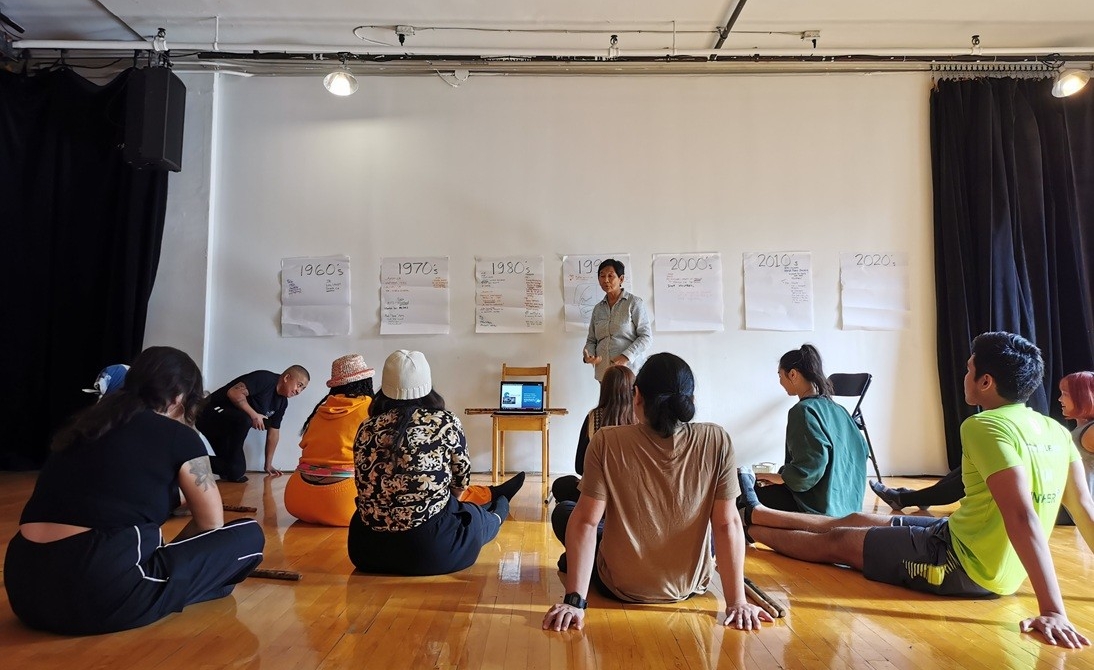
I had conversations with community partners, professors, and experts whose work focuses on community-engaged research, mental health, policy, and arts-based community and mental health practice. I also spent time dropping into and participating in community gatherings. This was particularly important because I am not researching the community, I am also a part of the community!
Centre Kapwa is a non-profit organization decolonizing Filipinx-Canadian diaspora mental health and wellness through art, movement, and conversations. At the heart of this work is kapwa: the Filipino concept of interconnectedness, of seeing ourselves in one another. Kapwa asks us to understand wellness not only as an individual experience, but as something shaped through relationships, community, culture, history, and collective responsibility.
My research sought to understand how Centre Kapwa's community-rooted approach might offer an alternative to dominant biomedical models of mental health and, importantly, how this kind of work can become recognized as legitimate evidence when it comes to policy and funding.
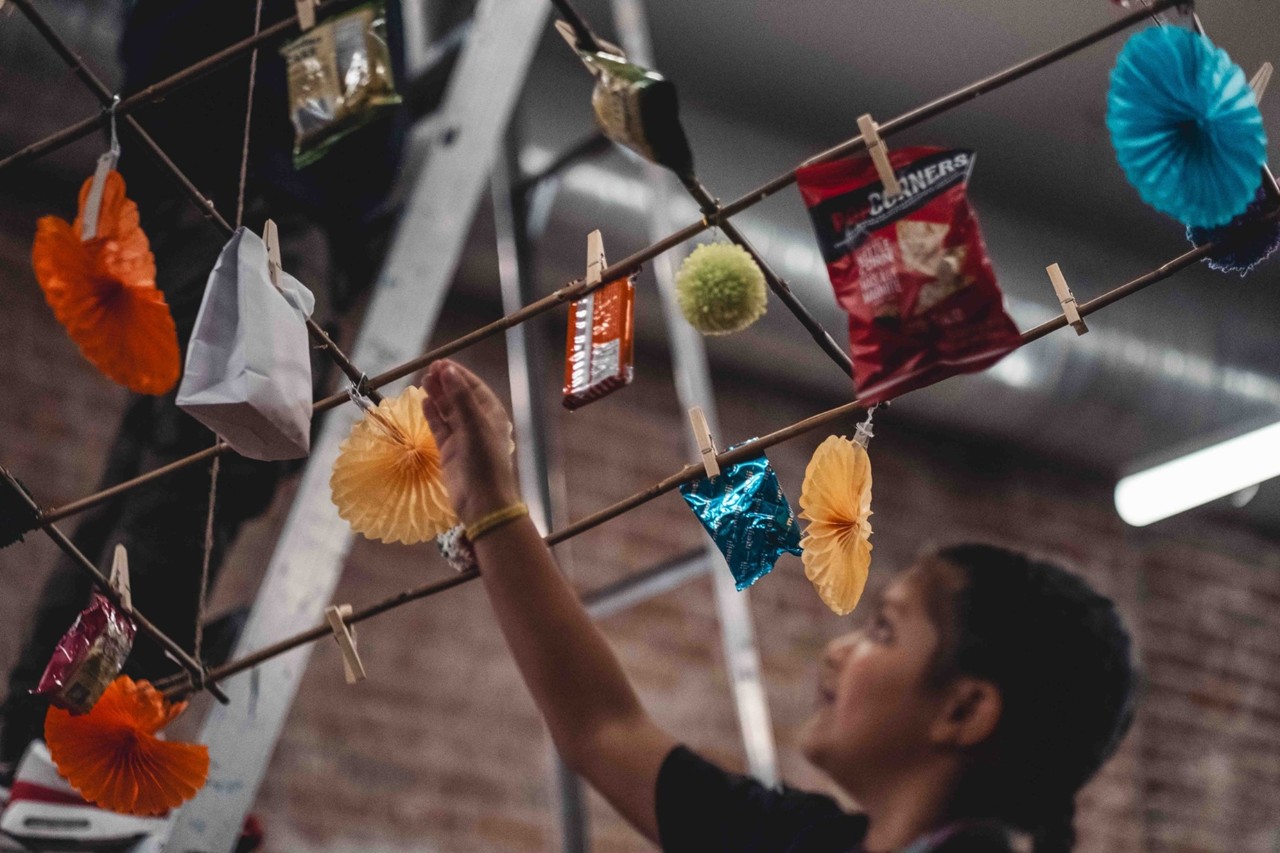
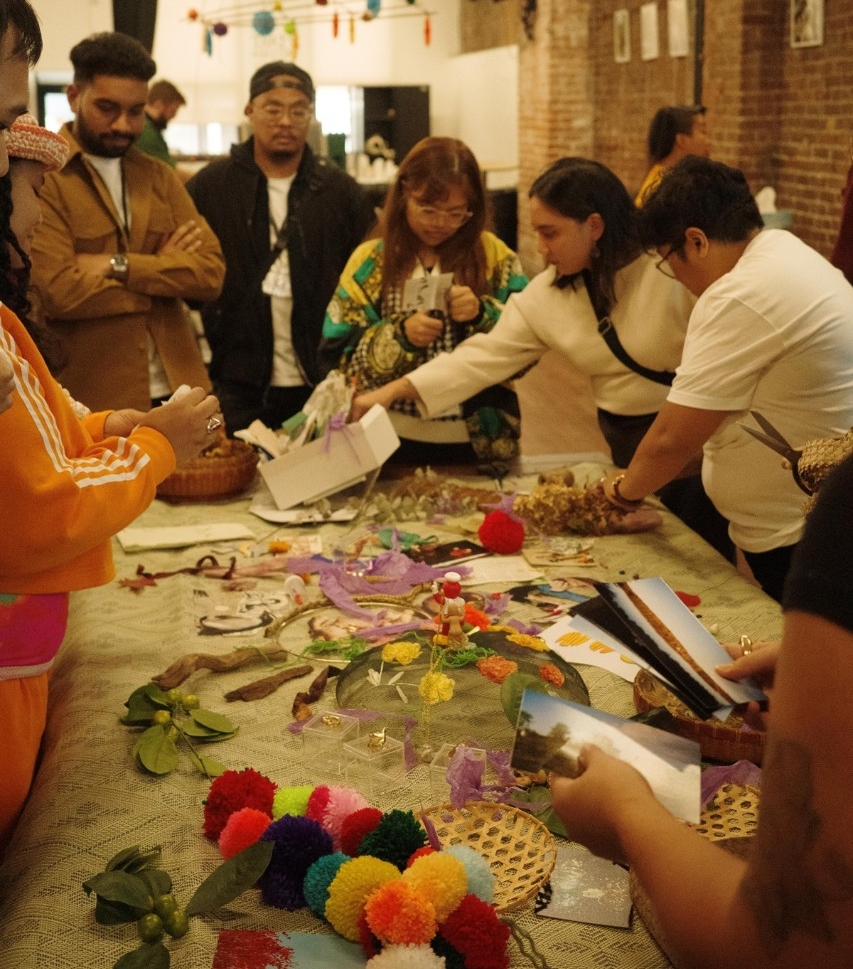
I approached the research through several interconnected methods. I conducted a literature review examining biomedical and community-based mental health frameworks, culturally responsive care, arts-based approaches, and the experiences of racialized communities in Canada. I had conversations with community partners, professors, and experts whose work focuses on community-engaged research, mental health, policy, and arts-based community and mental health practice. I also spent time dropping into and participating in community gatherings. This was particularly important because I am not researching the community, I am also a part of the community!
Community leaders and practitioners described how culturally specific care is frequently underfunded [...] Arts-based and community-based approaches are often treated as supplementary rather than essential, despite their ability to address isolation, belonging, connection, and collective wellbeing. Again and again, I heard that the problem was not necessarily a complete absence of evidence, but rather that it was that certain forms of evidence are more easily recognized than others.
Across the literature and conversations, a consistent story emerged. Mainstream mental health systems often rely on data and statistics from biomedical frameworks that prioritize diagnosis, individual pathology, and clinical intervention. These approaches can be valuable, but they do not tell the whole story. For racialized communities, mental health is also shaped by racism, migration, labour conditions, family expectations, cultural identity, colonial histories, and belonging. For Filipinx communities specifically, values such as kapwa, collectivism, interdependence, spirituality, and community connection can be central to understandings of wellness. Yet, these realities are often difficult to capture through conventional measures.
Filipinos are deeply embedded within the healthcare system itself. We work as nurses, personal support workers, caregivers, physicians, and other healthcare professionals. Our community helps sustain the very system that many of us struggle to access when we need care ourselves. The issue is not that Filipinos do not understand healthcare or do not value mental health. Rather, culturally relevant resources can be difficult to find, and many people do not feel represented by the systems available to them. Family and cultural pressures can make it difficult to speak openly about mental health. Internalized stigma can make asking for help feel like failure. And when the available services do not reflect our realities, seeking care can itself become an alienating experience.
I do not think the answer is to dismiss statistics. The stats can report important realities. Quantitative data can identify patterns, reveal disparities, and influence policy. But statistics are never the entire story.
The project interviews reinforced this gap between what institutions measure and what communities experience. Community leaders and practitioners described how culturally specific care is frequently underfunded, while short-term grants and competitive funding structures keep grassroots organizations in a state of instability. Arts-based and community-based approaches are often treated as supplementary rather than essential, despite their ability to address isolation, belonging, connection, and collective wellbeing. Again and again, I heard that the problem was not necessarily a complete absence of evidence, but rather that it was that certain forms of evidence are more easily recognized than others.
I do not think the answer is to dismiss statistics. The stats can report important realities. Quantitative data can identify patterns, reveal disparities, and influence policy. But statistics are never the entire story. A number cannot tell us why someone stopped going to therapy. It cannot necessarily capture the experience of feeling culturally misunderstood. It cannot fully describe the pressure of supporting family while struggling yourself, or the relief of entering a space where your culture, language, and experiences are already understood. One person's truth does not get to outweigh someone else's. But neither should one dataset get to erase the truths that fall outside of it.
The next stage of this project will bring these questions directly back to the community. In Fall 2026, we will host a film screening and community panel, alongside the launch of a survey focused on Filipinx mental health experiences. The findings will be transformed into an educational campaign that foregrounds first-person community perspectives in order to create evidence that can support advocacy and increase visibility.
Filipino mental health matters! Community care matters even when it is difficult to quantify. And if we are truly in kapwa with one another, then we must include the people at the margins: the people whose experiences have been minimized, misunderstood, or told that they do not matter. So perhaps the question is not simply, “what counts as evidence?” But also: “who matters?”
